Words & Images Ross Mackay
There’s a time of year deep in the Southern Alps when everything goes quiet and cold. People batten down the hatches, light the fire, and wait for the snow to fall. The weather is typically stable and, as a consequence, the dreaded inversion kicks in.
Where I live, this low-level cloud can linger about the hills for weeks, putting a dampner on peoples’ moods and locking in an air of dissatisfaction and unease. I’ve spent many an autumn contemplating an escape. Usually, work is very quiet and there is little to pass the grey, leaden days as we move closer to the snowy time of the year.
However, this year was different. My partner and I chose to embark on an adventure that removed us totally from the low ebb of autumn as we jetted off to the other side of the planet in search of sun and culture. The trip we envisioned: one where we could ride in a beautiful place, eat delicious food, and immerse ourselves in a place that would remind us just how old human history is, with summer warmth as an added bonus.
After many evenings of discussion and much back and forth between destinations, we settled on Georgia. Georgia seemed to tick all the boxes: easy logistics (we only had about three weeks to sort the trip), good people, great food and what looked like some stunning riding. But that’s all we had determined about the place, and as we boarded the plane it occurred to me that I had been so busy leading up to our departure, I’d given little thought to what we might find at the other end of the long haul flight. It was a nice way to kick things off.
Arriving in Tbilisi we were confronted by the usual airport taxi mafia and, after some rather stressful and heated negotiations, we finally found a vehicle just big enough for both ourselves and our bike boxes, to take us to the city. Once we’d unloaded our bikes and recovered from our strained airport encounters, we set about finding some traditional Georgian food, and we weren’t disappointed. A lavish hotpot of dumplings in yoghurt-based stew, topped with fresh bread which was dripping with cheese. I could get used to this!
Tbilisi is a mashup of humanity; a true cross- section of old-world-meets-modernity. Wandering about the old parts of the city was an eye- opening affair. The beautiful array of 300-year- old buildings in various states of (dis)repair and tight little corridors and alleyways had a very old-world European feel, however, Georgia is an interesting spot geographically as it sits right at the juncture of the Middle East, Europe and West Asia. These elements are reflected in the food, the people, and the architecture. Two days in the city was enough – we had our sights on the green hills that crowned the Capital.
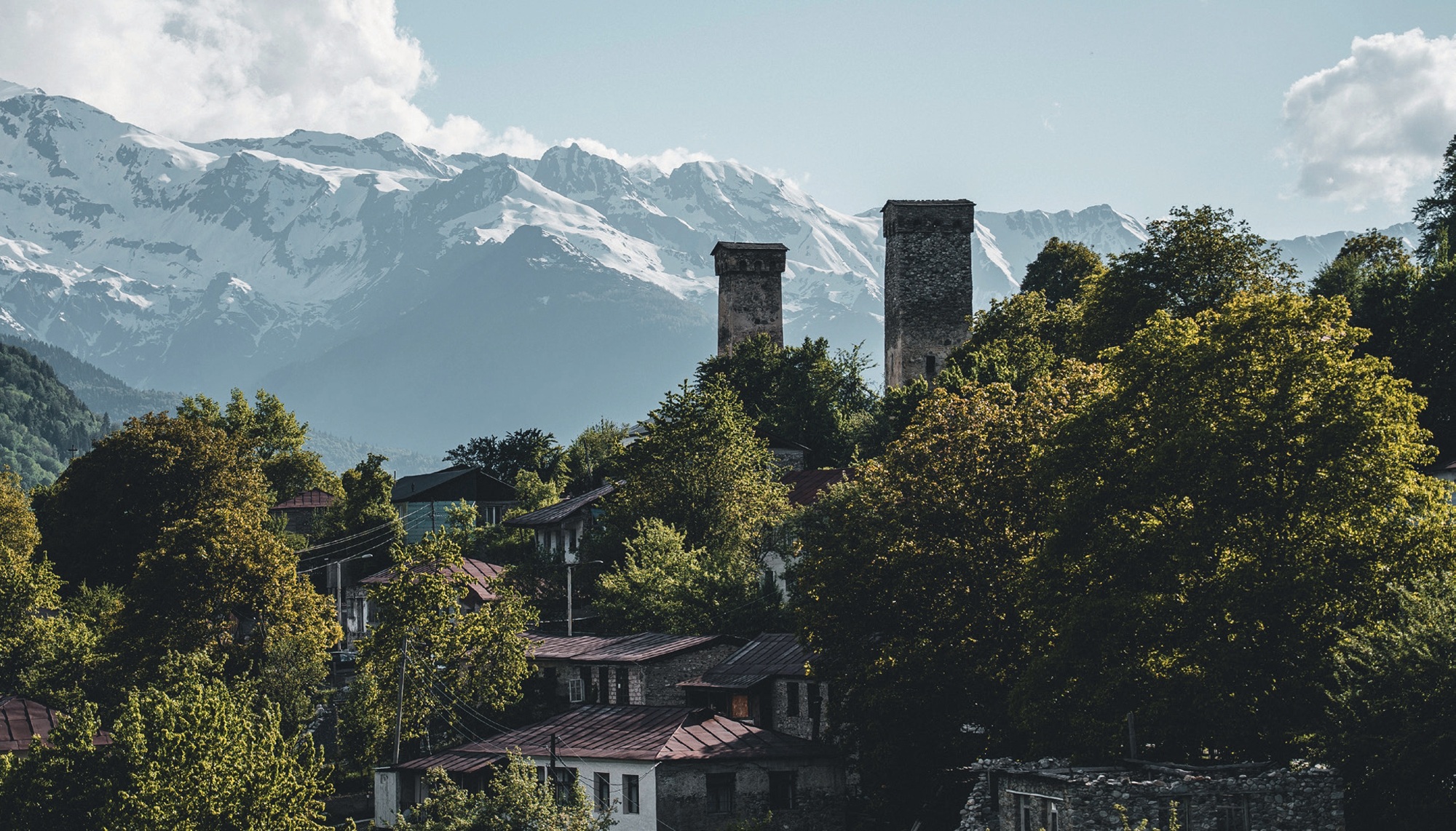
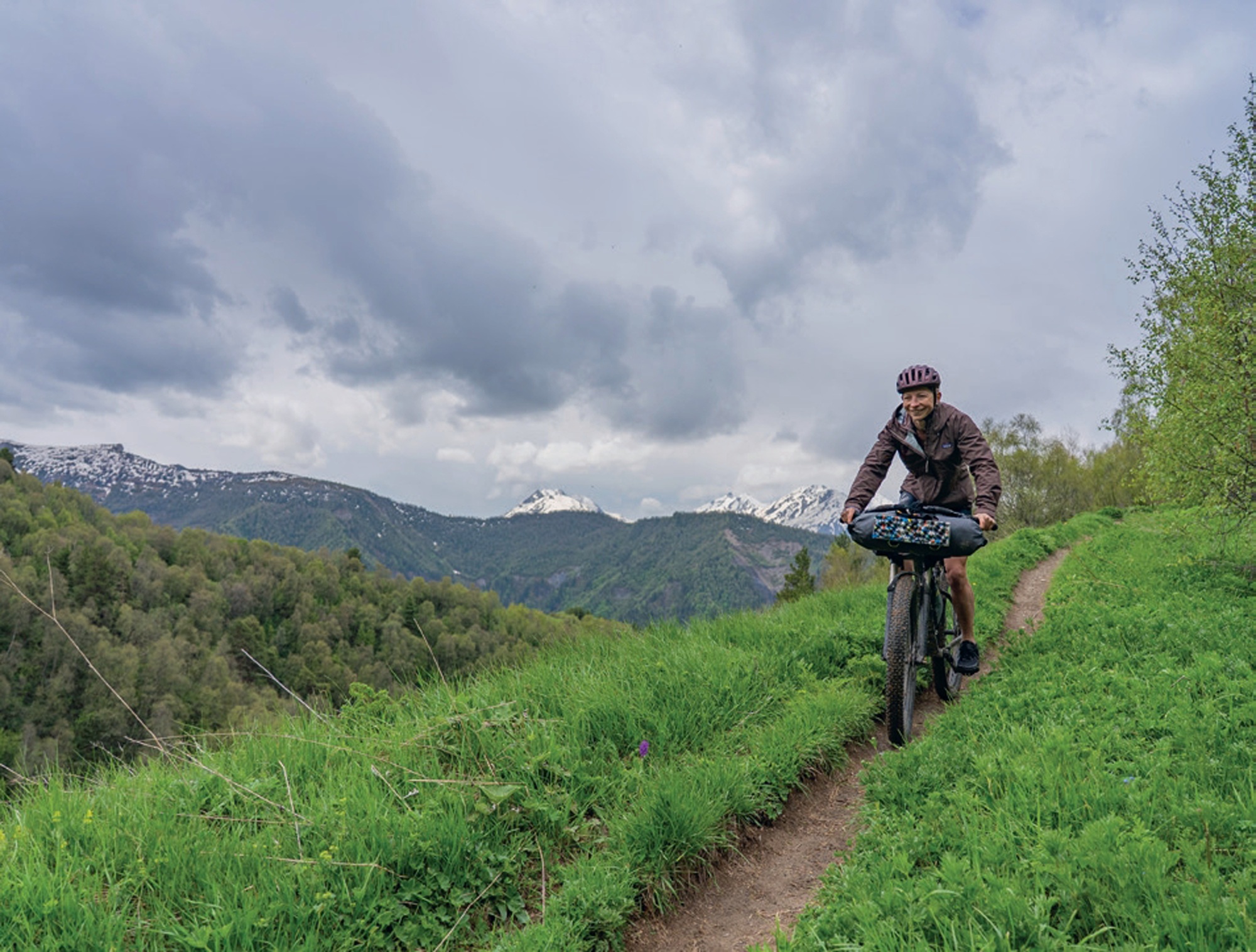
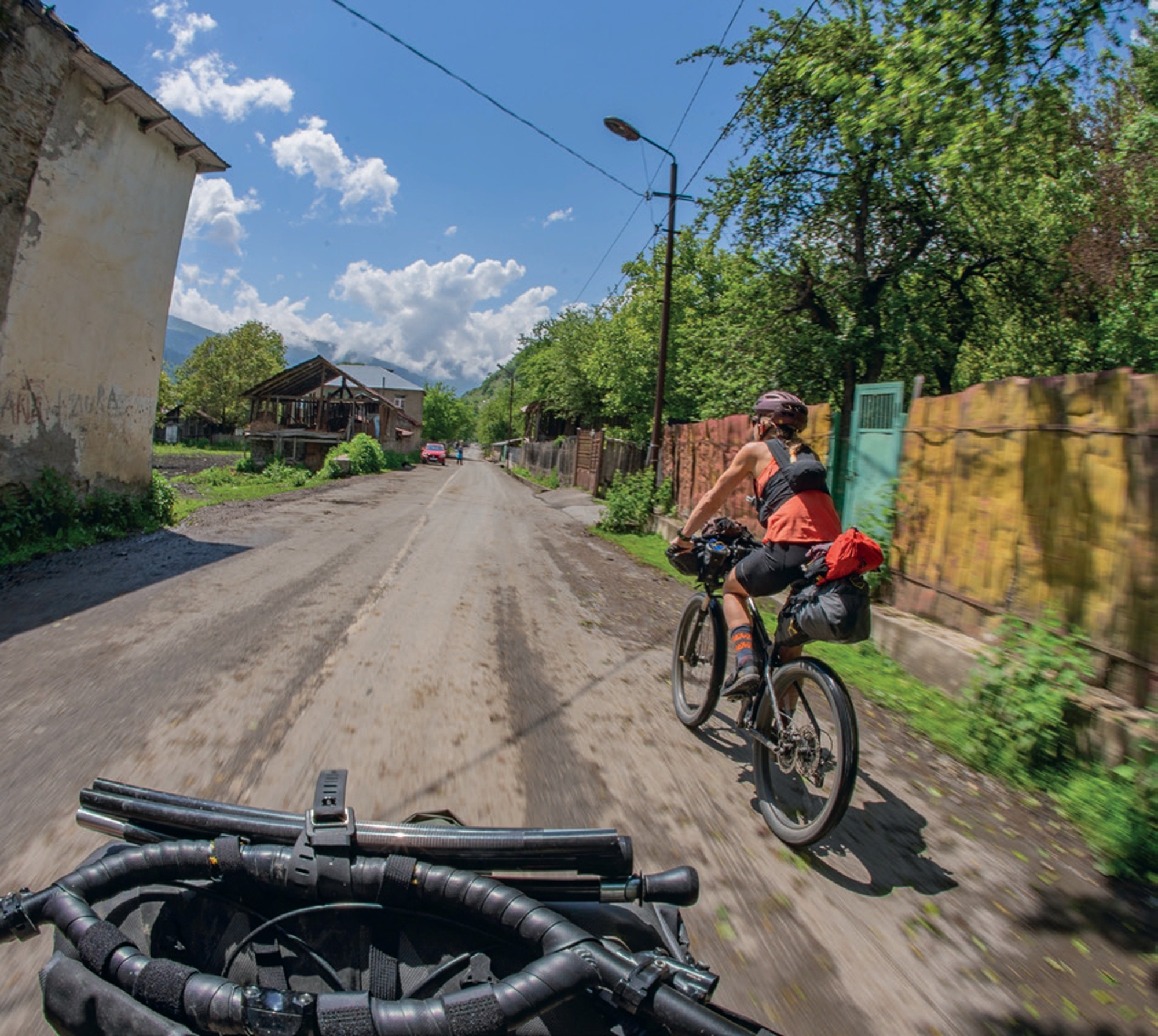
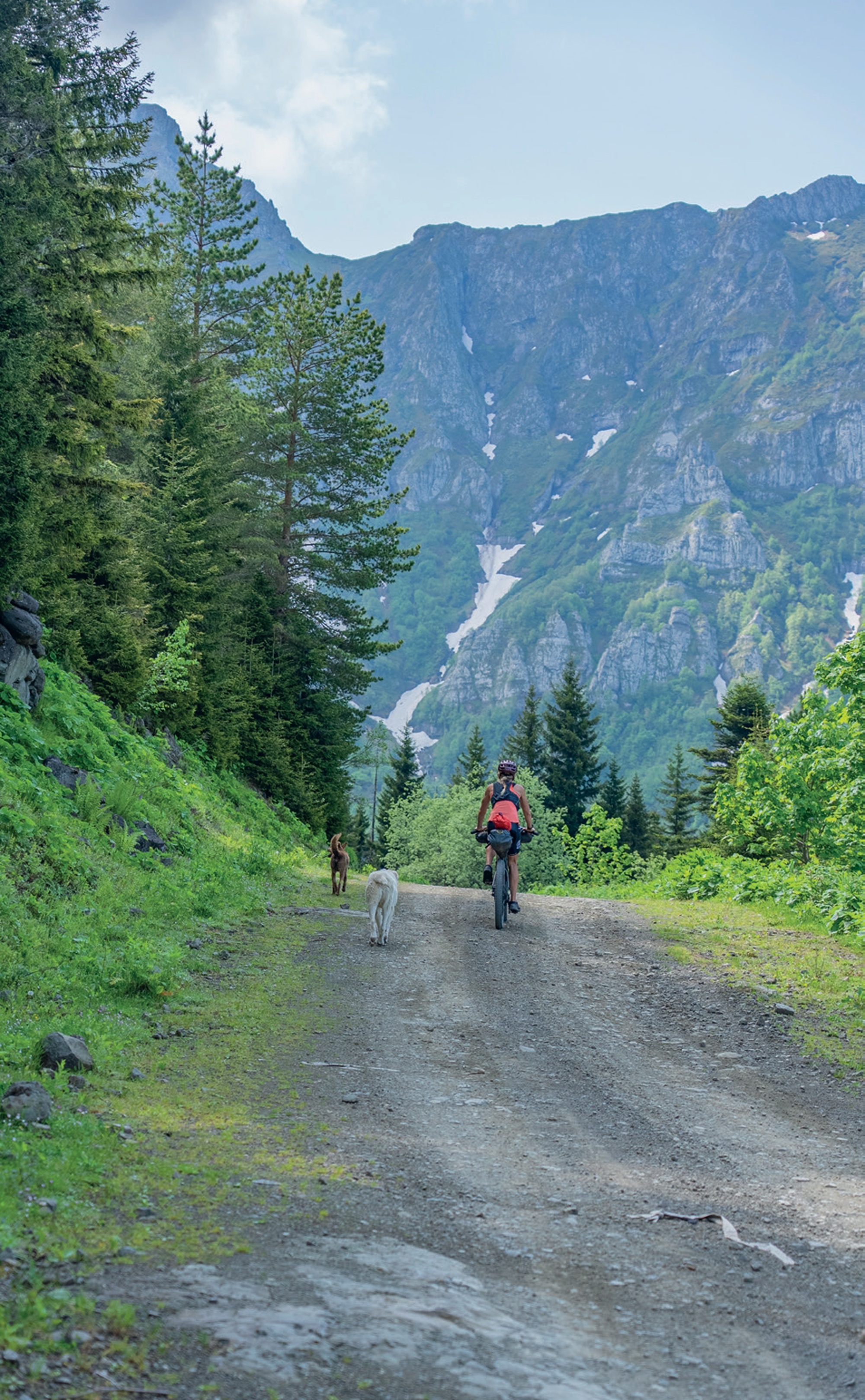
After a seven-hour train ride through the centre of the country, we arrived in Zugdidi; bikes prepped and bodies eager to begin. We kicked off the next morning and started riding uphill… for three days. This was a new experience for us, coming from NZ where the ascents are punchy but much shorter in duration. However, settling into a gradual, sustained uphill effort was a good way to let the mind slow down and start wandering into its more expansive creative mode. After only a day of riding through small farming villages and green fields, we hit the mountainous region of Svaneti and were treated to a combination of tiny ancient towns and grand mountain vistas. We were quite surprised at the number of paved roads in these areas. Our research was based mostly on blogs and articles written by cyclists who had ridden through Georgia five to seven years before us. There has clearly been a big emphasis on upgrading the infrastructure over that time, and many of the gravel or dirt roads have been sealed over in concrete. That’s not to say the mountain bikes were redundant though – we still encountered a good selection of alpine single track.
Recent history is written on the faces of the Georgian people. While the stone-cold expressions and staccato one-line answers gave a surly first impression, this quickly morphed into smiles and animated discussions about what the hell we were doing riding bikes in their part of the world. The generosity and hospitality of the Georgian people is legendary, and rightly so. They were not shy offering their encouragement as we made our way up one of the many climbs. The toot of a car horn, as we quickly learned, was not an angry admonishment of our presence on the road, but the precursor to an enthusiastic wave and shout of encouragement from the driver. We held many a discussion through an open car window and felt like our presence on the road was more a delight and curiosity to the locals, rather than an annoyance. While we were definitely in the minority (I think we spotted a grand total of three adults riding bikes during our three weeks), the drivers were generally courteous and gave us a wide berth. There was only one occasion, on the last day, when a van got a little close for comfort.
The furry inhabitants of the country were equally enthusiastic about our athletic endeavours. More often than not we had a canine chaperone (and, commonly, an entourage) on the road. Some dogs ran alongside for up to 30km before stopping to scavenge food in the next town. They were a ragtag of breeds and sizes, but the standouts were the enormous Tushetian sheep dogs, infamous for their ferocity when working security for the nomadic flocks of sheep. The pre-trip warnings of bear-sized dogs, adorned with collars of nails, had put the fear of God into one half of our party, and while most of the canines encountered were curious and amicable, we did have a few encounters with the professional guards when riding through the higher parts of the lesser Caucasus mountains. They take their job seriously and, when in a pack, they are a force to be reckoned with.
As we wound and climbed our way through the country, the different historical and cultural influences that have shaped the place started to reveal themselves. The punctuating 10th Century Svan towers are dotted right through the Upper Caucasus and are a modern-day reminder of a very different way of life. These impressive structures sit beside more horizontal, modern dwellings, creating an interesting juxtaposition of the old and new. These contradictions are everywhere in Georgia.
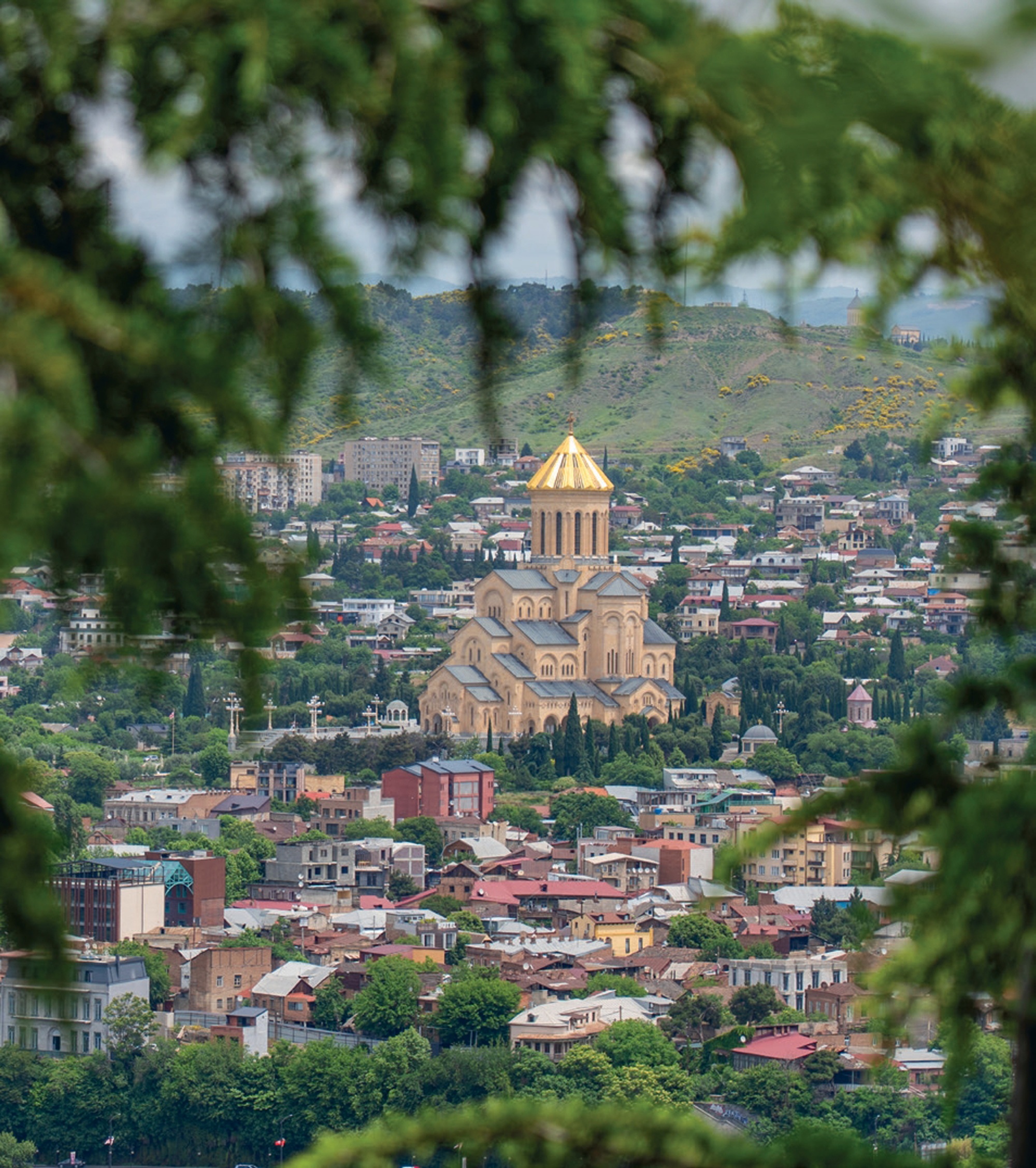
Centuries’ old buildings gradually succumbing to decay and disrepair will often have a brand-new European car sitting on the grass outside. We often found ourselves wondering what century we were in. One moment we’d be approached by a young boy who had ridden his horse to the local market to get supplies for his family (we politely declined the offer of a horse ride) and the next, another local drives past us on the rutted dirt road in his $200,000 V8 BMW. On that note, the vehicles in Georgia deserve further mention: although they seem to be a status symbol for Georgians, around 80% of the cars were missing the entire front clips and only retained the headlights and turn signals for obvious reasons. In the city, we did spot one vehicle missing its bonnet, bumper, guards on both sides, and the windscreen.
There is obvious wealth around, but much of the labour and day-to-day life is still achieved by manual means. It’s not uncommon to be riding past a local farmer in a paddock with a couple of horses and a wooden plough or see older women wearing traditional dresses and bonnets, planting for the coming season. On more than one occasion we had our various snack purchases tallied up on an abacus.
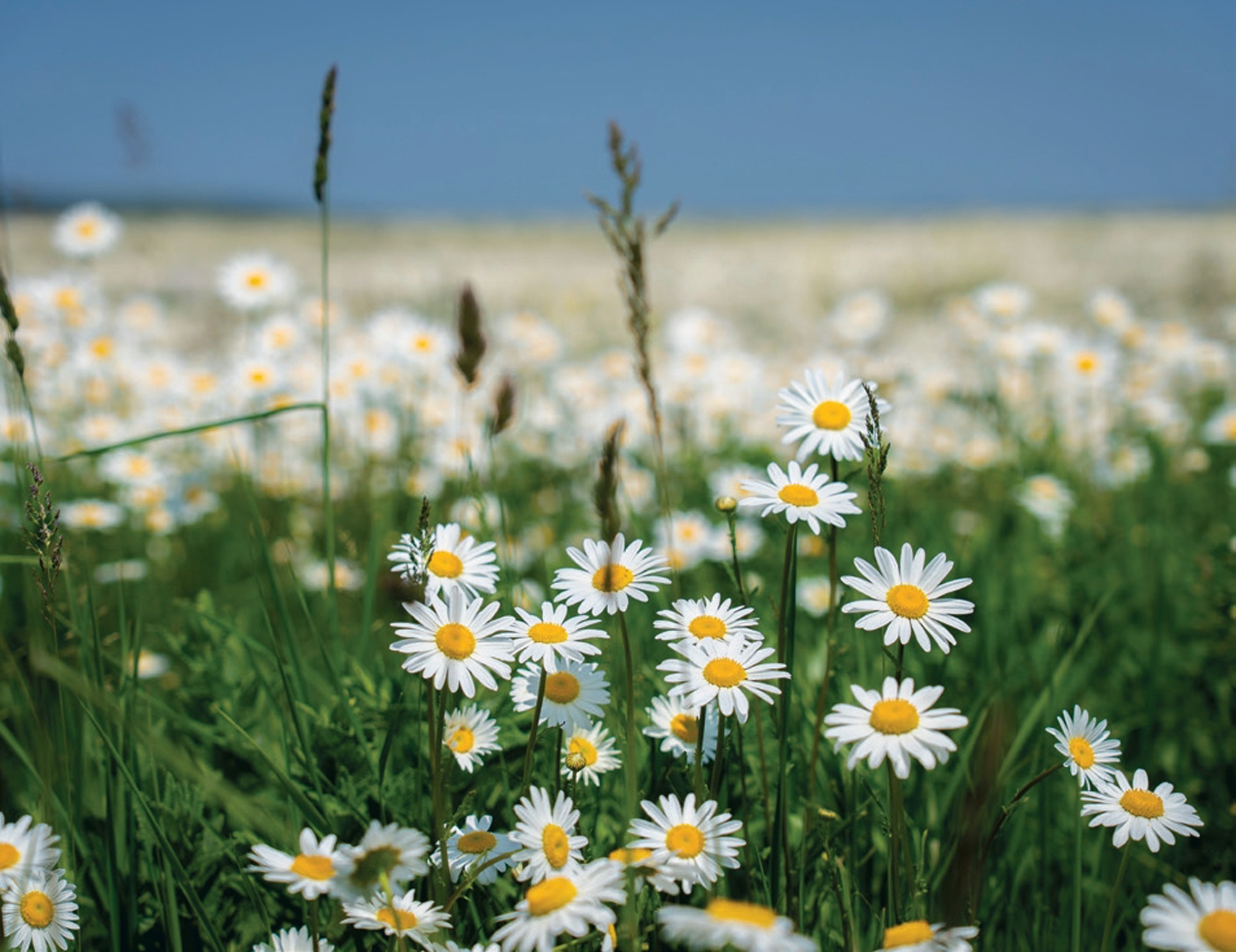
The Georgians have a real affinity for the land and retain a symbiotic relationship with their natural surroundings – something that’s been ditched by other cultures in exchange for maximising productivity. This is reflected in the quality of their produce, which was always fresh and absolutely bursting with flavour. We also travelled through fields and fields of wildflowers: a rainbow carpet that contrasted beautifully with the often-clear blue skies and lush green grass. The bird and insect life was astonishingly plentiful and ever- present, and reminded me of waking up as a kid in NZ to the dawn chorus, something I really miss.
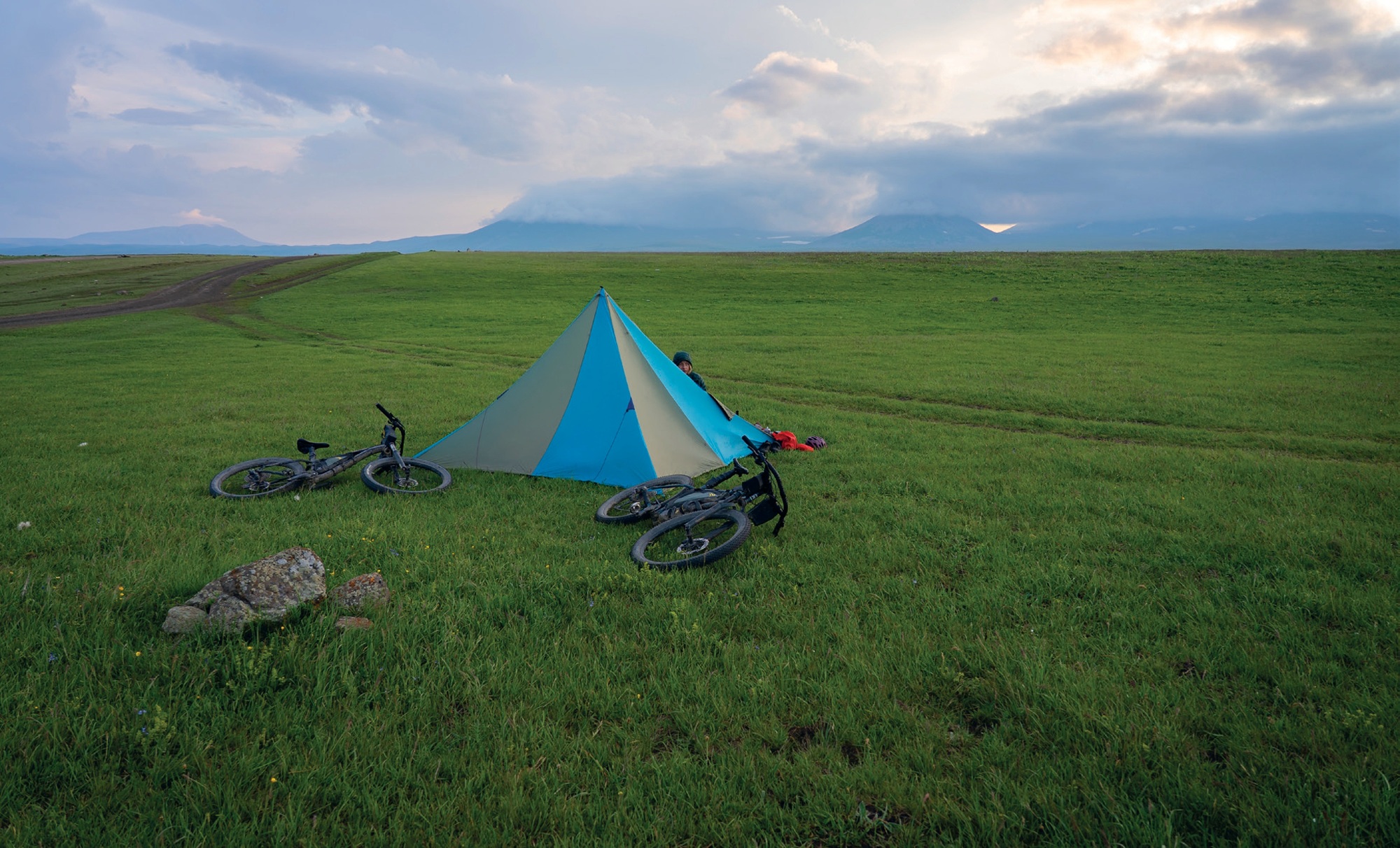
The geography of Georgia makes it an enticing destination for the cloud spotters and mountain lovers among us. Nestled between the Caspian and Black seas, with a valley linking the two and mountain ranges to the north and south, the wind either blows east or west and the frequency of the thunderstorms is very high in the summer, given the proximity to large bodies of water and high mountains. While we started our travels reasonably early in the season, we still encountered our share of inclement weather, including one day when we were chased up one of the passes by the morning storm. Just as we reached the top, the heavens opened and despite rapidly donning all of our layers and rain gear, our attempts to stay dry proved futile. It made for a soggy and very cold 2000m descent.
Camping was an easy affair; there were many places to lay a weary head for the night. Often staying high up made for a beautiful sunset amongst the mountains, fir trees and flowers. We were never asked to move on, and having a fire at each campsite was a novelty we don’t often get to experience these days in NZ.
Georgia’s people vary from the colder Russian-esque people in the northern Caucasus to the warm and affectionate Armenians in the lesser Caucasus. What didn’t vary was their generosity and eagerness to help; we were saved from several sticky situations (such as missing our train on the first riding day) by the assistance of locals. Many of the guesthouses we stayed in provided us with home cooked food, which was plentiful and often offered to us free of charge. The food was outstanding, from huge broth- filled dumplings, freshly baked Khachapuri, to cockle-warming spicy beef stews. We definitely ate our fill and often washed it down with home-made wine or cha-cha, the local – and lethal – moonshine. On one occasion, we inadvertently crashed a wake, but instead of being turned away from the café, we were welcomed in and fed plate after plate of delicious, traditional Armenian food. We were often ambushed by children running out from the fields or in the streets, wanting a selfie or a chance to practice their English. While eating lunch, we were sometimes surrounded by a crowd of curious and friendly onlookers, watching us masticate our way through the endless cucumber and tomato salads.
From the jaw-dropping scenery and the deep and complex history evident everywhere you look, to the warm generosity of the people and the fresh and abundant food that powered us through our ride, Georgia is a place of extremes, delights, and compelling contradictions that stole our hearts and took our breath away. We’ll be back in the future to explore more of this stunning country. It’s a big, high, beautiful place that I think you should visit should the opportunity arise.