Words Lester Perry
Images Various
Visit Ruby Bay, just east of Nelson, and chances are you’ll find laidback holidaymakers chasing golden- sand beach vibes, whale spotting from the shore, taking in winery tours, or perusing local artist galleries. There are some stellar cafes too. If you’re to visit over the NZ Christmas holiday period, though, and your timing is right, you’ll likely spot one of the area’s local pro cyclists out training.
George Bennett and Finn Fisher-Black have been the highest-profile drop-bar riders in the region for a time, both racing on the road World Tour; but there’s a newcomer turning heads locally and abroad, and while he shares a similar handlebar style sometimes, the roads on which he’s racing are unpaved.
What neither of the pros above can claim is that they’re exceptional on a unicycle or that they played the flute in the school orchestra, two things which prove just how diverse and interesting Cameron Jones really is.
Hailing from Ruby Bay, Cameron Jones has just wrapped up his first full season racing the Lifetime Grand Prix Series (LTGP), a race series in the USA that brings together a handpicked field to race alongside all-comers, at six high-profile off-road events across the country. From the high elevations of the Leadville Trail 100, to the two-hour smash- fest at Chequamegon, right up to the nearly 9-hour slog through the Flint Hills of Kansas during Unbound Gravel, it’s a diverse range of events on both gravel bikes and mountain bikes, with riders free to choose their weapon for each course.
Cameron had been racing mountain bikes across the globe for the previous few years, chasing the World Cup dream, but only recently did his focus broaden to include gravel racing. In the span of just two years, he’s risen from racing his first gravel event to winning the highest profile series on the global gravel and off-road calendar. Not only did he take this highly coveted win, but he did so in true hardman style, with a sprinkle of typical kiwi do-it-yourself attitude.
While he’s somewhat of a newcomer to the ‘gravel’ scene, his interest in racing endurance and off-road events goes way back to his earlier days at Waimea College, when at the age of just 16 he followed in his father’s footsteps and aimed to complete the Coast-to-Coast. Not only did Cameron finish the race, he also became the youngest person to win the infamous two-day multisport event.
“The year before, I’d done it as a team – I just did the kayaking leg – then it was actually up at the 3D Rotorua Festival that I got an entry. One of the spot prizes from that was an entry into Coast to Coast. And so out of the 500 people or something, I won that. I think it was rigged! I think Richard Ussher (pro- multisporter) just gave it to me. And yeah, 16 was the minimum age to do the two-day event. I guess growing up, I was in a sort of community like family, friends and stuff that had surf skis, so I learned to paddle a skinny boat. I’d always done a bit of cross- country running through school, and cross-country mountain biking was my main event then too.
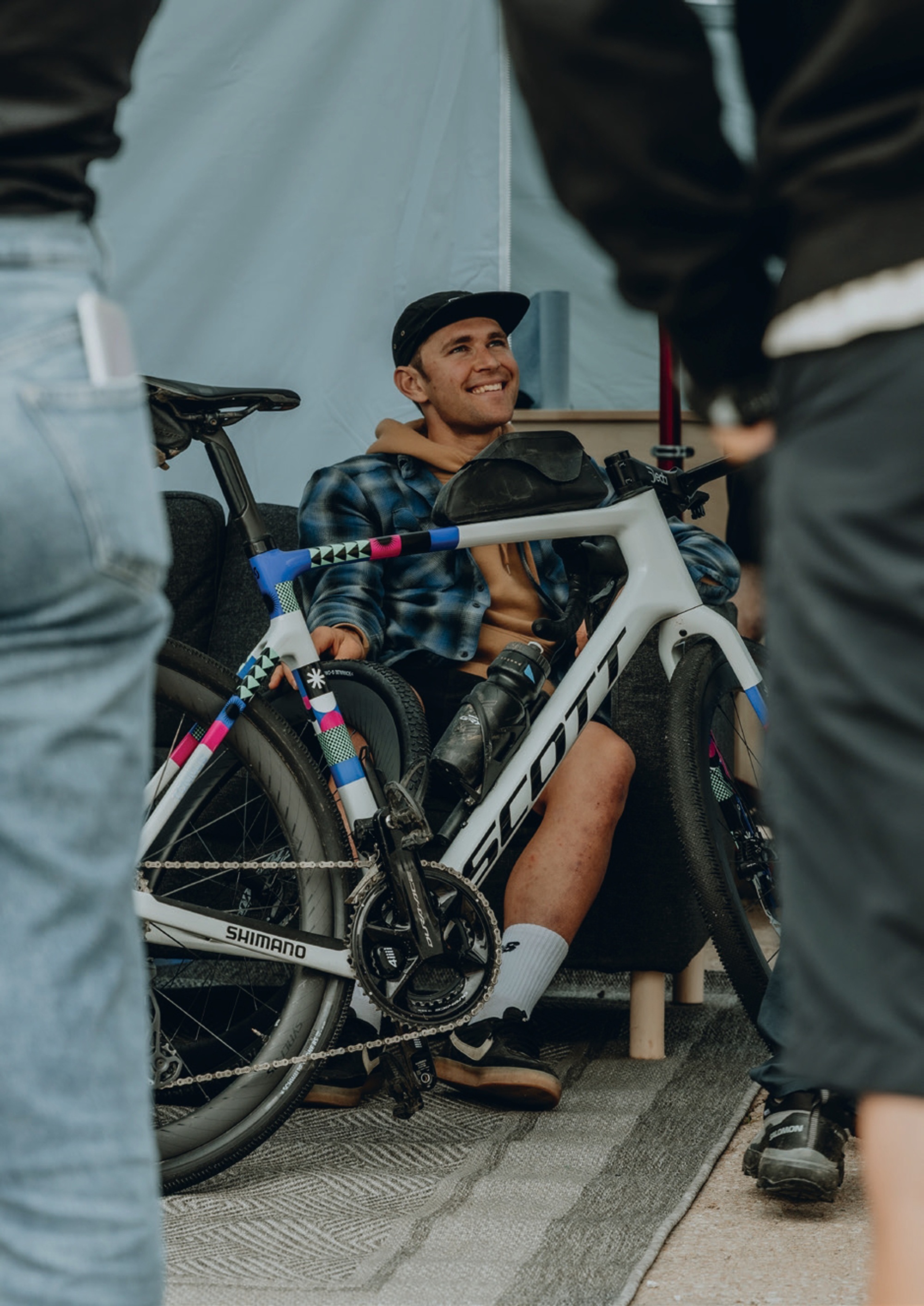
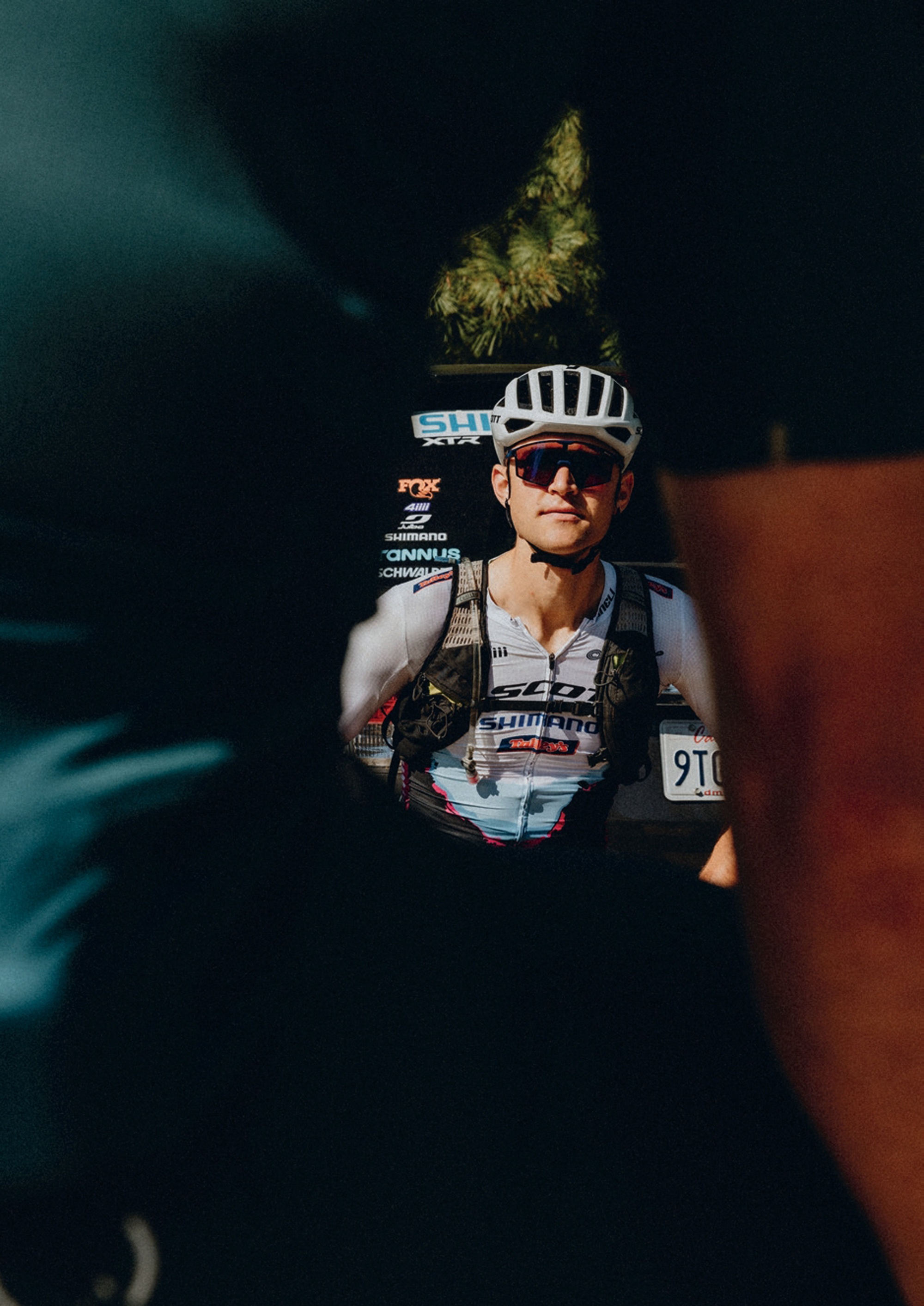
“So, I had all the parts of Coast to Coast under my belt. I guess I was in high school then, so I had a fair bit of time to train and do some part-time work. It was my first summer of doing training on a training plan. Before then, it was just random. You just do what you feel like, just weeknight races and stuff. But that was the first time actually training properly, I think it was around 18-hour weeks on average.”
Winning the Coast-to-Coast remains one of Cameron’s proudest moments and, at the time, the win made him realise that endurance sports would be part of his life going forward. “Coast to Coast, and the training that went into it, showed me how – with endurance sports – you get out what you put in. It’s quite rewarding stuff.”
Once Coast-to-Coast was done, mountain biking became his primary focus. After gaining success locally, he decided he wanted to go all-in to see where he stacked up on the global stage, rather than just local (albeit high-profile) multisport events like Coast. “I think if I hadn’t chased the XCO (Cross Country Olympic) stuff, I’d always be wondering how I would have gone.”
A Covid-disrupted first season in Europe found a masked-up Cameron catching trains and hitching rides between races, with no team support and not many connections in the area; it was up to him to make it all work through half a season of World Cup racing. Year two was slightly more successful, having the support of the ‘Kiwi MTB collective’ team, but even that was not without its challenges.
After a couple of years chasing the XCO dream, Cameron realised he was travelling to a load of amazing venues to compete, but the reality was that the race day itself just wasn’t really fulfilling for him. It was the days after the race, when he could go on big rides and explore the mountains surrounding the race venues, which were really what he came to enjoy.
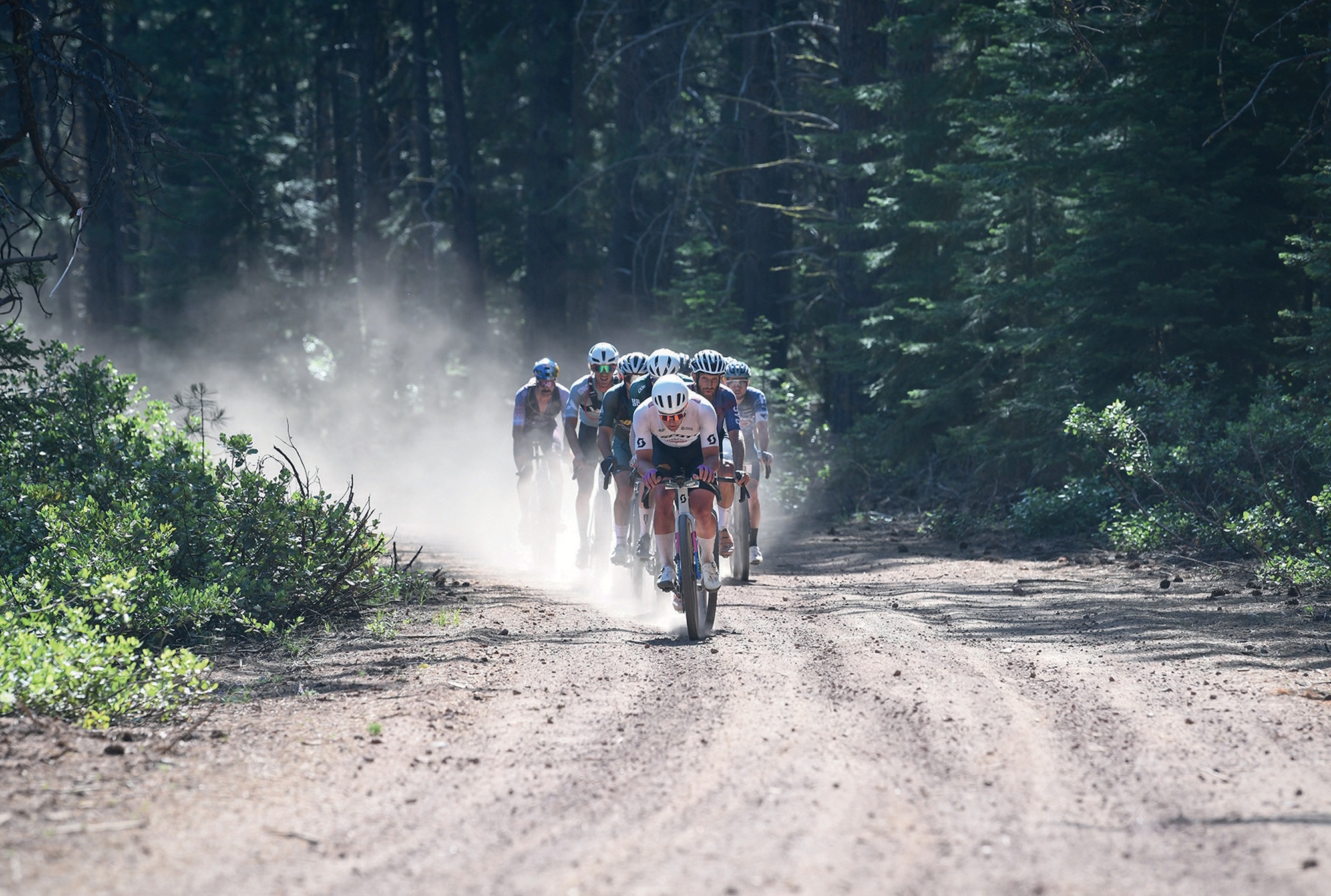
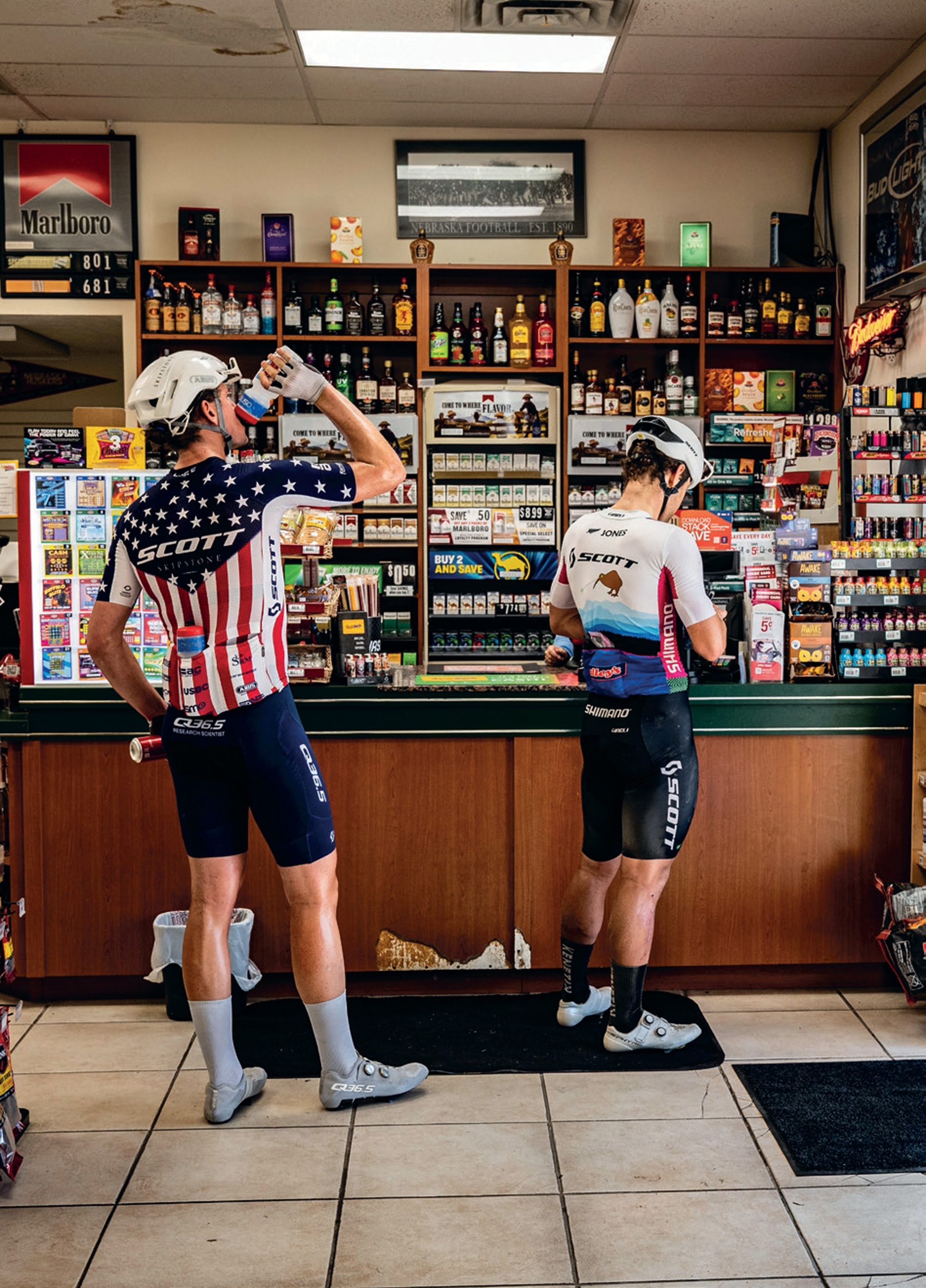
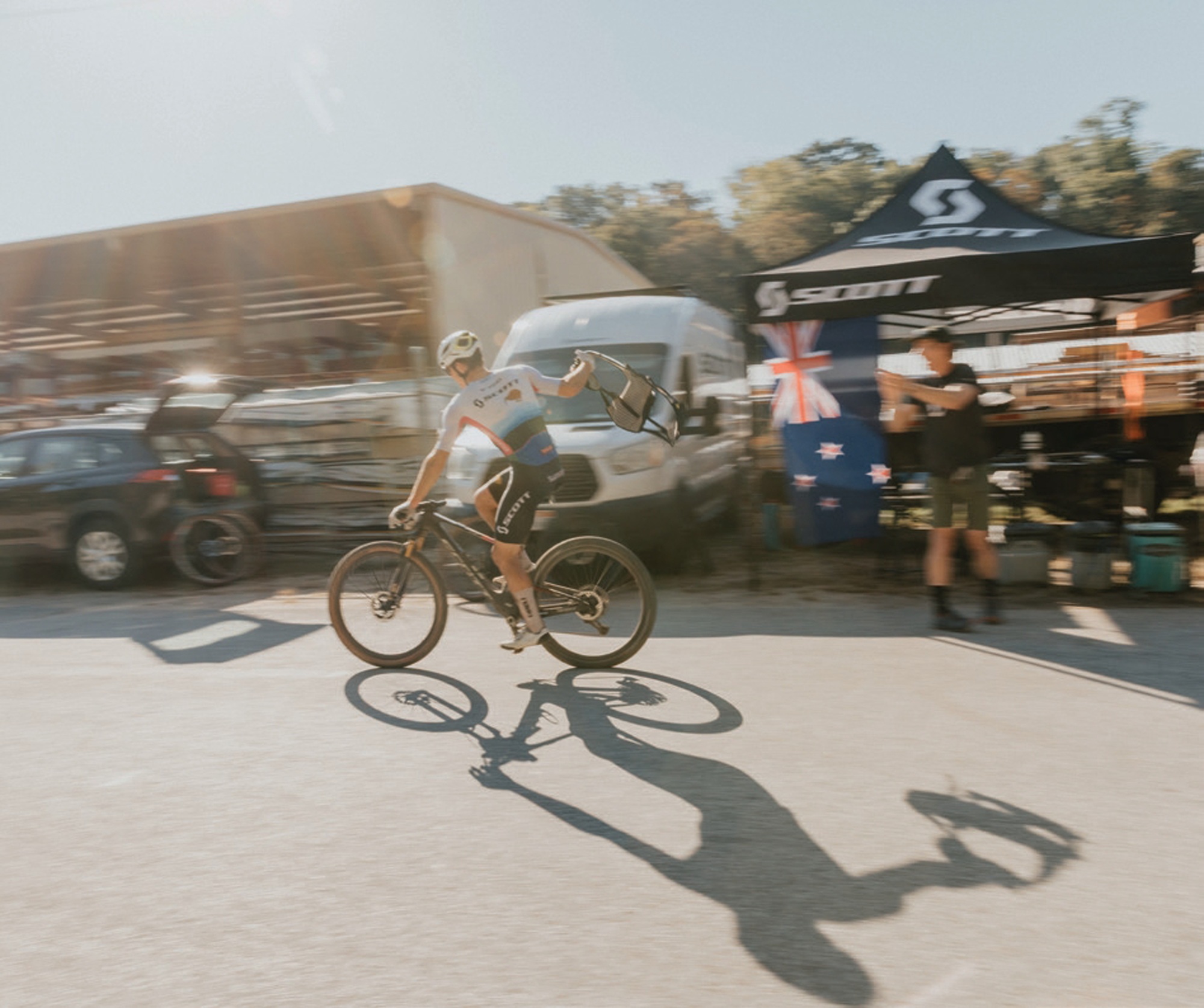
Finishing the 2023 northern hemisphere season after a tumultuous time, Cameron returned to NZ. “You could probably do a whole article on that season. It was pretty hectic, various mishaps.” Carrying his form into the Labour Weekend Whaka-100 MTB race in Rotorua, he finished second with a strong ride just behind winner, Ben Oliver.
A couple of weeks after Whaka, aboard a bike borrowed from a local bike shop in Nelson, Cameron went north to Te Uku, just out of Raglan, for his first gravel race: the unofficial “Gravel Nationals”. In classic fashion, Cameron drilled the field, taking the win despite his lack of gravel experience and bike setup knowledge, even running over 40 PSI in his tyres, something he now has meticulously dialled to a much lower number.
By the end of 2023, Cameron had acquired his own gravel bike and got another couple of gravel races under his belt, with wins at the 126km West Coast Wilderness Trail Race, from Ross to Greymouth, and NZ’s biggest gravel event, the 248km Edition Zero in Waimate.
Enjoying these longer, more adventurous single- lap events, rather than shorter XCO, multi-lap style, Cameron looked offshore for his next adventure in 2024. With gravel events gaining profile and popularity, he set his sights on the USA, inspired by fellow Kiwi rider Sam Shaw’s “just go and do it” attitude: no vehicle, no plan, just some races pencilled on a calendar.
In 2024, Cameron headed to the US for the first time, on a four-month tourist visa, to race a varied calendar of road, XC and gravel races. The Tour De Bloom road tour kicked off the season, laying a solid fitness foundation before he headed to the 100km MTB race, the Sea Otter Classic. Cameron immediately turned heads with his powerful, attacking style, finishing an eventual 8th at Sea Otter amongst a field stacked with the 2024 LTGP riders.
Next up was Cameron’s first Unbound Gravel experience; he considers it more of a learning experience than anything, but his 17th-place finish confirmed to the competition that he was one to watch at future events. By his own admission, although he didn’t nail his bike setup or nutrition, the experience not only helped him get these things sorted but also gave him a good understanding of other riders’ strengths and weaknesses.
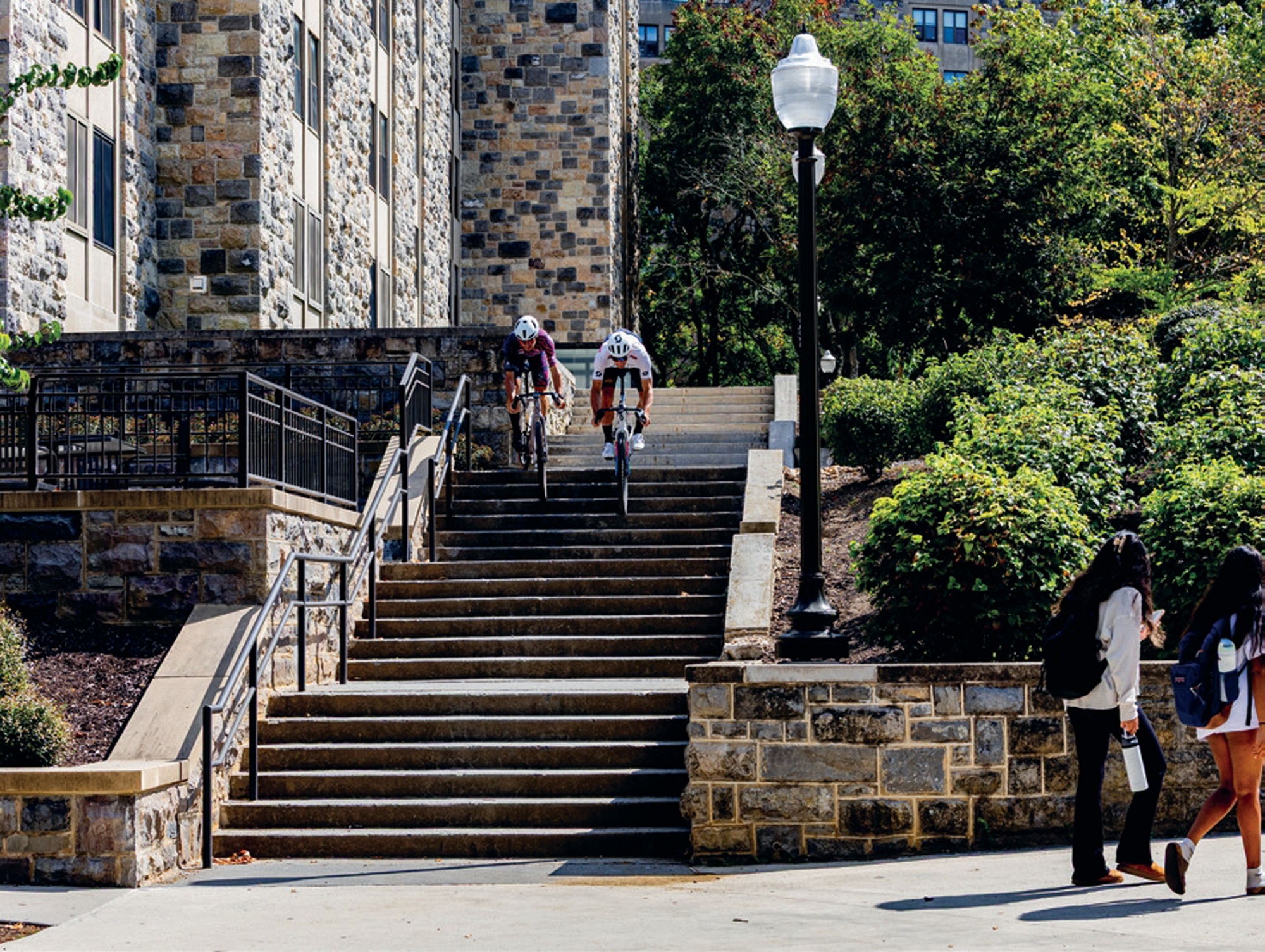
The tail end of his US season saw Cameron combine chasing podiums with a semester of study at Virginia Tech in Blacksburg, Virginia, a town which would become his home-away-from-home.
“I definitely recognise that year, compared to all my other years racing. I’m sure a lot of the top roadies and mountain bikers speak to being homesick at times, and when you’re always on the road and just racing and training, that’s all that’s on your mind. I felt that when I was in Europe, and even to some point when I was in the States last year, all I had to do was ride my bike. But now, to start having some local non-biking friends and have more of a normal life off the bike, I think that helped my performance that year.”
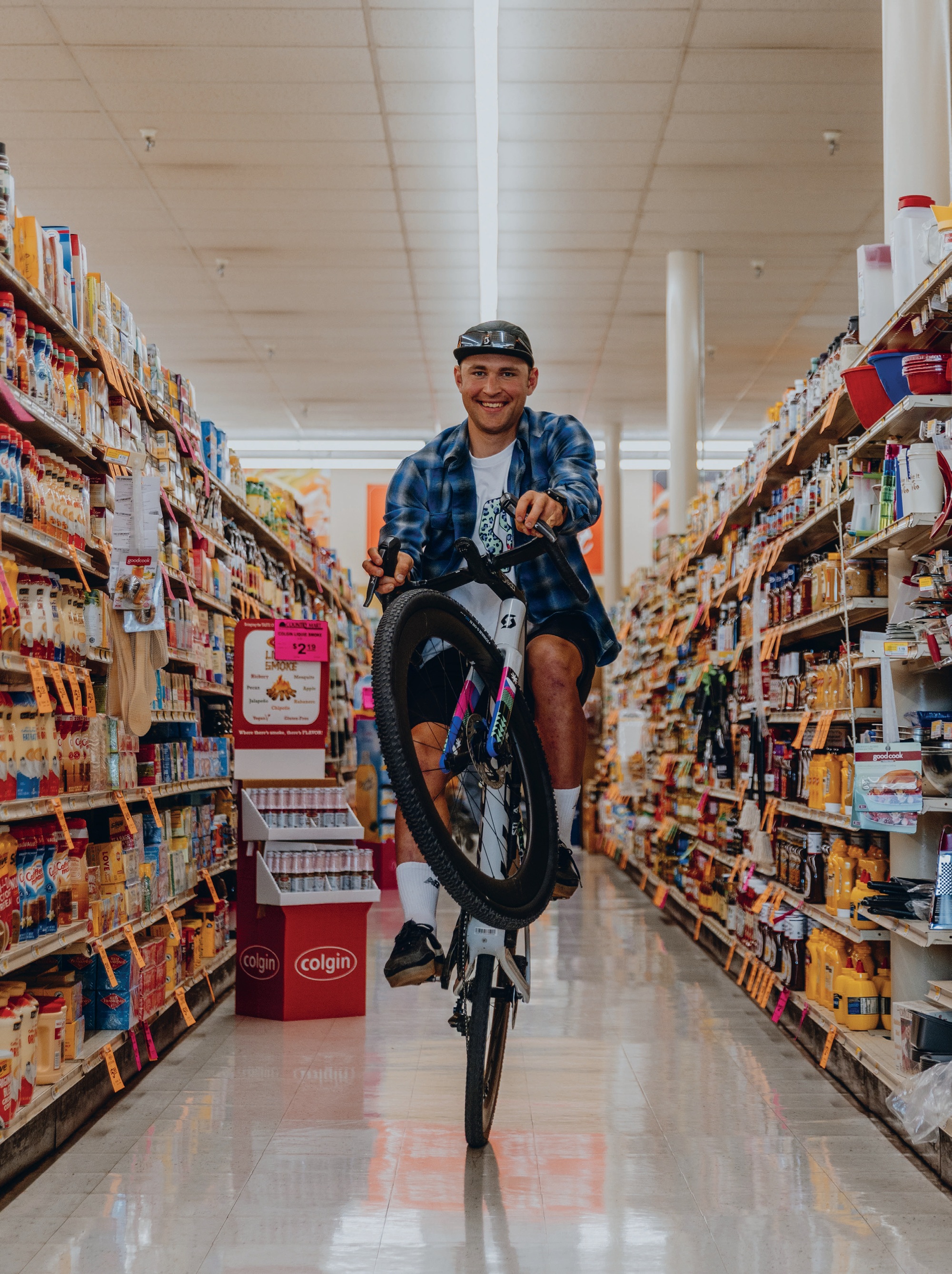
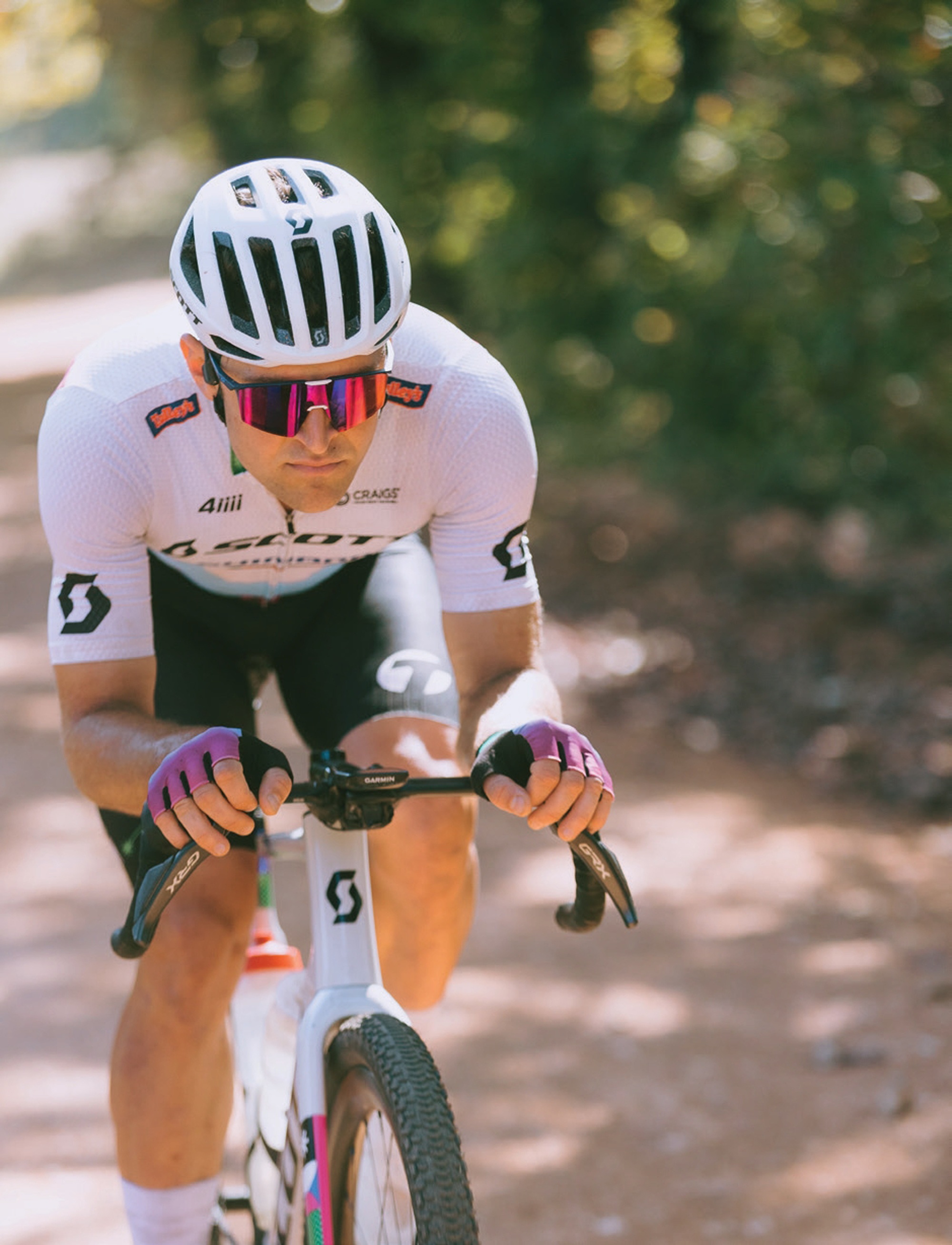
The end of 2024 would bring a close to Cameron’s four-year degree in Forestry Engineering at Canterbury University, a subject he pursued largely because of its links to mountain biking. The MTB meccas of Nelson and Rotorua are based around the forestry industry, so he figured it could be a handy qualification to have. What could be better than living in one of those towns, with a company Hilux and a key to the forest? Not much, in Cameron’s eyes!
Cameron’s coach, Mark Leishman, aka ‘Cabin’, had some stellar comments about Cameron: “It feels cliché to say, but it really is a privilege to be able to play a role in Cameron’s journey. While I’ve been on board for four years now, I was already a fan of his in the preceding years. Super genuine, friendly, and humble; he’s a guy you just want to help. Seemingly, no barrier is too large for Cameron, and he’ll always find a way. But his casualness also belies an intense focus that drives him day to day. That “lazer kiwi” on his 2025 race kit is a perfect representation of Cameron and his approach. His ability and desire to tolerate huge workloads never cease to amaze me, and I often find myself second-guessing the sanity of what we’ve planned. But it works. To paraphrase a great piece by Ben Kepes in the Christchurch Press: More often than not, greatness isn’t built in fancy facilities or from deep pockets. But from humble circumstances and tight budgets, by people who simply care too much to stop trying. And quite simply, Cameron won’t (and doesn’t) stop trying. No matter the odds.”
For 2025, Life Time announced a Wild Card entry system to the Grand Prix series, allowing those riders who had applied but weren’t selected a second chance at selection. The three highest- ranked riders after Sea Otter (round 1) and Unbound Gravel (round 2) would secure themselves a Wild Card entry for the remainder of the season. After missing out on selection through the first round of series entry, Cameron’s focus for the early season became securing himself a Wild Card. He knew the LTGP series was where he should be, as did most of his competition.
Cameron immediately turned heads with a strong showing at the opening round, the Sea Otter gravel race, finishing a credible 12th place and crucially securing points against his Wild Card competitors.
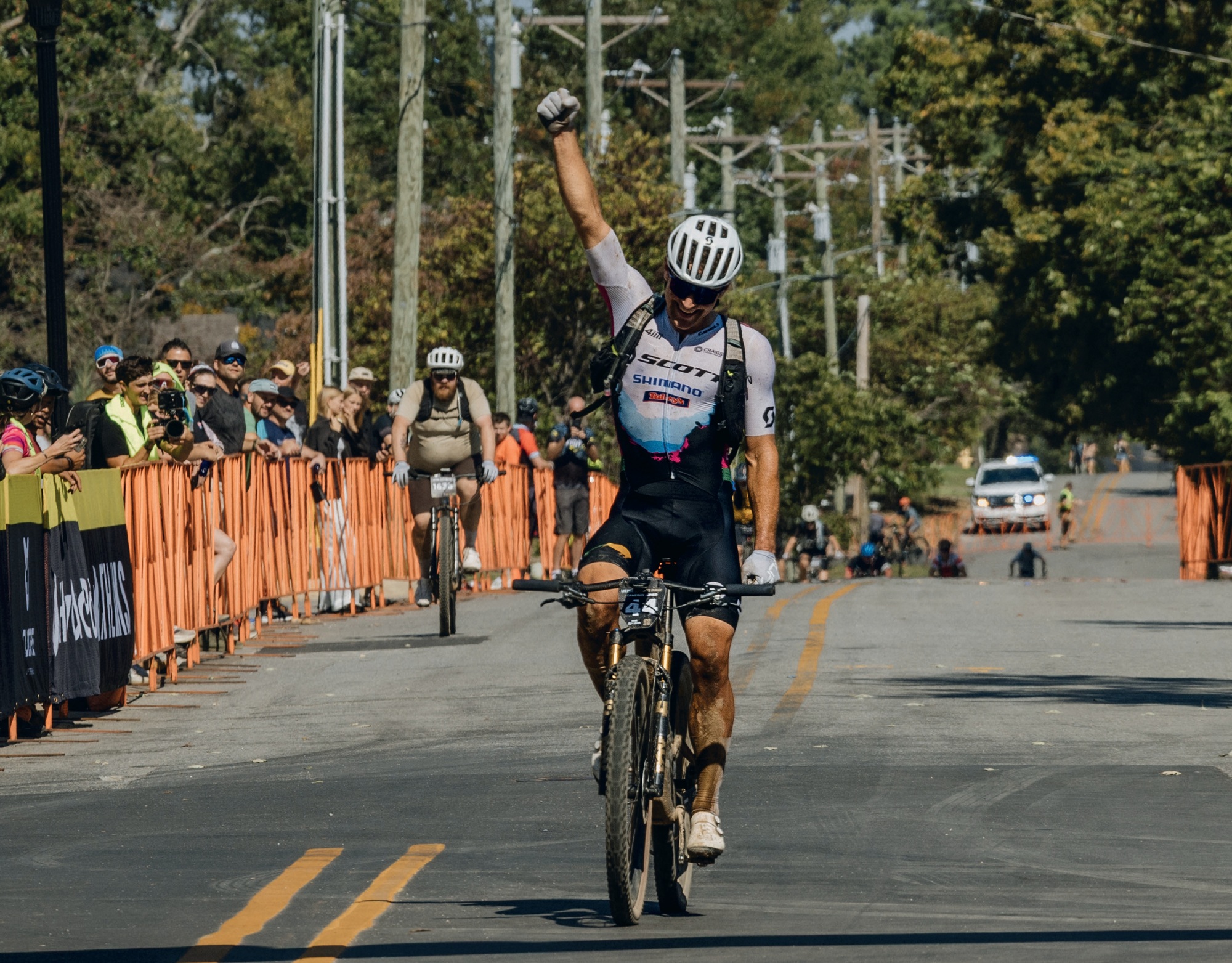
Round 2, Unbound Gravel was where it all really fell into place for Cameron. With learnings from the previous year under his belt, and confidence in his abilities, he pushed the pace early, essentially riding away with one other rider; no one else confident that this could be a worthwhile move, that could go all the way to the finish. Jones and his breakaway companion, 32-year-old Swiss rider Simon Pellaud, broke free of the main peloton just 80 kilometres into the 320km day. With the race favourites still in the main group and a lack of cooperation amongst them, Cameron and Simon pulled away, trading strong pulls for the remainder of the day. To outsiders, including myself watching the live-stream, it looked like Simon may be playing tricks he’d learned from his time in the pro road peloton, forcing Cameron to take longer pulls on the front to save his own legs for the finale. As the duo approached Highland Hill – the final kick towards the finish, Cameron dug deep one last time, distancing Simon. With no answer from Simon, Cameron rode away for a historic win, establishing a new course record of 8:37:09, smashing the previous record of 9:11:47 set by Lachlan Morton in 2024.
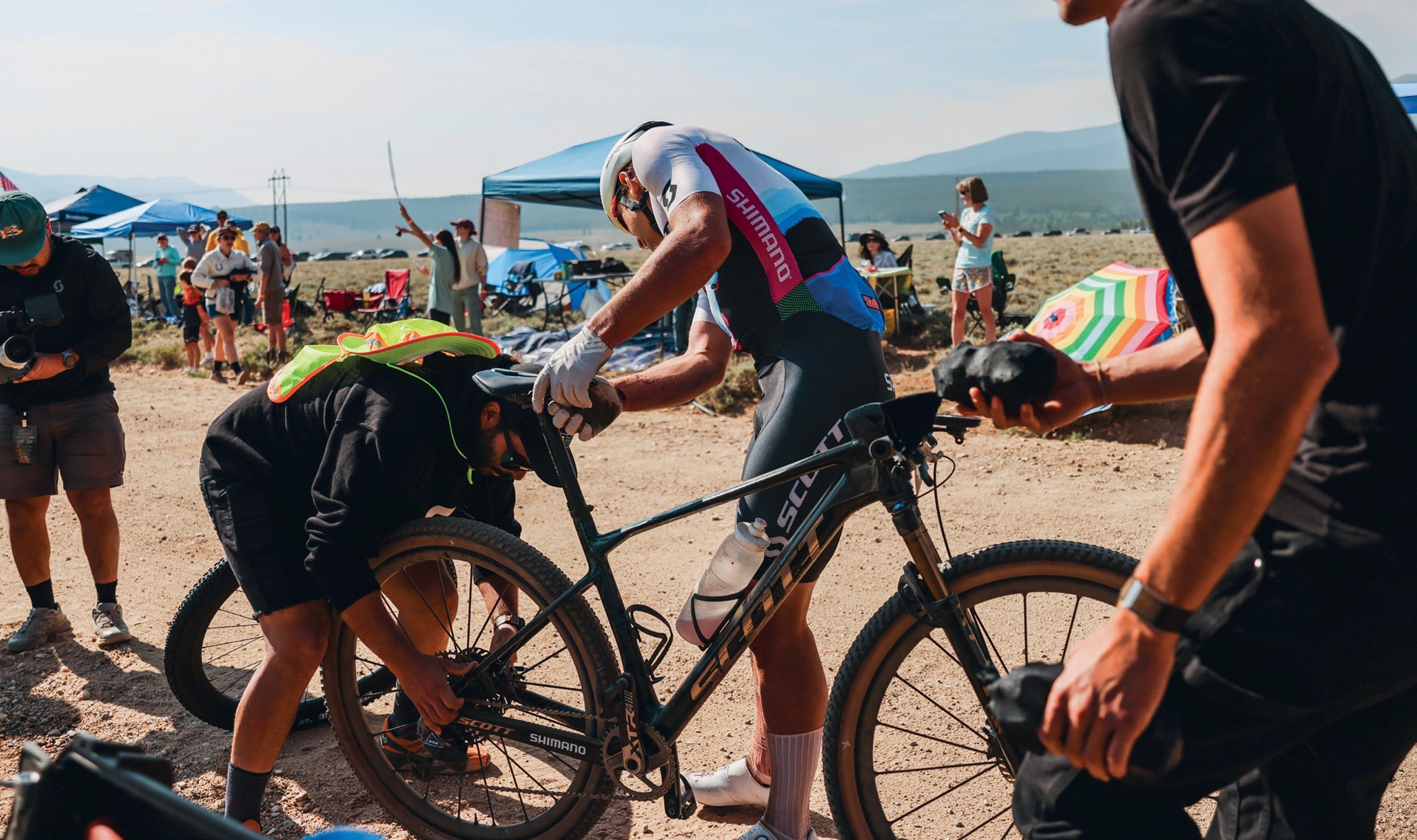
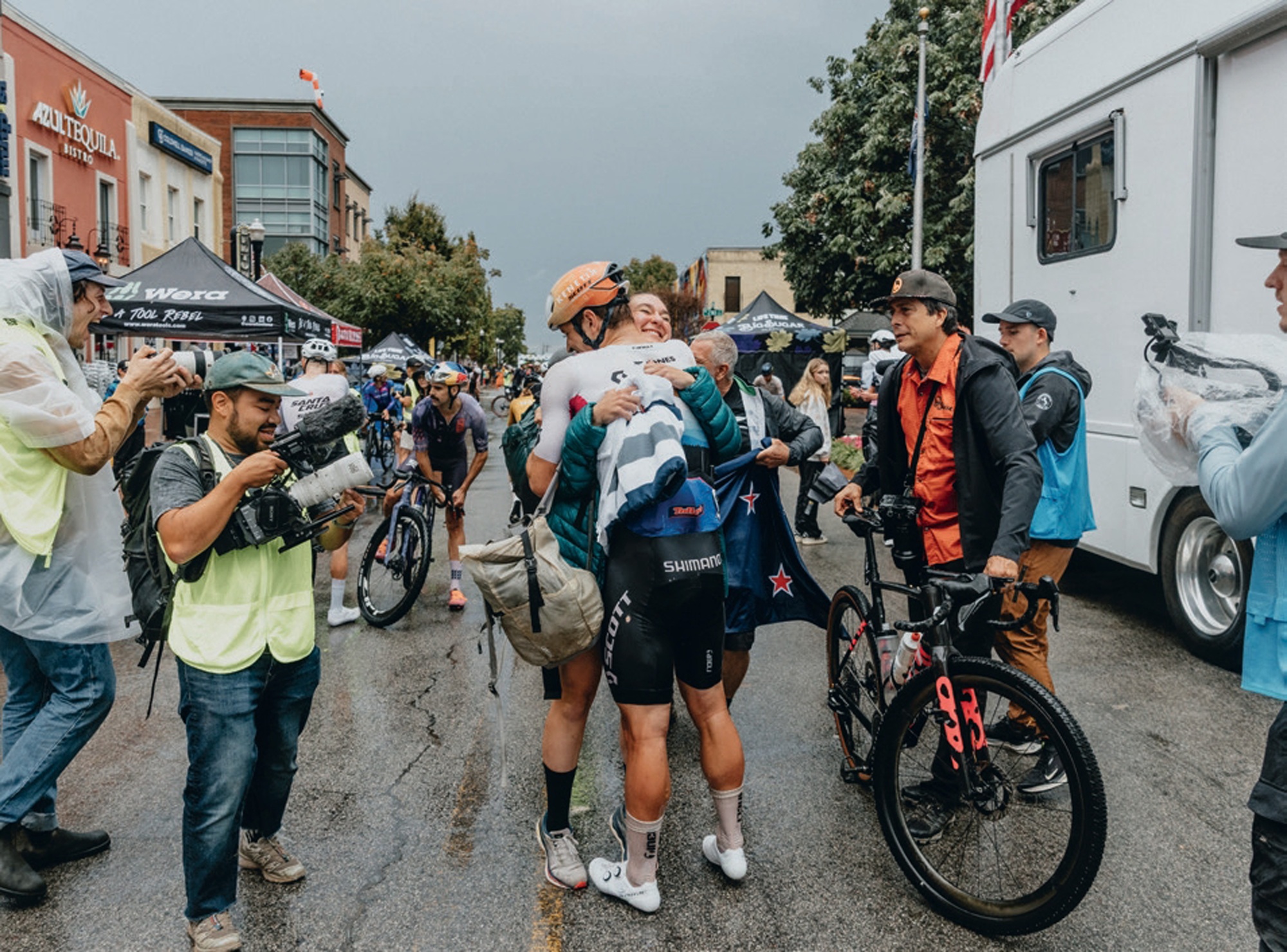
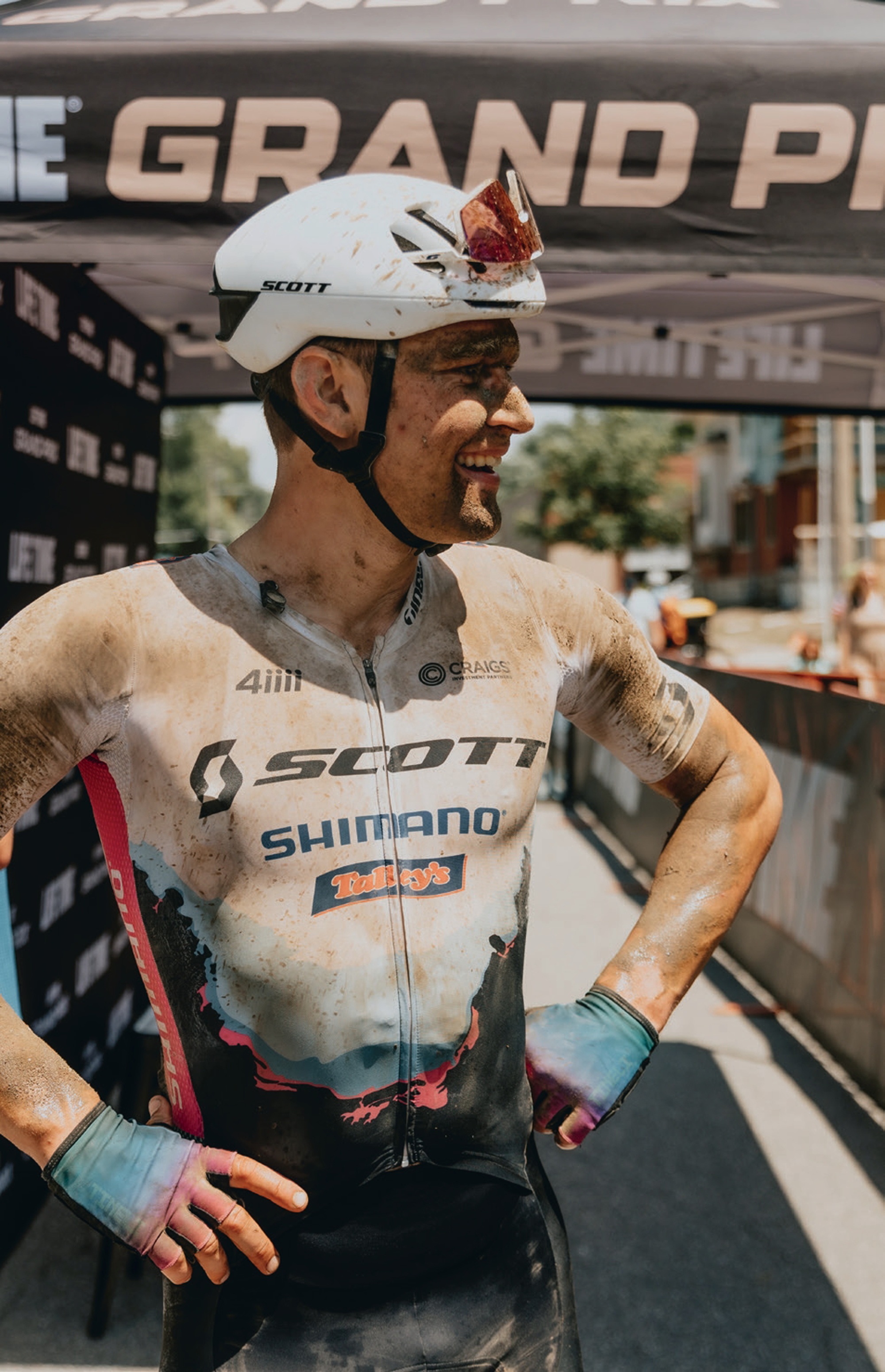
The win didn’t come for free; leading into Unbound, Cameron had put in some impressive hours of training: “With this gravel stuff, nothing’s really bad training. If you’re doing shorter stuff like XCO racing, maybe it’s a bit more important to do really specific efforts, but you can kind of get away with anything when you’re doing this longer racing. Since I’ve started racing, every year I’ve just done more and more volume. Once I phased out doing the multi-sport stuff, my volume on the bike’s just gone up and up, and every year I’ve got better and better. I’ve got to a point this year, when I’ve been able to do it full-time, that I don’t need to add more volume, maybe just get more specific. You have to start seeking other ways to improve, improving the quality and the recovery. Before Unbound at the start of the year, I did half a dozen 30-hour weeks. I’m able to tolerate that kind of training load, and I’ve improved as I’ve continued to do more and more riding.”
Cameron’s record time and power numbers raised eyebrows, but his fuelling strategy was equally impressive. Having learned the hard way, in 2024, that Unbound is as much about hydration and fuelling as it is about physicality, Cameron was sure to put his learnings into action during the ‘25 edition.
“I think a lot of people had enough food at Unbound, but you’re sweating so much, you’ve got to keep the fluids-to-sugar ratio at the level that you can stomach. At each of the two aid stations, I was picking up five or six litres of water,” explains Cameron. Just like back in NZ, it was his parents who were handing him his bottles; they’d taken a trip to the US to support Cameron through his Unbound adventure.
His hydration and fuelling strategy was relatively simple; he wore a hydration pack on his back, filled with “just some sodium”, and the multiple bottles on his bike were filled with a homemade, yet proven, concoction of maltodextrin and fructose powder. To maintain his 37kph average speed at a gargantuan 295 watts average power for the 9+ hour duration, alongside a total of almost 13 litres of liquid, Cameron consumed in the vicinity of 195 grams of carbs per hour, mainly in liquid form. That’s equivalent to around 1800 grams of sugar in total!
His fuelling strategy ultimately paid off. Pellaud, his breakaway companion, had dropped some gels in the latter part of the race, meaning he’d run short of fuel and wasn’t able to maintain the pace of Jones, who continued to fuel effectively until the end.
The win wasn’t a stroke of luck, or a case of the field not knowing what he was capable of; it was a culmination of the years of training and all the events he’d done prior, giving him the knowledge for how he should fuel best for his body type, his equipment choices and some knowledge of those riders around him.
Crucially for Cameron, his Unbound Gravel win secured him a wild card: his ticket to compete for overall points and placings in the remaining rounds of the LTGP for 2025. For Cameron, it was game on! But first, a return to one of his favourite events: the Oregon Trail Gravel Grinder, a five-day gravel stage race. Cameron racked up two stage wins and three podium finishes and capped a stellar week with the overall win, proving his Unbound domination was no fluke.
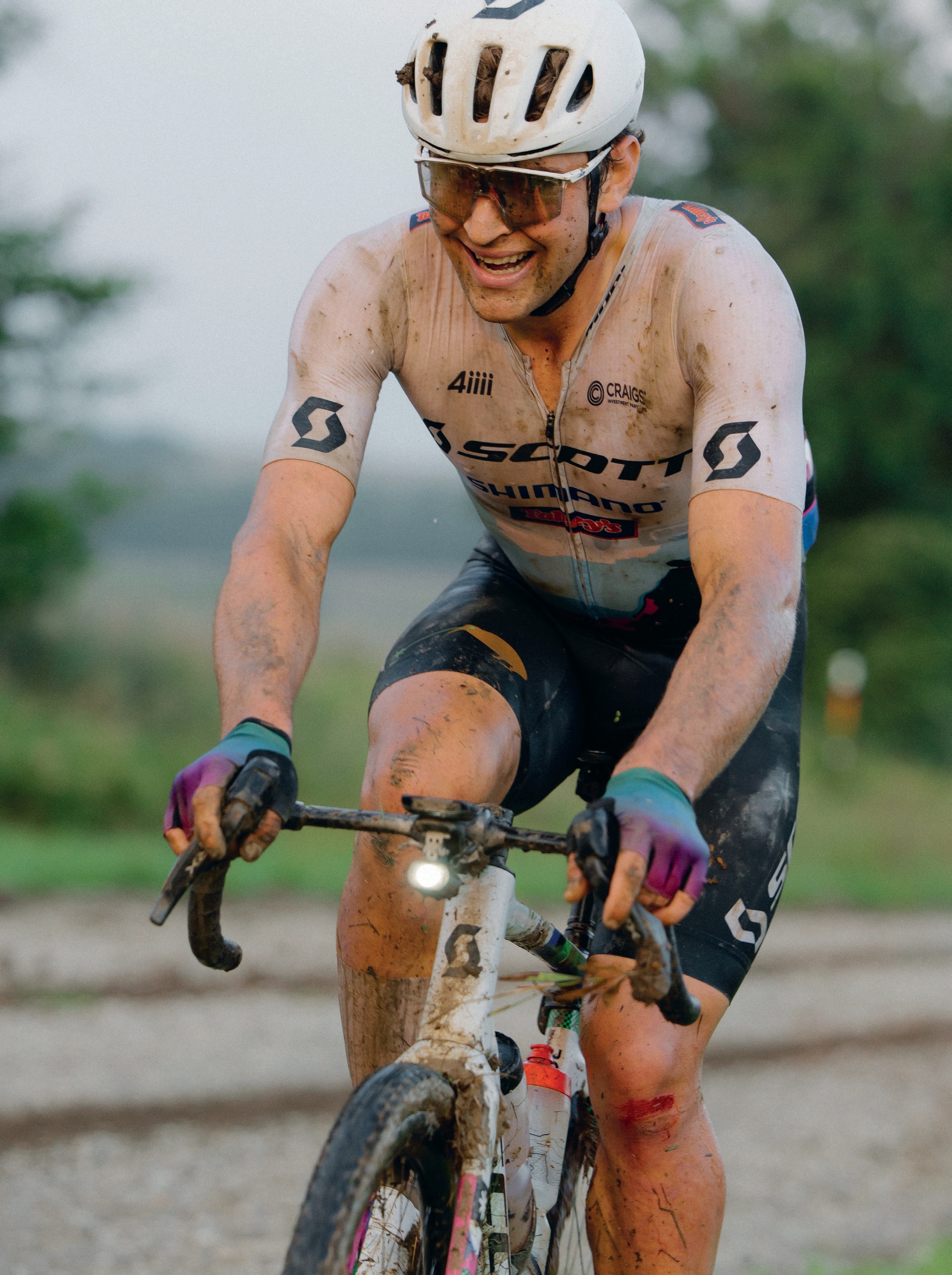
Next up in the LTGP was the Leadville 100, a 160km ‘out and back’ mountain bike race that takes on 3660m of climbing at elevations ranging from 2800m to 3800m. The high elevation creates havoc for many riders. Some adapt quickly, some don’t adapt at all and merely suffer through the race, and others, like Cameron, just get on with the job, not letting it get into their heads – or legs, it would seem! Cameron spent a few weeks in Colorado, acclimatising to the altitude to give himself the best chance he could have at dealing with a race at 3000m, although, when it came to the event itself, he was surprisingly matter-of-fact: “You have to ride at a lower power. You can’t take it quite so hard, and you want to avoid any big power spikes. But everyone knows that. And so it’s just like a normal race”. A 12th overall placing and 9th on LTGP points meant he’d survived what could have been a disastrous race for someone born at sea level, and headed into round four with a strong placing.
Next up was Chequamegon, a 40-mile point-to-point MTB race through northern Wisconsin’s forests. It’s essentially a drag race with few pivotal moments, and much of the course is wide open cross-country ski trails. Watching the livestream, it was obvious that Cameron and fellow kiwi, Matt Wilson, were ones to watch, driving the pace early and scrapping at the front on each of the few small climbs. Ultimately, a few riders got away from the field, leaving Cameron to battle in a bunch sprint for the line, resulting in eighth place on the day, and sixth in the LTGP points.
Little Sugar is a purebred MTB race in Northwest Arkansas, with lots of rock-strewn single-track, short, punchy climbs with only 1700m total vertical gain, and 100km long, all things that play to Cameron’s strengths, and he knew it. Cameron took the lead early, applying pressure at a pace most weren’t keen to follow. Flat tyres and broken wheels claimed many of the favourites as the race wore on. Riding at the front meant Cameron had clear sight lines to avoid rocks and obstacles, allowing him to maintain smoother lines, ultimately helping him keep air in his tyres and his machine in one piece – an absolutely dominant performance from start to finish to take the win with a 2:30min gap on second. Caleb Bottcher from Palmerston North crossed the line in a credible 6th place and certainly turned some heads with his performance, too.
Cameron had stamped his authority on the LTGP, now sitting tied for second overall with his Unbound breakaway companion, Simon Pellaud. The duo were just one point back from overall leader, Keegan Swenson, as they headed to the finale on the gravel roads of Big Sugar, not far away.
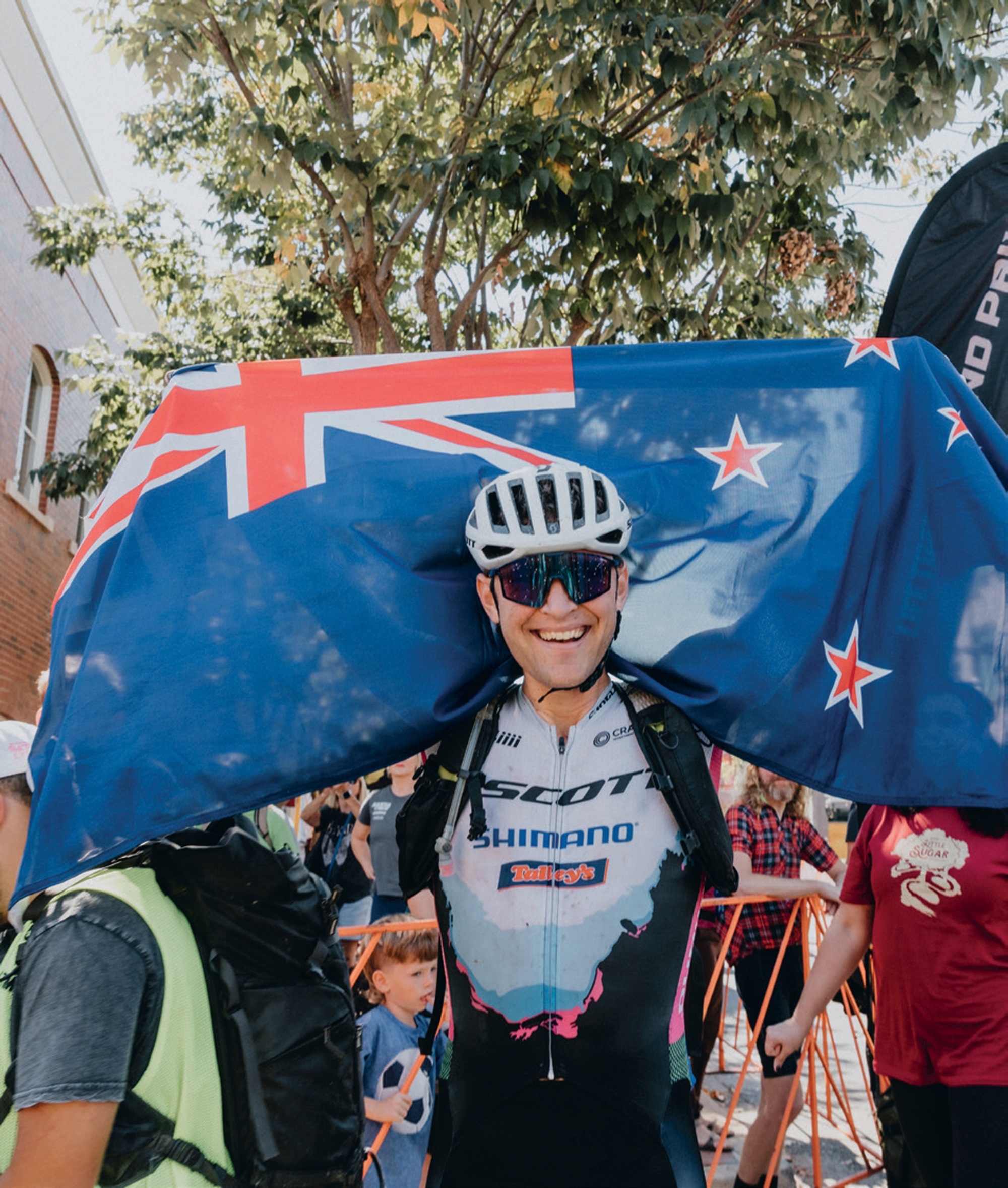
The final race of the LTGP, Big Sugar was planned to be a 100-mile gravel race. Organisers murmured that they may shorten the route to 50 miles the day before the event, but with no confirmation, many riders were sent into a spin. Theoretical race plans were put on pause, and gear setup was questioned until just 30 minutes before flag drop, when the final call to shorten the event was made, forcing racers to pivot to the shorter format. Although the series win was within his reach and pressure was mounting, Cameron took the challenge of it all in his stride, eventually winning the bunch sprint for 3rd place, and etching his name in the LTGP and off-road racing’s history books with the overall series victory.
Following the series through the livestreamed coverage and social media from both the LTGP itself and Cameron’s competitors, its abundantly clear that, although his time on the scene has been relatively short, he’s gained the respect of the peloton that usually takes riders years to earn, thanks to his cheerful demeanour, balanced outlook on life and sports, his cheeky antics and solid work ethic.
The 2026 season will arrive soon enough, and as defending champion, no longer will Cam have to scrap it out for a wild card entry; he’ll have a target on his back and be a favourite for each round, regardless of the terrain he’s racing on or the handlebar style on his Scott bike.