Words Tom Southam
Images Chris Auld
As we edge ever closer to the end of the year, and the time when lists start to get wheeled out across your chosen music platform, I got to thinking: for my opinion piece, why not make my own list of… well… opinions.
I’ve limited myself to the five things I would love to see changed to help the sport of cycling adapt, to take it forward in our rapidly changing world. I love cycling, especially the professional sport, but it can be a difficult and frustrating beast at times and, in my opinion, it’s a sport that’s just crying out for change.
Regionalised calendar to reduce the movement of team vehicles
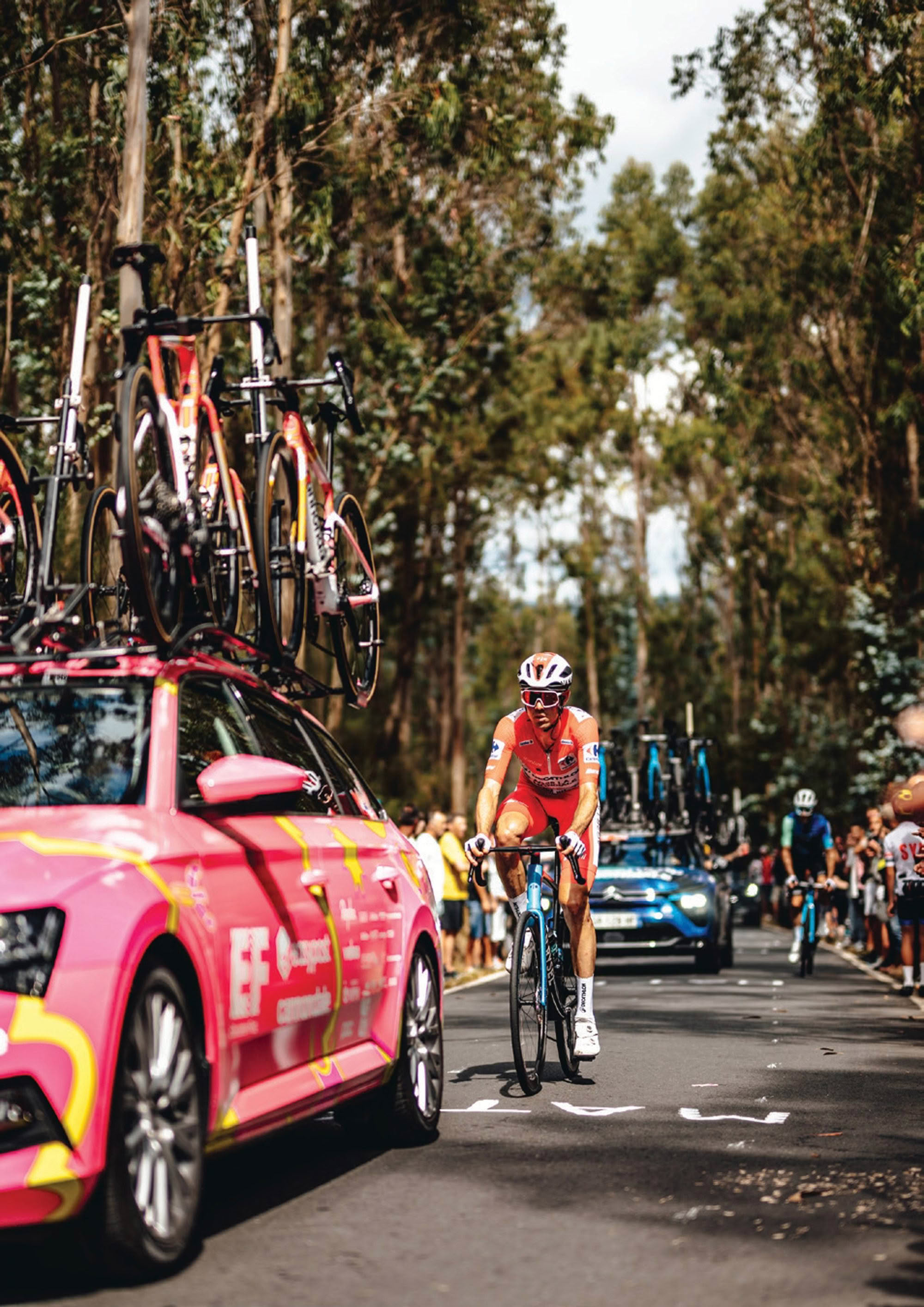
As a sport that is on the front lines when it comes to the influence of climate change, it surely can’t be too long until we have a think about the absurdity of several hundred team vehicles criss-crossing back and forth across Europe on a weekly basis to get staff, equipment, and riders to and from races that are part of a calendar that was designed a hundred years ago.
The UCI is so far behind the times with climate matters, that it still manages to persuade the world that by tackling the issue of littering (hefty penalties for throwing bidons) they are doing something for the environment, while at the very same time, team vehicles regularly drive thousands of kilometres back and forth to races, or leave their generators running day and night at the start and finish of races.
If the UCI were serious, a solution would be to move races into regionalised zones for several weeks at a time, to allow teams to be based in one location with their vehicle fleets before moving on to the next block of races. Yes, it would be a little bit sad if the Race of the Falling Leaves were to be in April, but things will be much worse if thousands of kilometres of coastline are underwater.
A salary cap for the men’s World Tour
The men’s World Tour is very much in need of a salary cap, however, it has been mooted for many years and I can only see things getting worse in this regard. On one hand (the one hand that is the Sheik’s that is) it is great that UAE have enjoyed 80 victories (and counting) in 2024, but the fact their unlimited budget means they can sign up every single talented junior and U23 (on enormous and lengthy contracts) means that things are only going to become more of a monopoly.
UAE’s hunger to win every single race on the calendar is no doubt reinforced by the depth of talent available to them; having a rider with the ability of Marc Hirschi to send to every 1.pro and 1.1 ranked race is an absurd luxury only available to a team whose owner has a Louvre.
A more balanced distribution of young talent would allow more teams to compete, keeping more sponsors interested, as well as hopefully put the handbrake on the insane pressure to sign riders for enormous sums of money at an age when they are far from developed as athletes – or people.
Six-man teams for Grand Tours
If we talk of making racing more interesting and keeping more sponsors interested in the sport, why not reduce the size of teams at the Grand Tours?
This would alleviate the tension between the UCI and the race organisers – which comes from the limited wild card allocation for the race organisers, due to the races’ inclusion in the World Tour. As it is, all three Grand Tours leave teams at home with a legitimate claim to race in each one – see Caja Rural and Burgos BH at the Vuelta, or Q36.5 at the Giro. Participation alone would go a long way to justifying sponsorship dollars for teams such as these.
From a sporting perspective, it potentially makes for much less predictable racing in the sense that the teams hoping to win the race would potentially allow other teams to make the running in the earlier part of the race, to save themselves for the third week. There is also much more chance of a race being flipped on its head by a break if teams simply have less firepower to control a race, day in and day out.
The downside is that, on average, a team loses two riders per Grand Tour and finishing with four riders would make winning the race impossible and the image for the teams less than glamourous.
Do away with the U23 category at the World Road Race Championships
In a few short years, the U23 World Championships went from being a proving ground for aspiring pros to a poor pro race with a rainbow jersey no one will ever wear as the prize. With most top juniors now going directly to the professional ranks, it is the junior road race that has become that last stepping stone into the pro ranks and the U23 race has become pretty much redundant.
Word is that the UCI will stop professional riders taking part in the race from next year, but this means that the race – as pointed out by one of the many pros who raced it this year – won’t be a true world championship as all of the best U23’s in the world won’t be racing in it.
As it was pointed out to me by an U23 team director the other day, the U23 Worlds has served its purpose, but it’s time to accept that it is redundant and put the money elsewhere.
Drones to replace motorbikes to film races
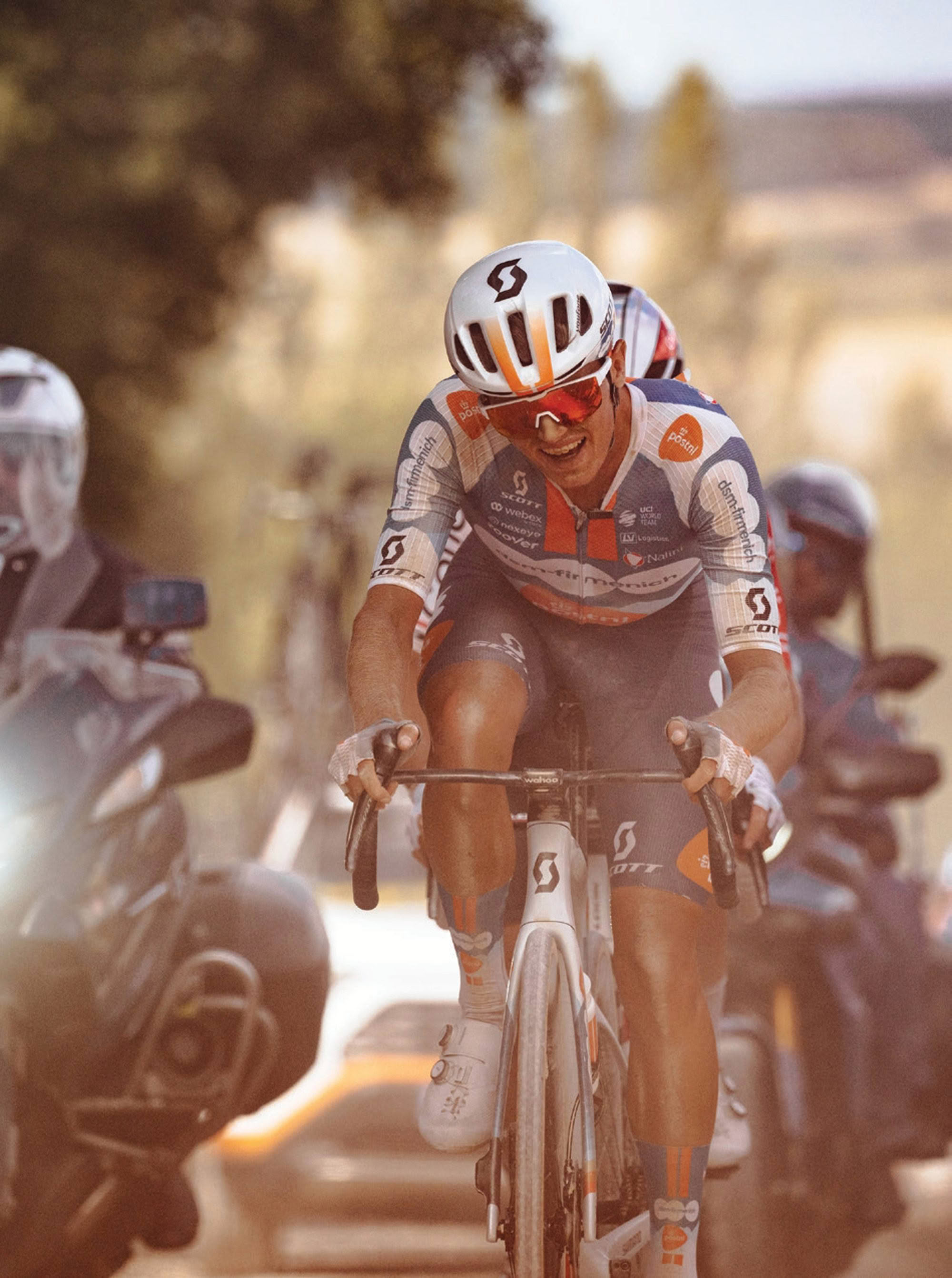
I can’t begin to tell you how many times this year I have angrily driven my team car up to the commissaire and told him that the riders are complaining about the motorbikes causing a draft that is changing the race.
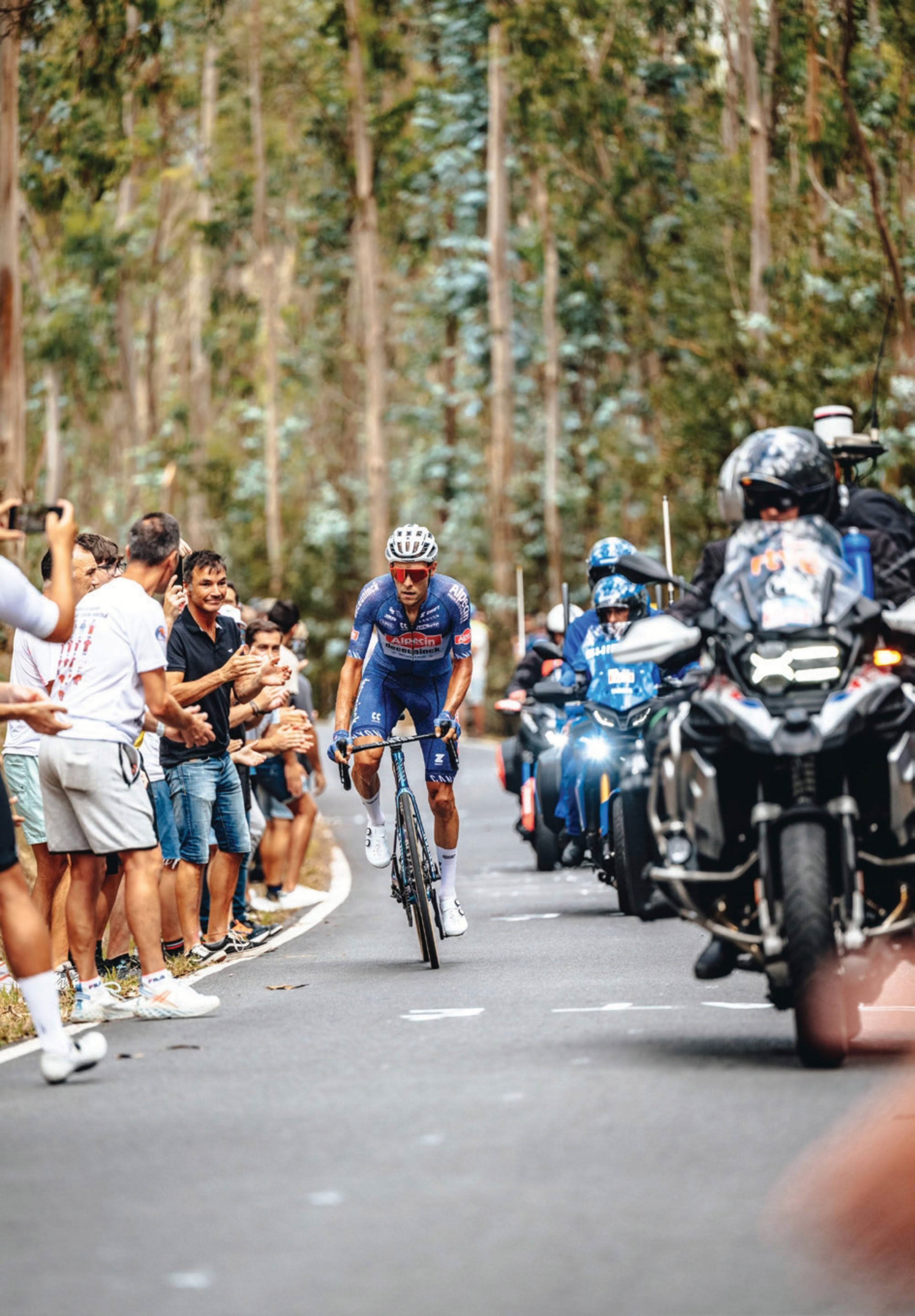
A few years ago, it was just sort of accepted that you would use the bikes a bit when you could, but as the coverage of bike races has extended to many lower tier races (which are governed much less strictly than the big events like the Tour), it is mind-blowing to see just how much the TV motorbikes are influencing the racing.
We are all much smarter about aero gains these days and we all know that four or five watts saved in an overshoe pales into comparison to a few seconds in the draft of a motorbike at 60kph. The damage is often irreversible, and it will always advantage whoever is being filmed from the front, be it the chase group or the break – and it is just not OK.
We need television images, that is an absolute certainty – there is no professional sport without coverage – but again, the system of motorbikes in the middle of the race seems antiquated. Think about the TV motorbikes getting in the way as Pogacar went to attack Vingergaard at the Tour last year, or the stalled bike that stopped the race on the Col de la Loze. At best, motorbikes in the middle of the race are a nuisance that influences the outcome of the race, and at worst they are a hazard.
As a half measure, doesn’t it make sense to add much more regulation to the TV motorbikes, allowing them only to film from behind and use some inventive drone footage to cover the parts of the race where the viewers would want to see the race from the front? Obviously, you couldn’t cover the entire 200 odd kilometres of a stage that way, or anywhere with trees (half of Europe…) but you could surely do the climbs or parts thereof, for example.
So, that is my five cents – or five opinions – to muse upon as the season comes to a close here in Europe. Perhaps there is a lot you disagree with, or maybe just a little. Hopefully you all want the same as me – which is a safer, more interesting and cleaner version of the wonderful sport that we have.