Words by Liam Friary
Images by Callum Wood & Anton McGeachen
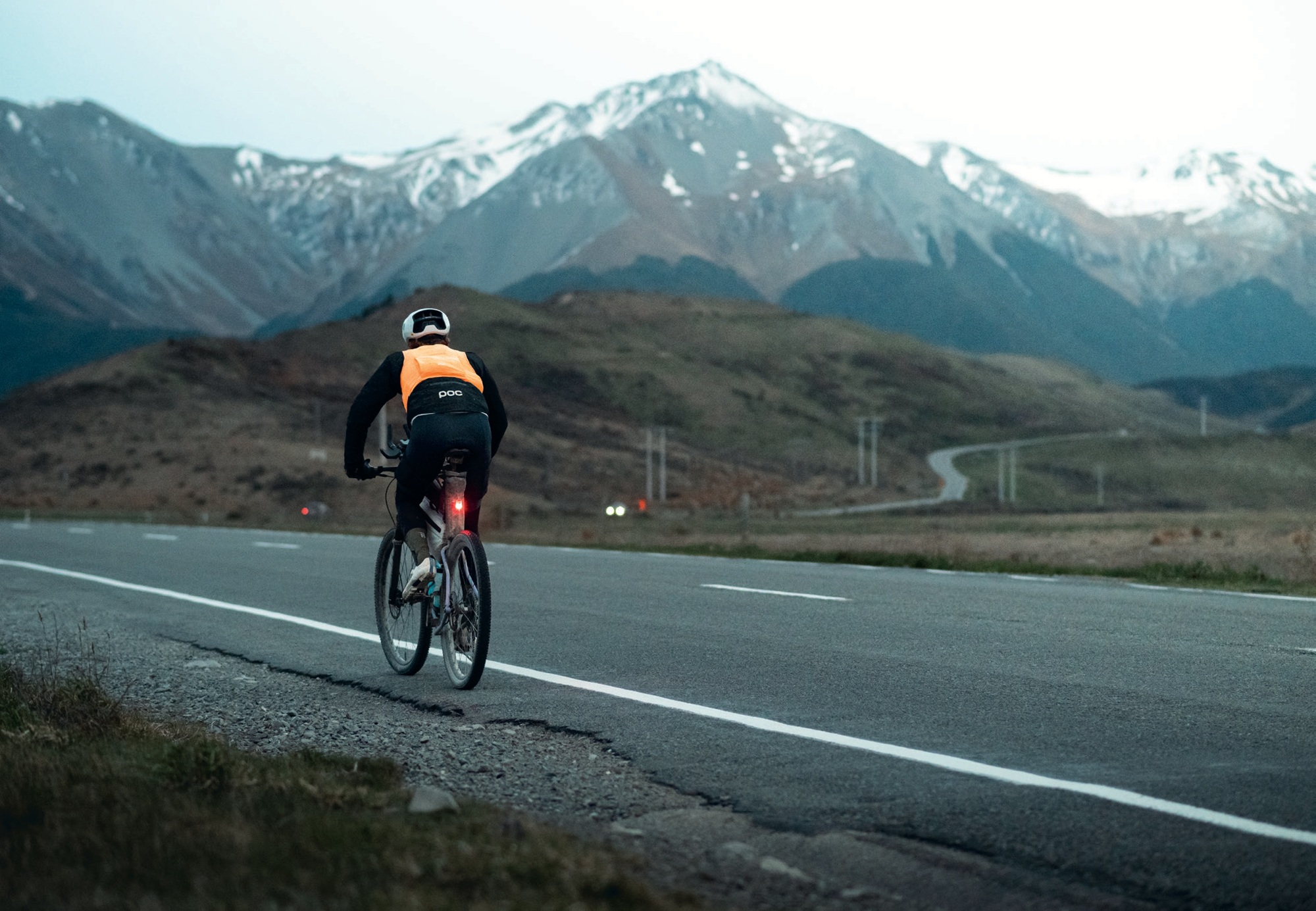
In late October 2025, Rufus Wenlock and Joe Nation embarked on what they called ‘Project Double Shake’ – a simultaneous attempt at the Shaky Isles route, stretching from Bluff in the deep south to Spirits Bay at New Zealand’s northern tip. Created by Brian Alder, the mind behind Tour Te Waipounamu, the route deliberately sidesteps highways in favour of New Zealand’s raw backcountry and isolated terrain.
The twist? Rather than chasing each other in the traditional ultra racing sense, Wenlock and Nation started at opposite ends of the country, creating a race format where the usual metrics became meaningless. While they’d ultimately cover identical distance and elevation, every other aspect of their journeys would be entirely different: different weather, different terrain challenges, and completely different experiences of the same route.
The Route
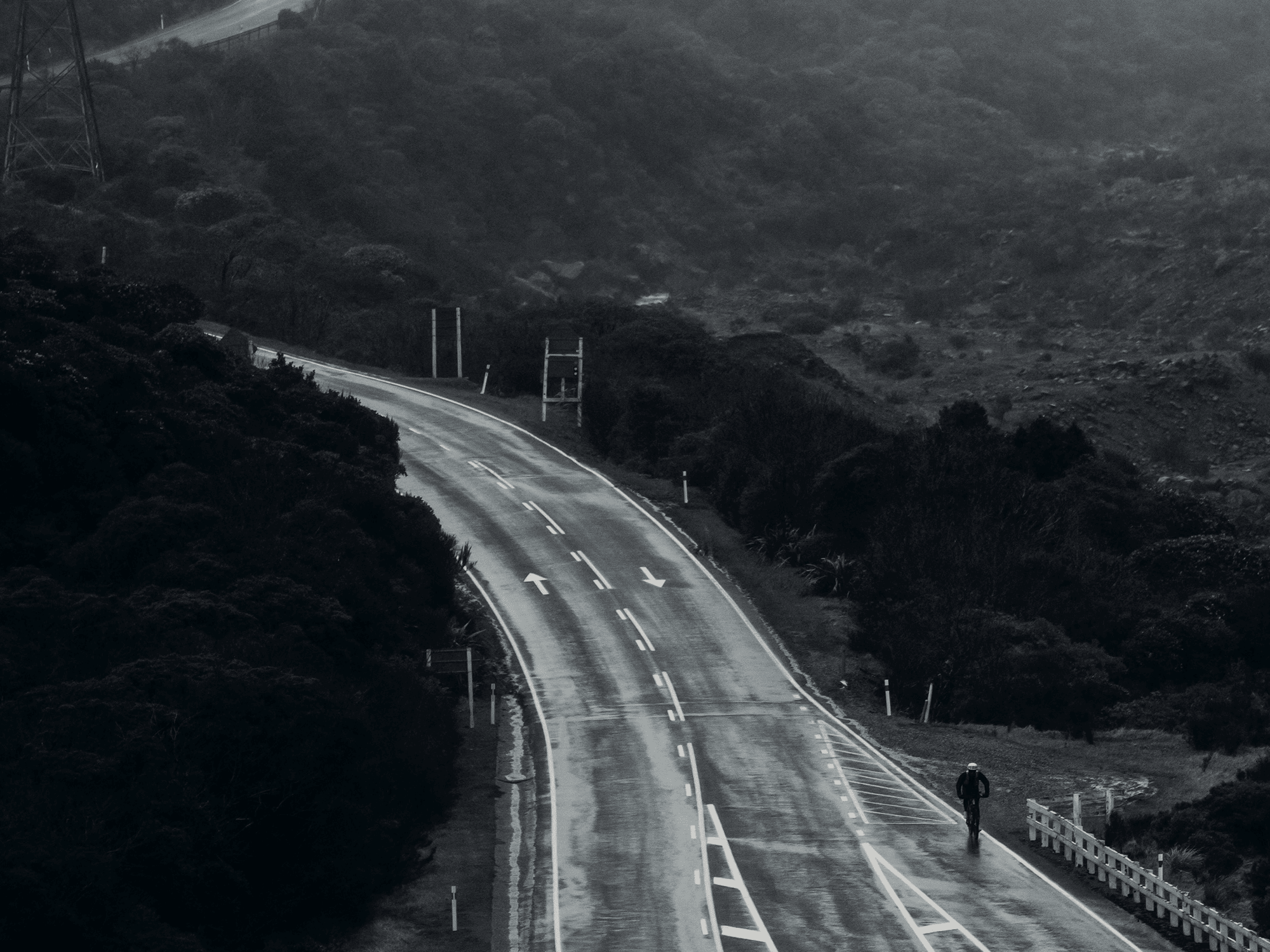
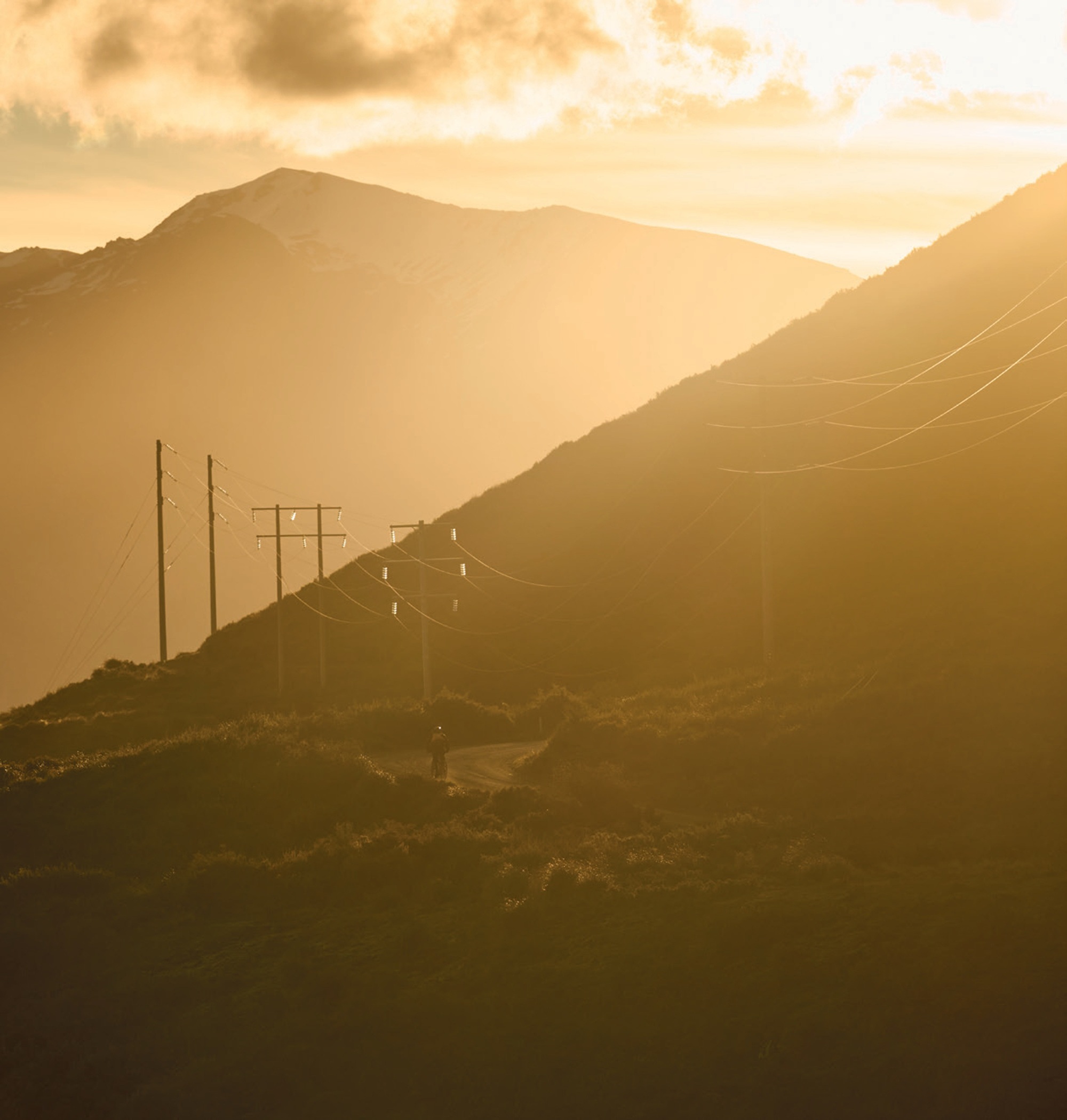
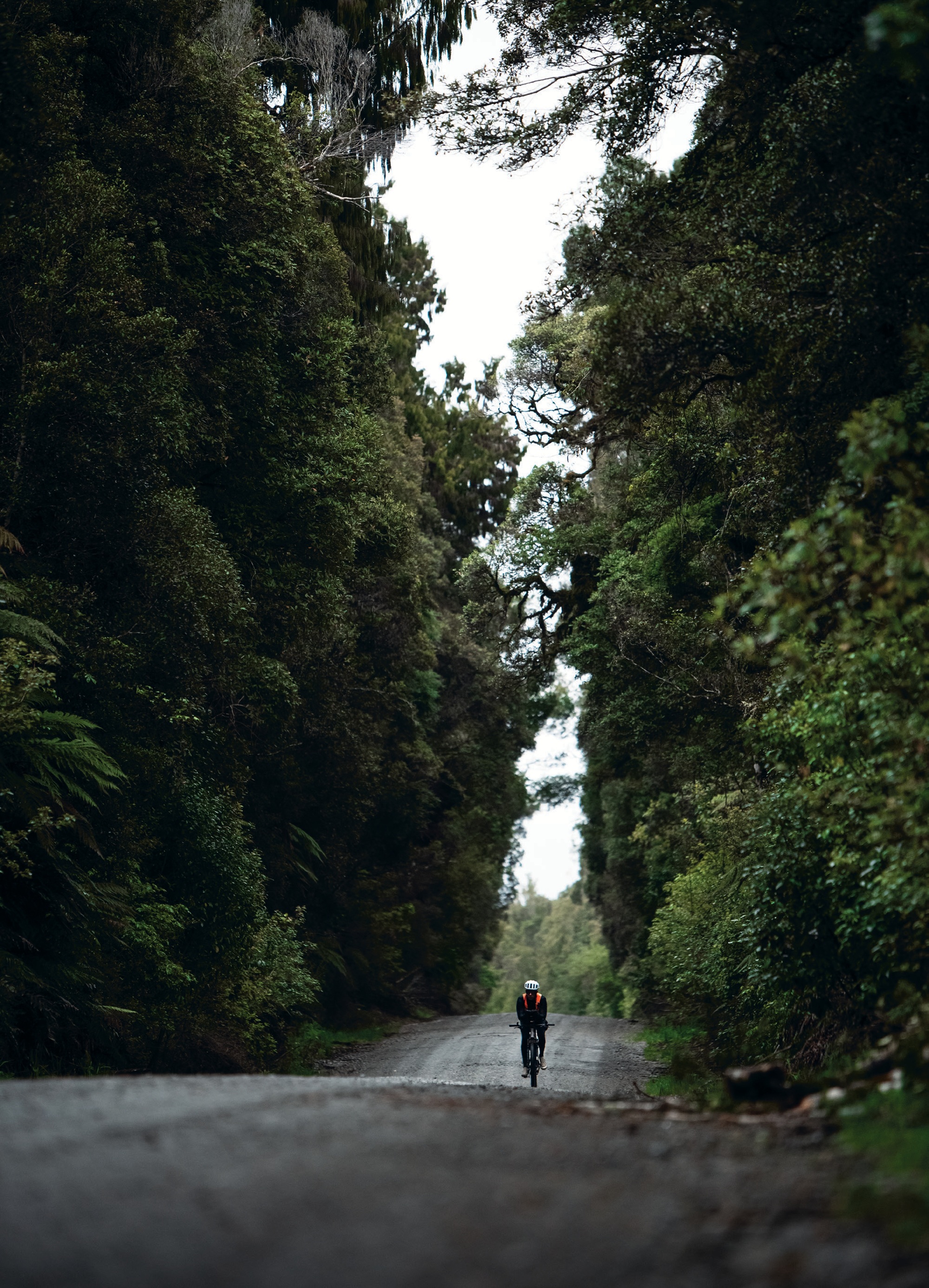
Rufus Wenlock, attempting the Shaky Isles for his third time, describes it as roughly 50-50 on-road and off-road, deliberately avoiding highways. “It takes you through a lot of remote New Zealand,” he explains.
Joe Nation found resupply particularly challenging: “For New Zealand, I felt some quite tough, 150-, 200-kilometre gaps. And when you’re racing at our speed, you might have two resupplies coming up in 100kms, but you get to that resupply and it’s just closed, so you’ve essentially got a 200km gap.”
The terrain varies dramatically between islands. “The North Island kilometres were a lot harder than the South Island ones,” says Nation. “More hills and relentless climbing versus this sort of major climb, then major flat, then major climb again down south.”
Opposite Directions, Different Challenges
Racing in opposite directions created a fascinating dynamic. Nation tackled the North Island first: “I think the North Island is 1,600kms but it’s like 21,000 vert, and the South Island’s like 16,000 vert. I got the better end of the stick, getting that punchy, relentless climbing done with fresh legs.”
For Wenlock, wind became the hardest challenge. “In the rain I can keep pushing on, but the wind just physically slows you down like nothing else. And it starts impacting your mental state when you’re not clicking off the Ks like you’re hoping to.”
Both riders knew the South Island intimately but found the North Island largely unknown territory. “The South Island, every section, you just know exactly what’s coming up,” says Wenlock. “The North Island was kind of just flying blind. But it had its pros and cons. I was so entertained because it was all new to me, and the scenery was mind blowing.”
Nation agrees: “That section from Blue Duck Station to Raglan was probably my favourite. Just like a dream through there. It was incredible.”
Weather Systems and Storms
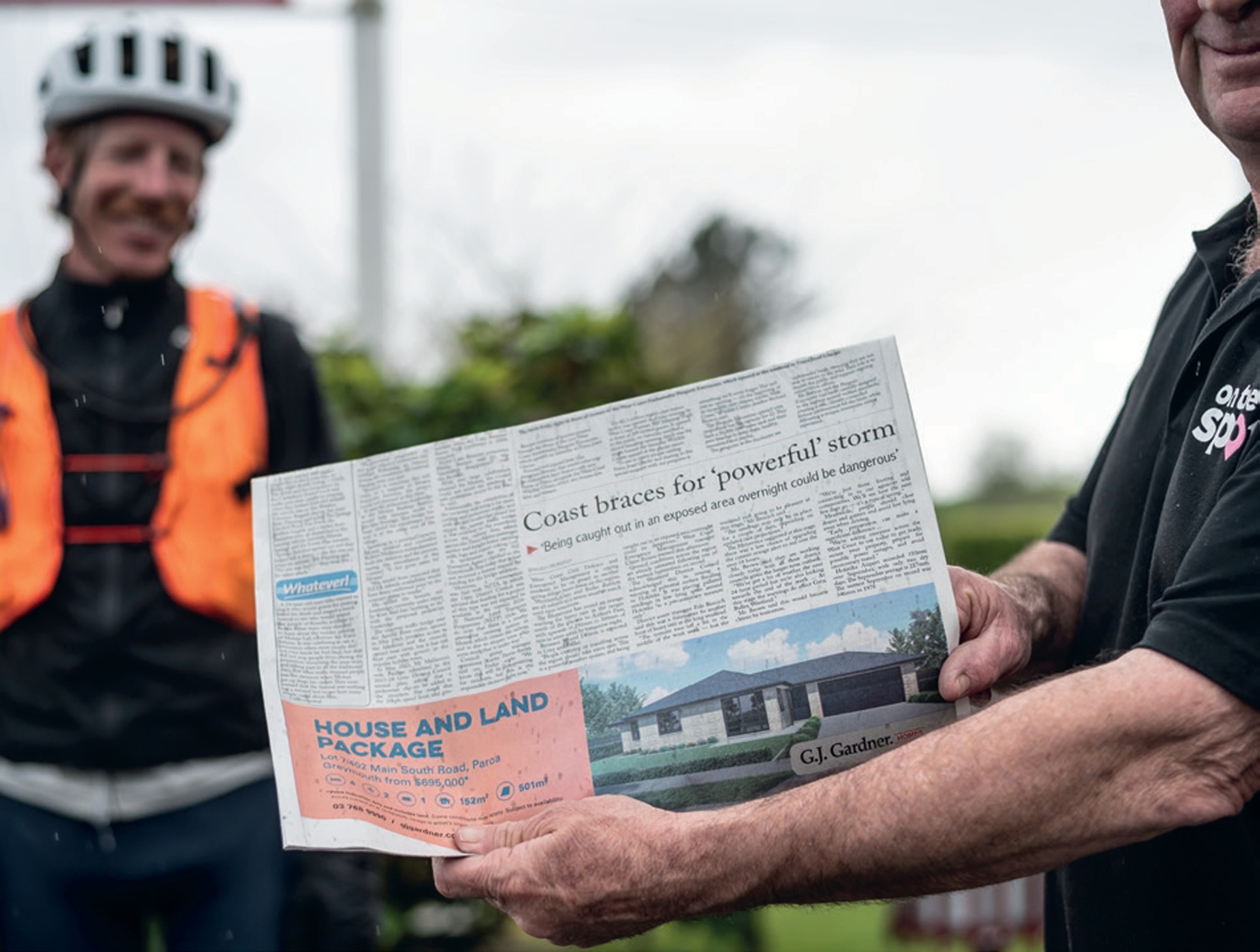
Both riders encountered some terrible weather conditions, including two severe storms that caused havoc around the country and especially on the roads in the South Island, it didn’t really stop throughout their journey.
Nation had more favourable conditions initially: “There was a predominant prevailing northerly breeze. It wasn’t crazy for me, but it wasn’t in my face. When I hit those storms, it was pretty good for me.” Route creator Brian Alder played an unexpected role in keeping them informed, with Nation noting: “He was the one that alerted me via social media that there was a massive storm coming in across the top of the South Island.”
Sleep Strategy and Execution
The two riders took markedly different approaches to sleep. Nation planned meticulously: “I learned the hard way on the Tour Divide that you’ve really got to look after your body to do something this long. Day one I did 350kms and slept for four hours, but then I pushed it out to five hours. I’d take time, like 20 minutes, before sleeping to sort out hygiene: clean the chamois, things that aren’t going to pay off for the first three or four days, but by the time I get to the South Island, hopefully they’re paying off.”
He also incorporated hotel stays: “My knees were getting quite sore. I had a night in Nikau Caves and the next day my knees were considerably better. So, every second night I’d try and get a roof over my head just to stay warm, stretch out, get a shower, and keep the knees going.”
Wenlock, by contrast, wished he’d slept more: “This is the first thing I’ve done over 2,000km and that extra little bit of sleep deprivation was really destroying me towards the end. I was having periods throughout the day where I’d just be barely turning the pedals, spacing out completely. If I was just sleeping, I’d be so much better. I would have gone faster with more sleep for sure.”
He emphasizes the difficulty of recovering from early sleep debt: “Unless you throw in some huge sleep hours, you’re just on the back foot from there on. If you’re skimping at the start, it doesn’t matter how much you do later.”
The Mid-Route Meeting
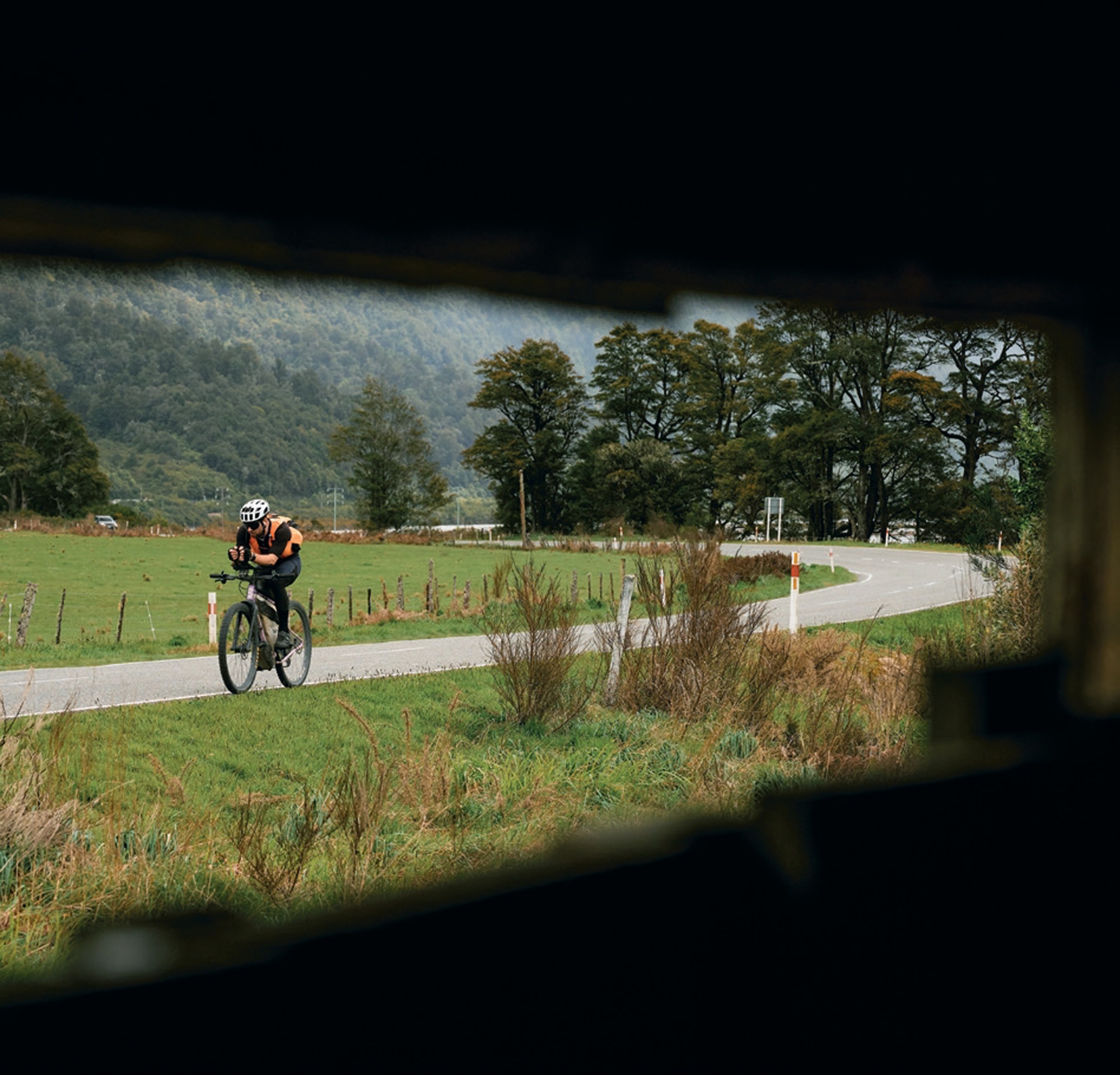
When the two met mid-route, Nation recalls: “I congratulated Rufus on making that earlier ferry and told him that the North Island was a real treat, so he had a pretty good thing coming.”
Wenlock’s parting words? “Good luck with that headwind. I’d just been getting blown for like three hours and I was like, oh, Joe is coming into this.”
The Racing Dynamic
The opposite-direction format created unique challenges. “It was really spinning my head out the first couple of days when I’d check and we were within five or 10kms of each other consistently,” says Wenlock. “I couldn’t really gauge exactly what was happening at his end. You can’t help but conspire the story in your head that he’s absolutely destroying you.”
Nation had analysed the course strategically: “I knew I’d be losing ground to Rufus in the North Island, but it was just to minimise that. I knew that if I was pretty close kilometre-wise at the passing point, then I’d be in the driver’s seat. At one point I was over 100kms behind him, and dot watchers who weren’t dissecting the route were like, oh, Joe’s losing it here, but I was still confident the whole way because I felt so good.”
Equipment: Mountain Bike vs Gravel Bike
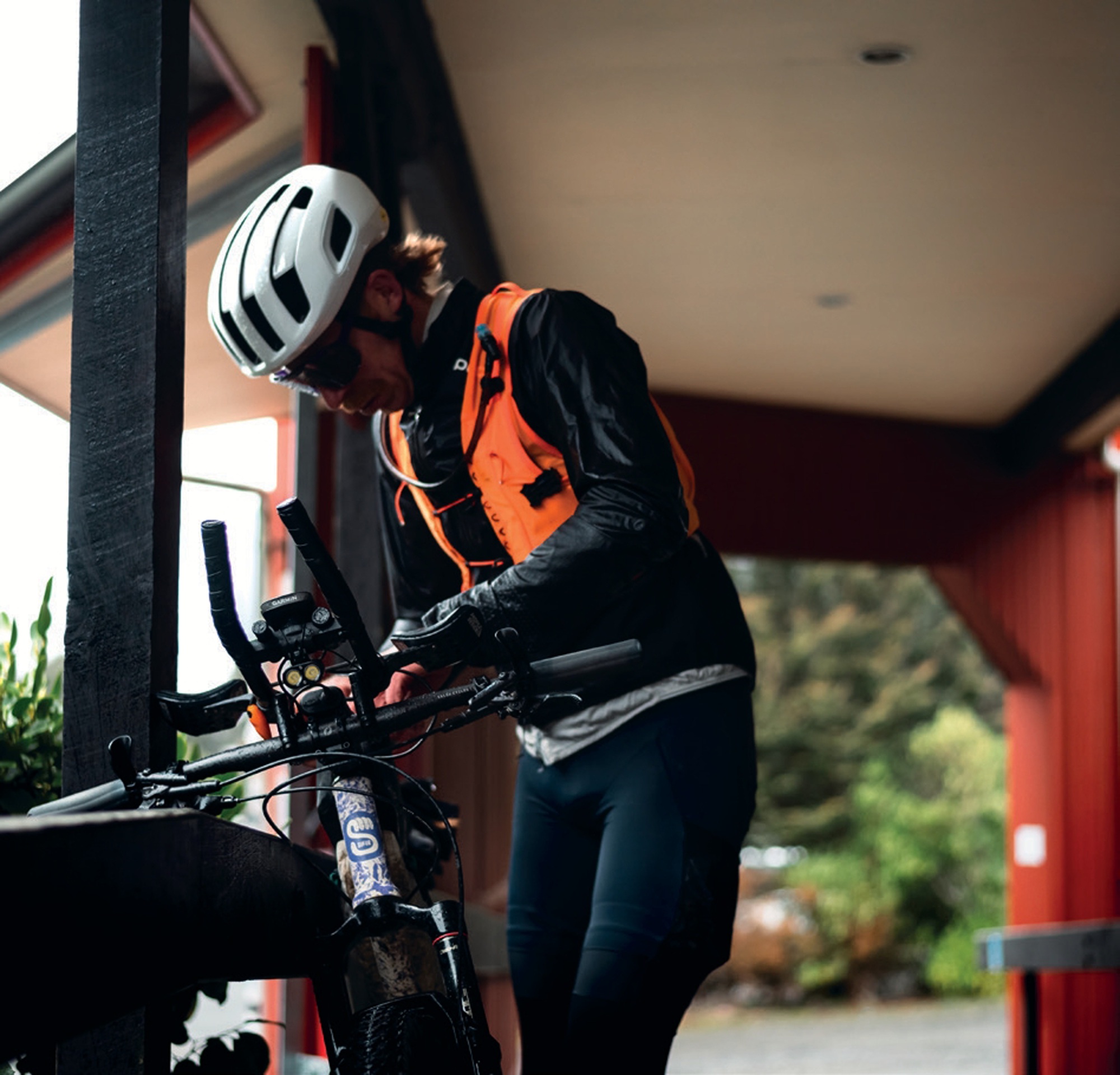
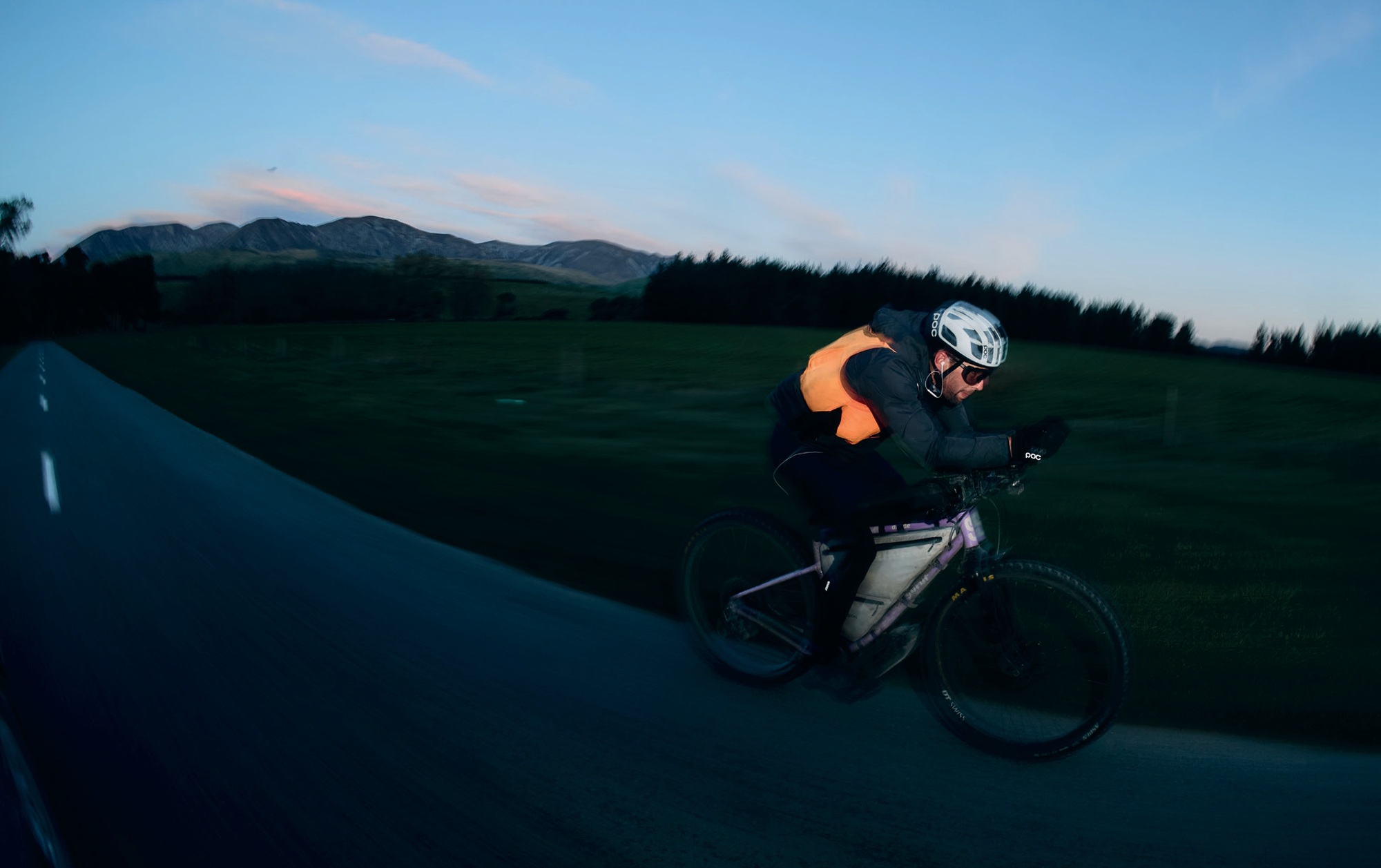
Both chose mountain bikes despite speculation about gravel bikes being faster. Wenlock had attempted the route on both: “For sure, I think the gravel bike was faster. I just knew if I did it again on a gravel bike, I probably wouldn’t finish because of the hand problems I have with drop bars. Last attempt, which was only three and a half days, I had numb hands for six months after.”
Nation concurs: “I really like to get out of the saddle and climb on steep climbs. When I’m on a drop bar, I just can’t do the same. After Silk Road, I was out of action with my hands for three or four months. There’s just no way I’d go any distance on them.”
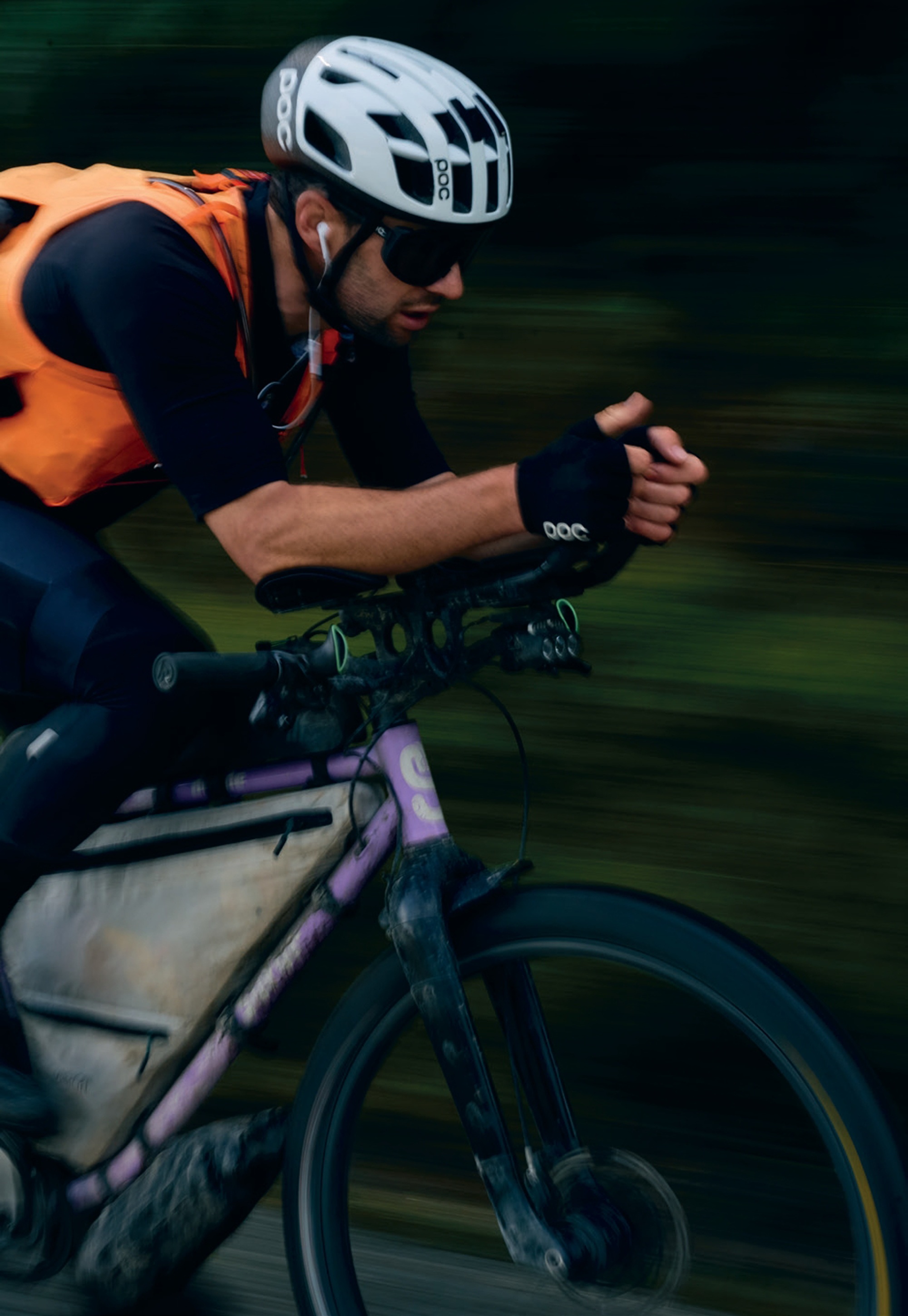
Nation’s custom Süfur frame proved ideal: “It’s the first and only bike I’ve had made for my frame, for my body. I never thought I could do a 10-day race and come out so comfortable. Something so long was all about comfort.”
Dot Watchers and Community
The event garnered significant local attention. “It was quite cool for New Zealanders to have an event happening in New Zealand on trails that they were familiar with,” says Wenlock. “We saw an outrageous amount of dot watchers on course.”
Nation experienced the community support firsthand: “There were people coming out with baked goods, making sandwiches. I found it a bit rubbish that I had to turn them away because of self-supported rules, but it was appreciated. There was even a guy, probably in his 70s, who rode with me through Wellington at 1:30 in the morning for about five or 10kms.” says Wenlock.
Making It Work
Neither rider makes a living from ultra racing. “The sponsorship for this event was enough to cover the majority of expenses, but we’re still out of pocket,” says Nation. “I had to buy a jacket, waterproof pants, all the maintenance on the bikes, new drivetrains, bearings, brake pads, etc. “Wenlock adds: “This is the first time I’ve ever been involved in anything with sponsors paying anything. We’re sort of just hobbyists, one or two races a year.”
Nation works in an underground utility location; Wenlock is transitioning to full-time frame building after selling his bike shop. “I don’t feel like I’m at a deficit racing against full-time athletes,” says Nation. “Come day two, three, or four, it’ll just be whoever executes it and whoever’s minds in the sharpest place. I’m pretty happy working – it means there’s money in the account and I don’t have that stress.”
Looking Ahead
Both have Tour Te Waipounamu next on their calendars, with eyes on Turkey’s Taurus Mountain Race for next year. For now, they’re savouring the achievement – only a few riders have completed the Shaky Isles route.
“It’s nice to have it done and to be successful,” says Wenlock. “Quite a few people have tried this route and only two have finished it. For us to both finish it was quite a big deal.”