Words & Images by Freddie Gillies
We learnt about the Kenyan Bikepacking Odyssey, a 1,024 km route riding the ridges of the Rift Valley from Kenya’s capital, Nairobi, into the highlands to the north. We had also heard good things about Tanzania, in particular the road around the base of Kilimanjaro. A route formed from Kampala, Uganda, where my partner Flora’s father was born, to Dar es Salaam on the Tanzanian coast, soaking up the best of East Africa. The route promised wildlife, mountains, national parks, and gravel riding through some of Africa’s most vibrant landscapes.
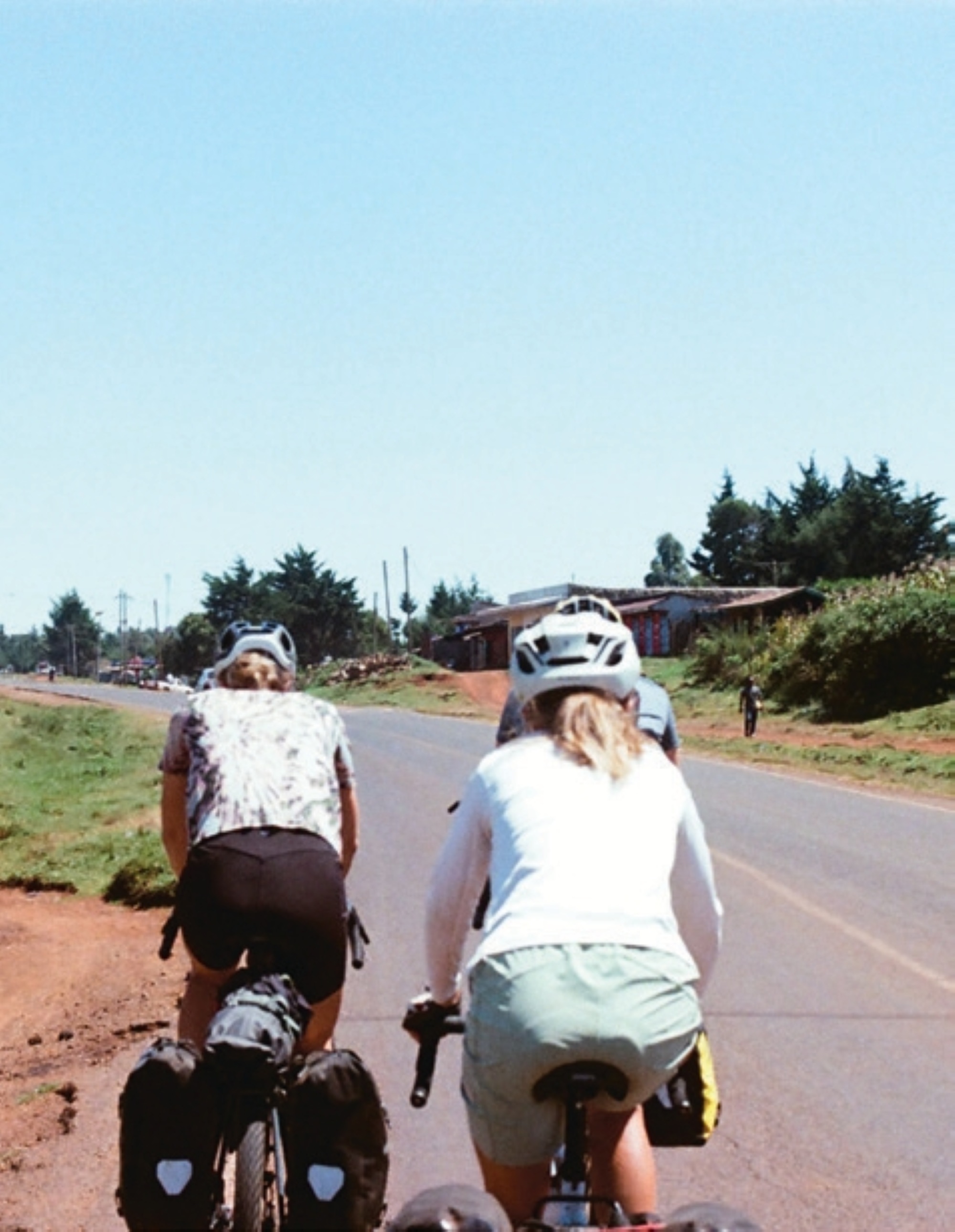
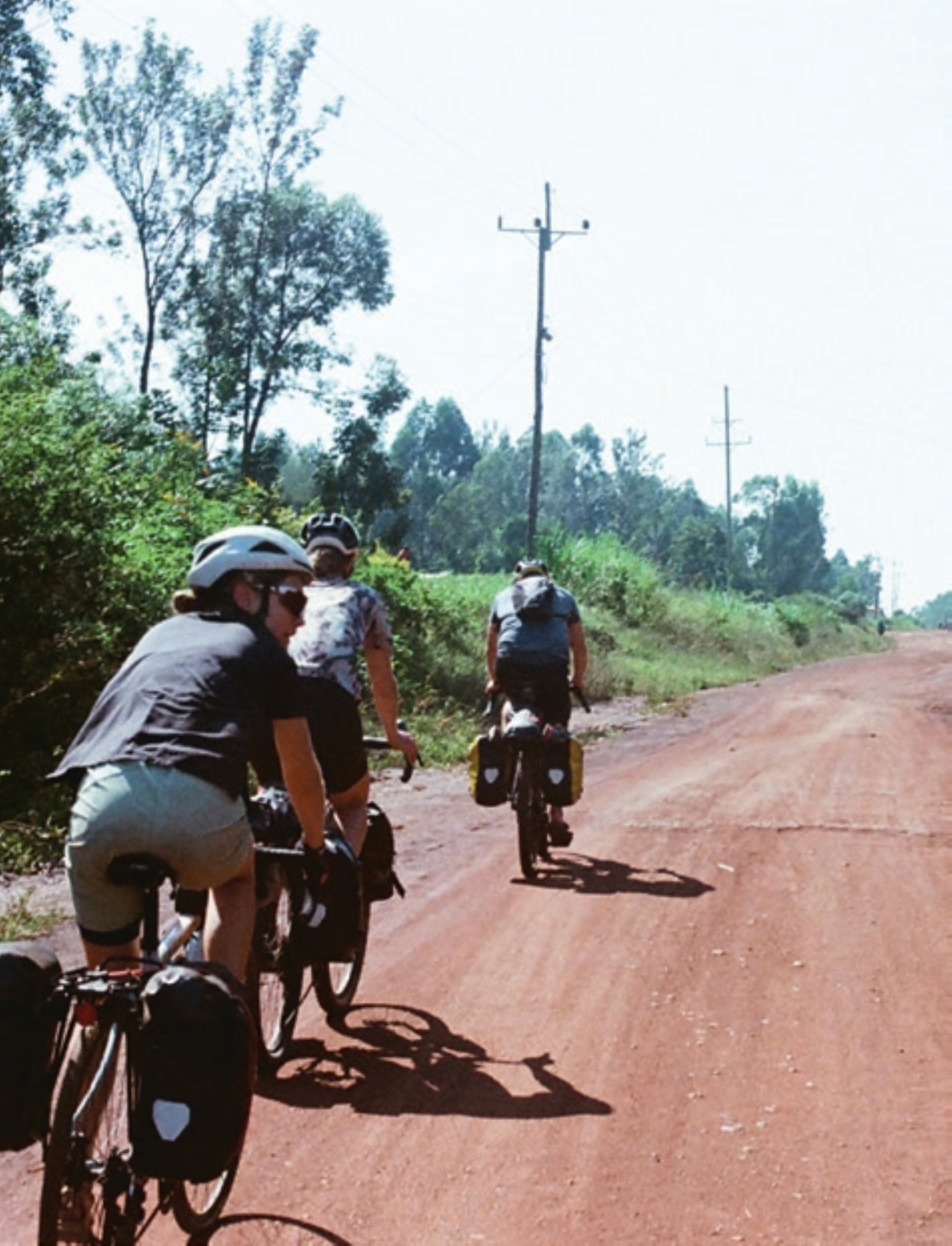
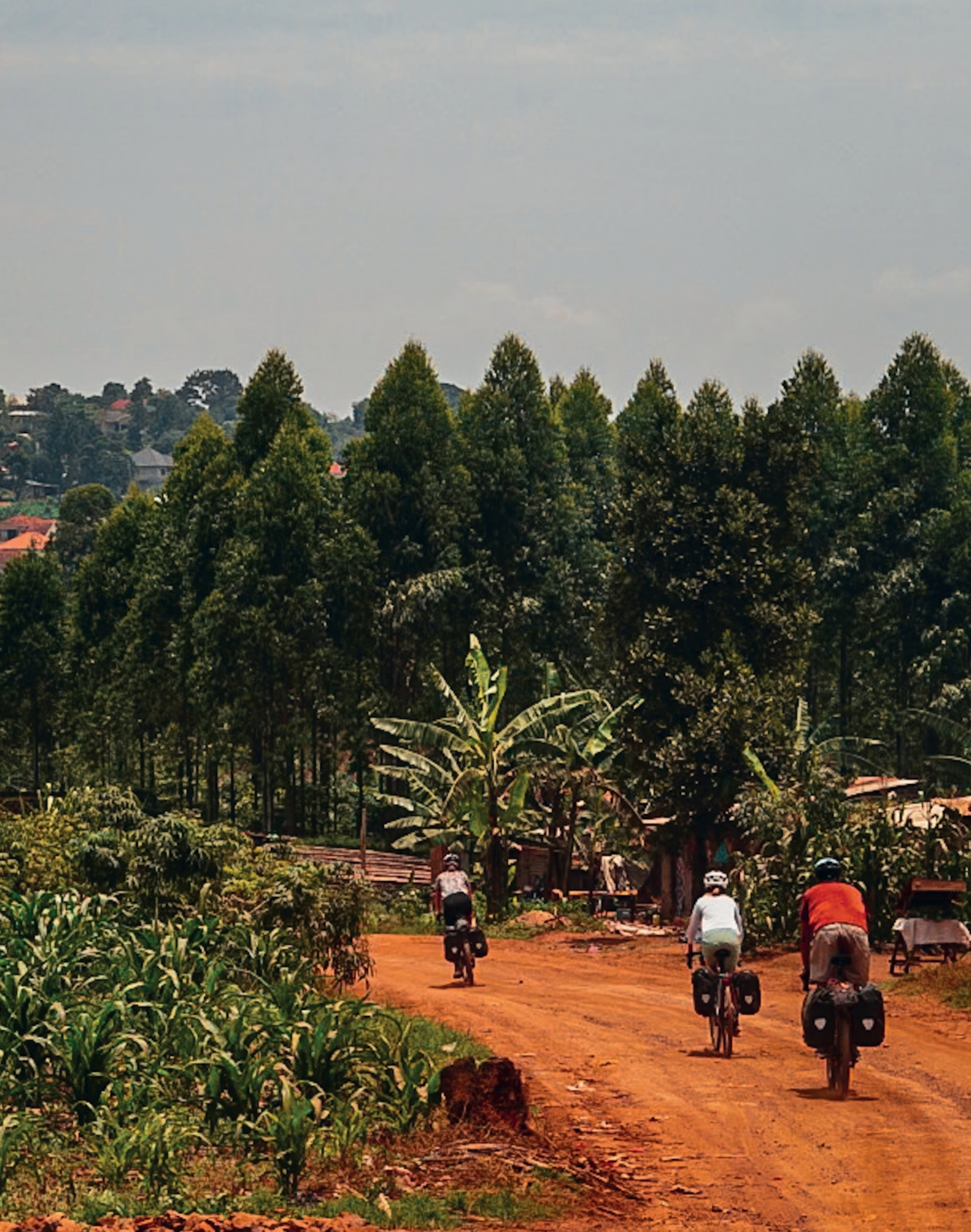
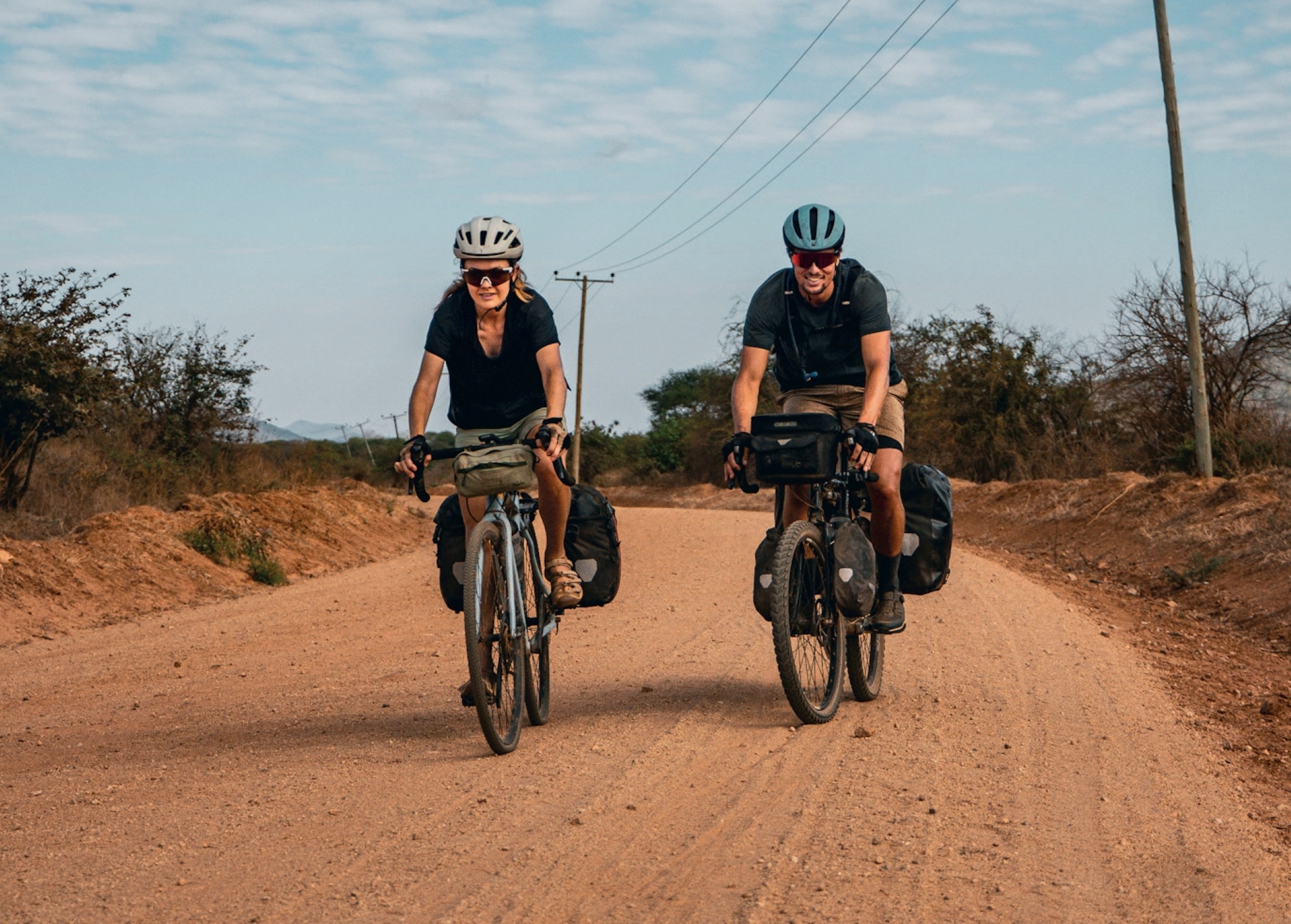
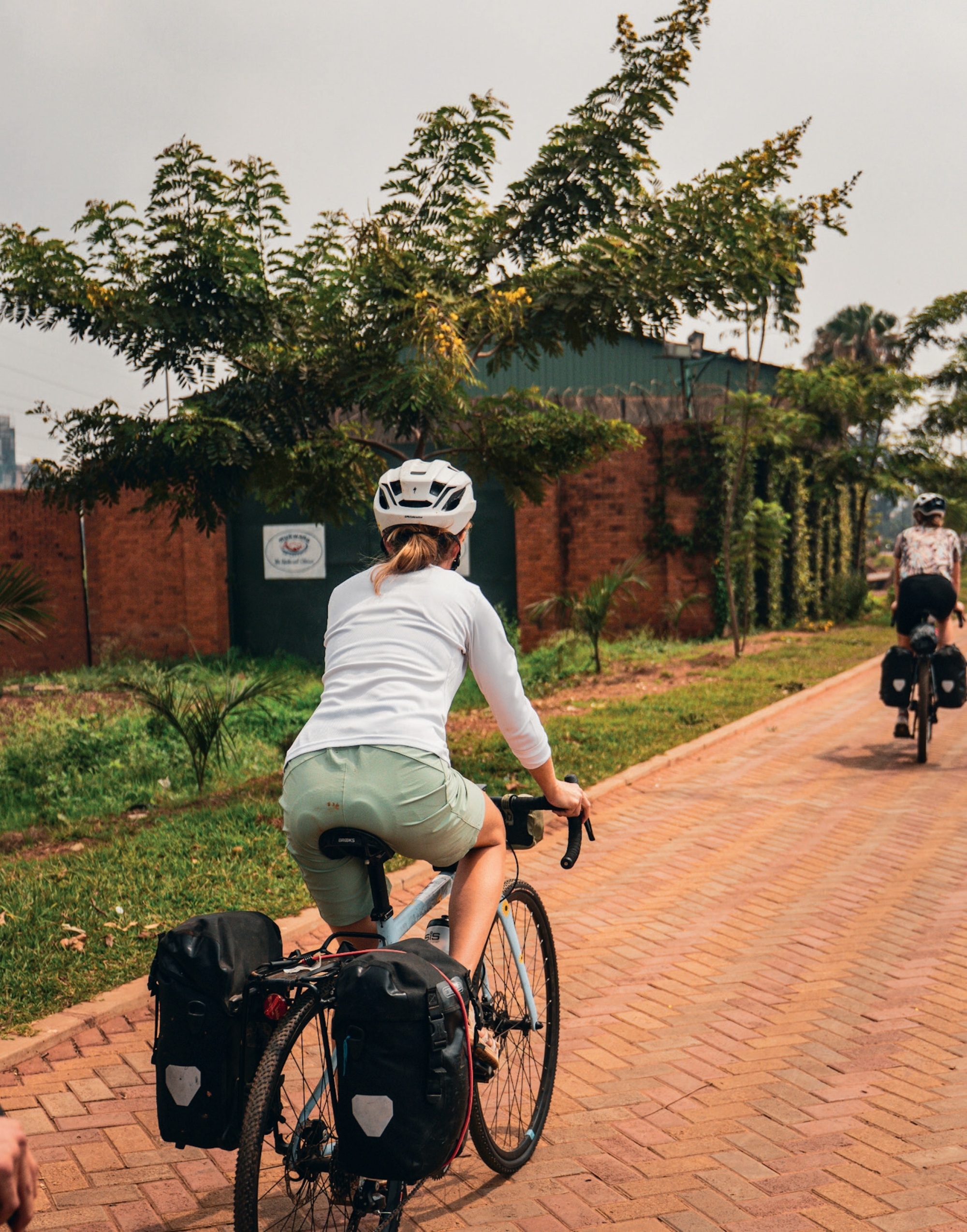
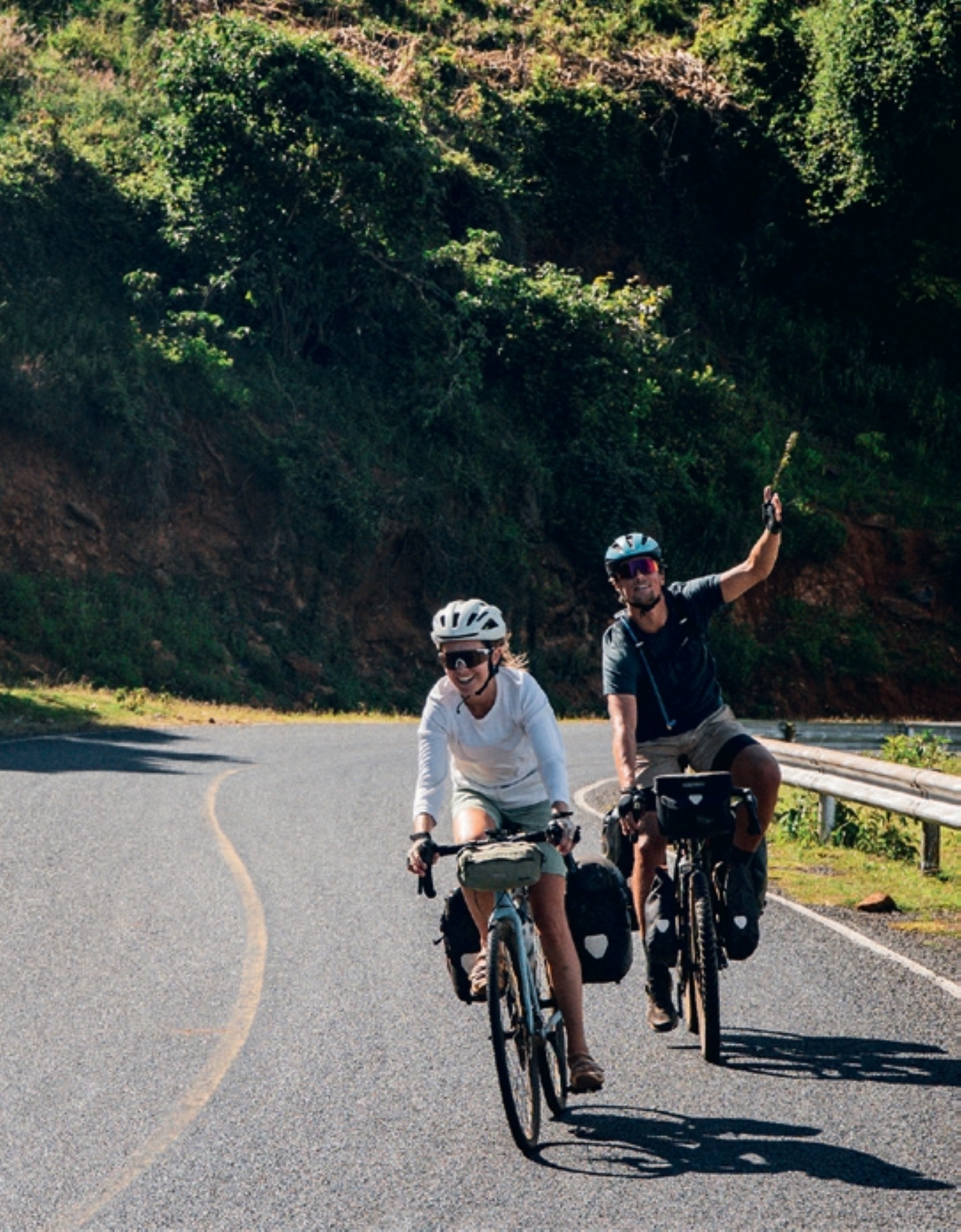
We built our bikes in the arrivals lounge at Entebbe International Airport: Stef and Eef from Belgium and Flora and I, who’d come from London. Security personnel stole looks at us, wondered what we were doing. The air was humid and close on account of the broken air conditioning. My Merino t-shirt was already soaked through as we built the bikes in a feverish hurry, eager to get on the road and beat the setting sun. It was already 4pm and we had only two hours until darkness would fall. Outside the airport we set off on smooth tarmac. I noted the green trees, the rolling hills, the abandoned Russian military helicopters. It was lush and abundant in the way London was not. The first pedal strokes came with the associated feelings of freedom that belong to cycle touring; a wave of euphoria atrophied to steady, linear progression under one’s own power. The four of us settled into a box formation and pedaled through the first roundabout. Slowly the traffic filled out; a Tata truck in a cloud of smoke, a boda (motorbike) straddled by four men, a mini-van with too many heads sticking out too few windows. The main road was soon jammed, noisy and smoky, so we turned off for the back roads. There the road turned to dirt. Small flecks of it coated my new Ortlieb panniers and it had a sort of novelty to it – we’d dreamed of riding in the red dirt of Africa. The road rolled and the undulations became steeper. Soon we were climbing 20% gradients and descending the same. Time passed, we moved slowly. The sun dipped below the horizon, a damp twilight of purples with waves of opaque smoke came all too soon. Then it was dark and our headlights were out. We’d been told to avoid riding in the dark and here we were, day one, riding in the darkened suburbs of sprawling Kampala. I’d never imagined East Africa as anything but the Savannah – dry plains, clouds flocculent in a massive sky, animals abundant. Not the humid, violently rolling sprawl of a jungled megatropolis. No, this was not what it was supposed to be. The earlier sense of adventure was overpowered by a paroxysm of doubt, fear, dread. Lessons would be learnt. Set out early. Allow more time on poor quality roads. Keep the bikes as light as possible for the steep gradients.
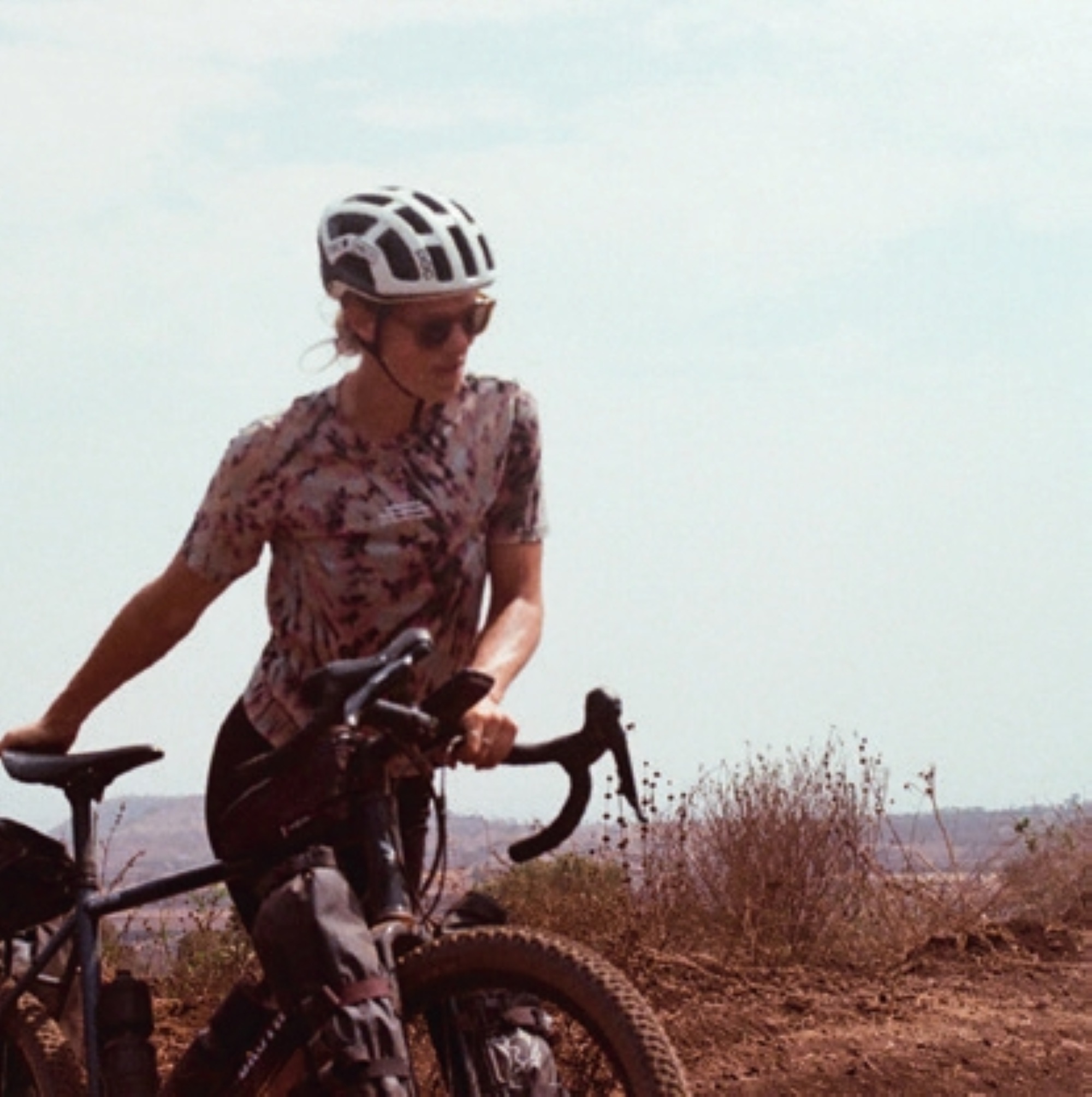
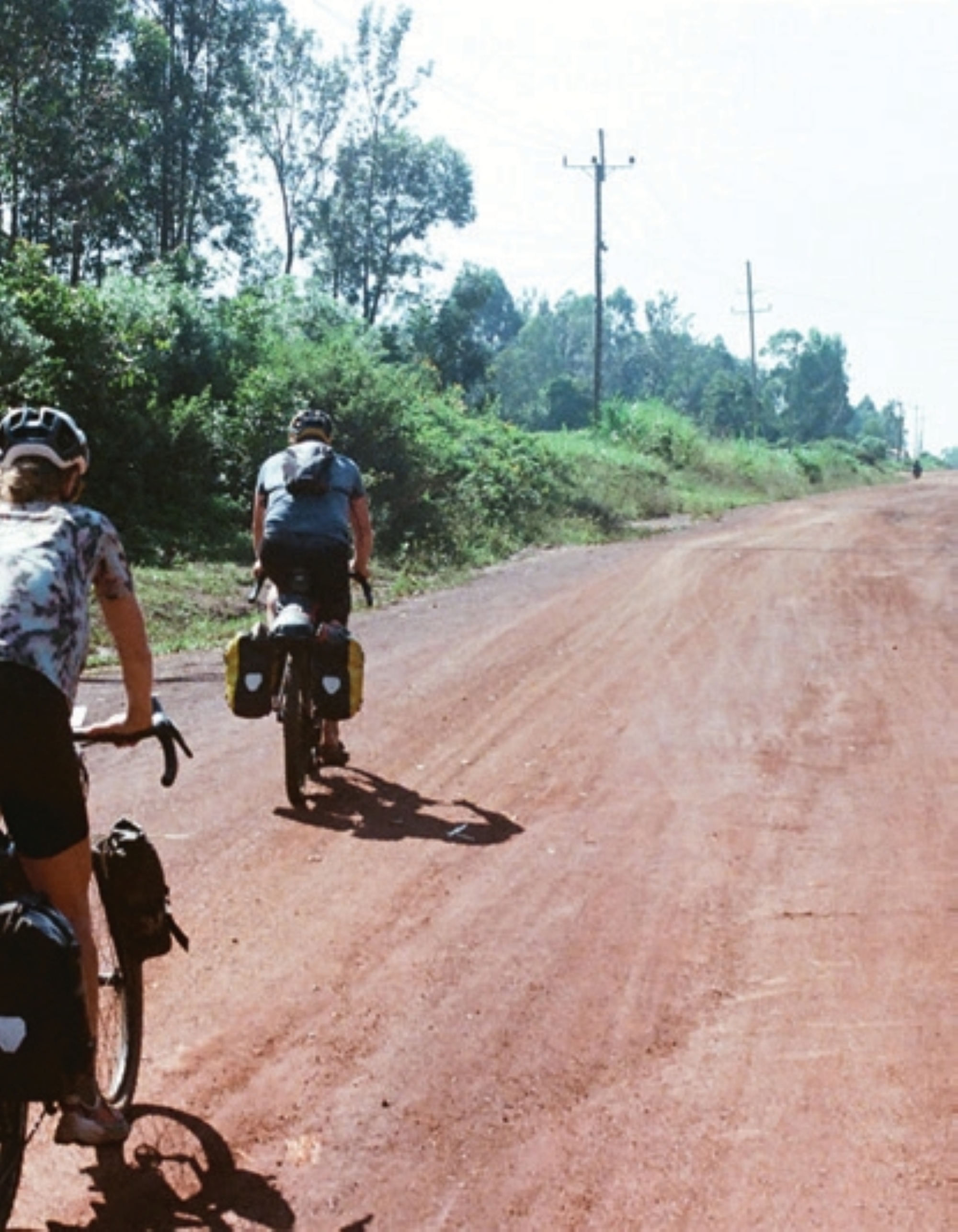
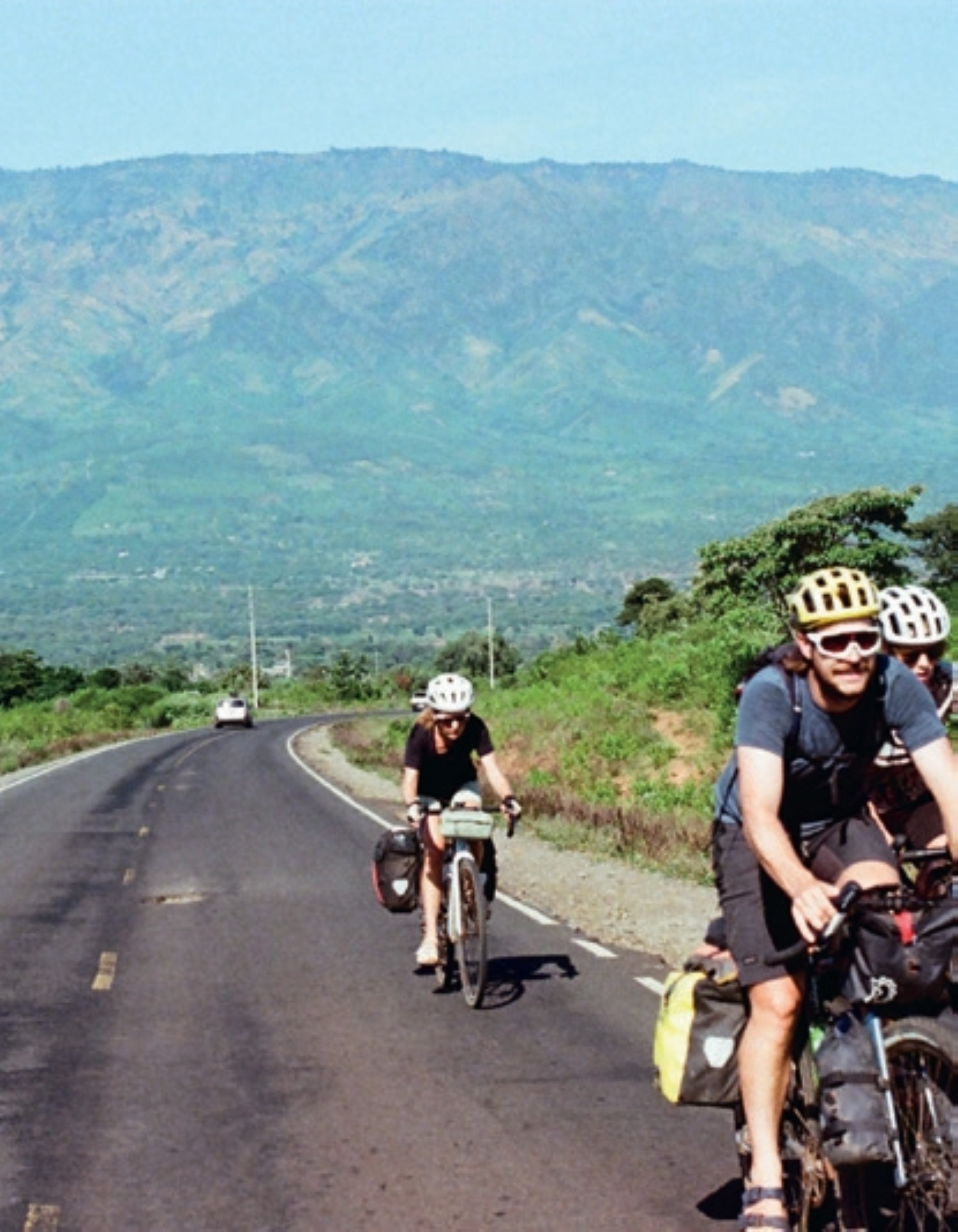
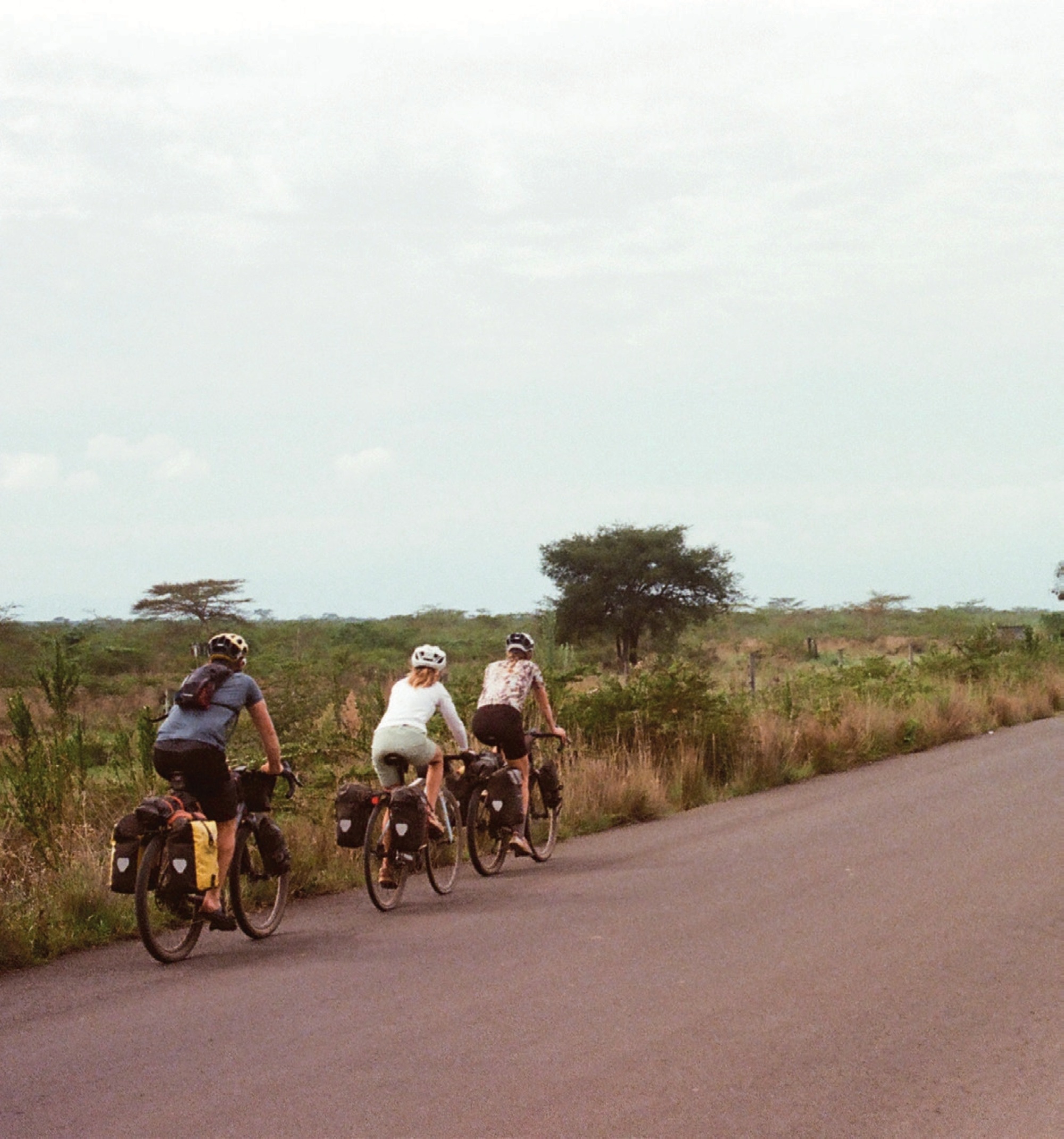
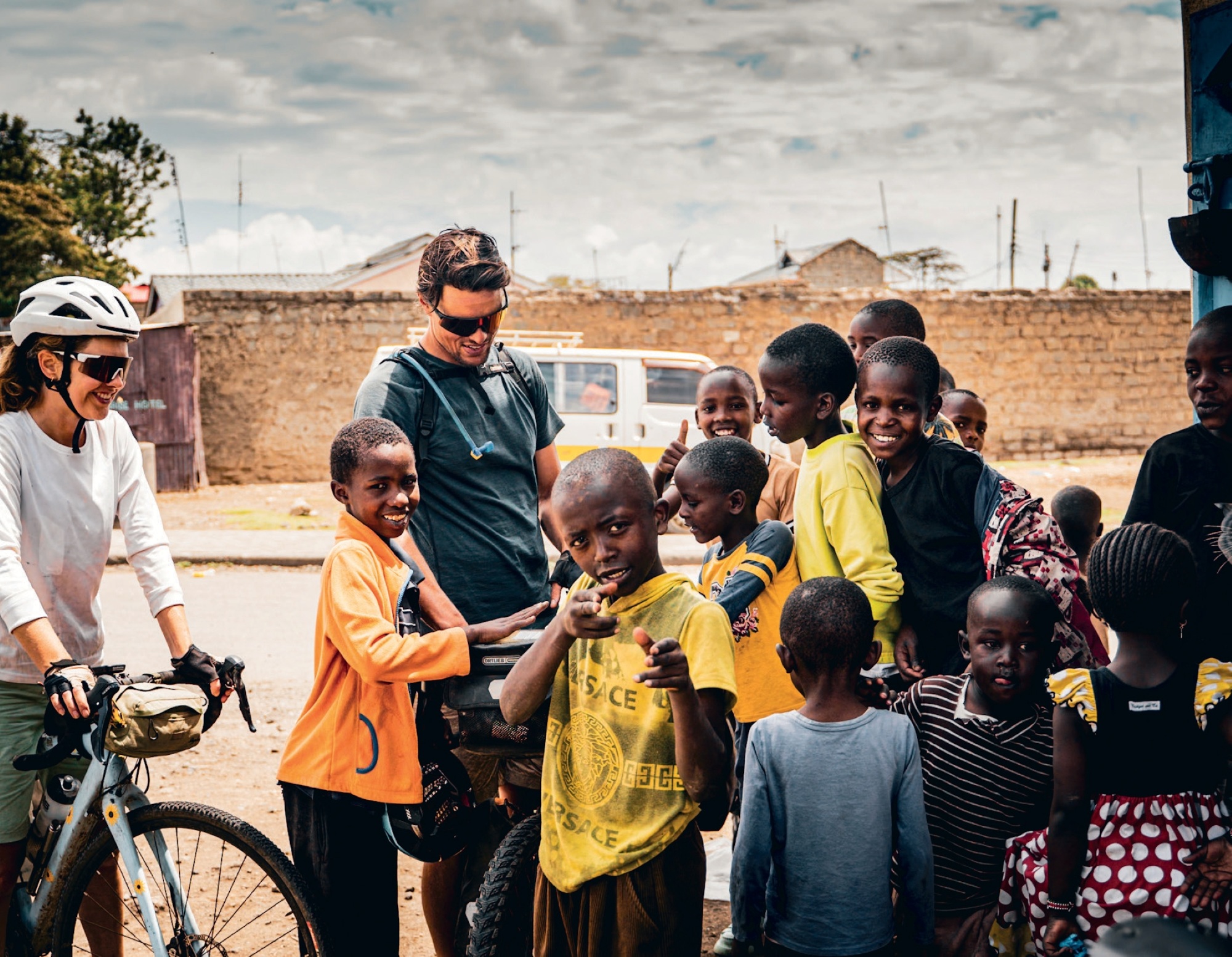
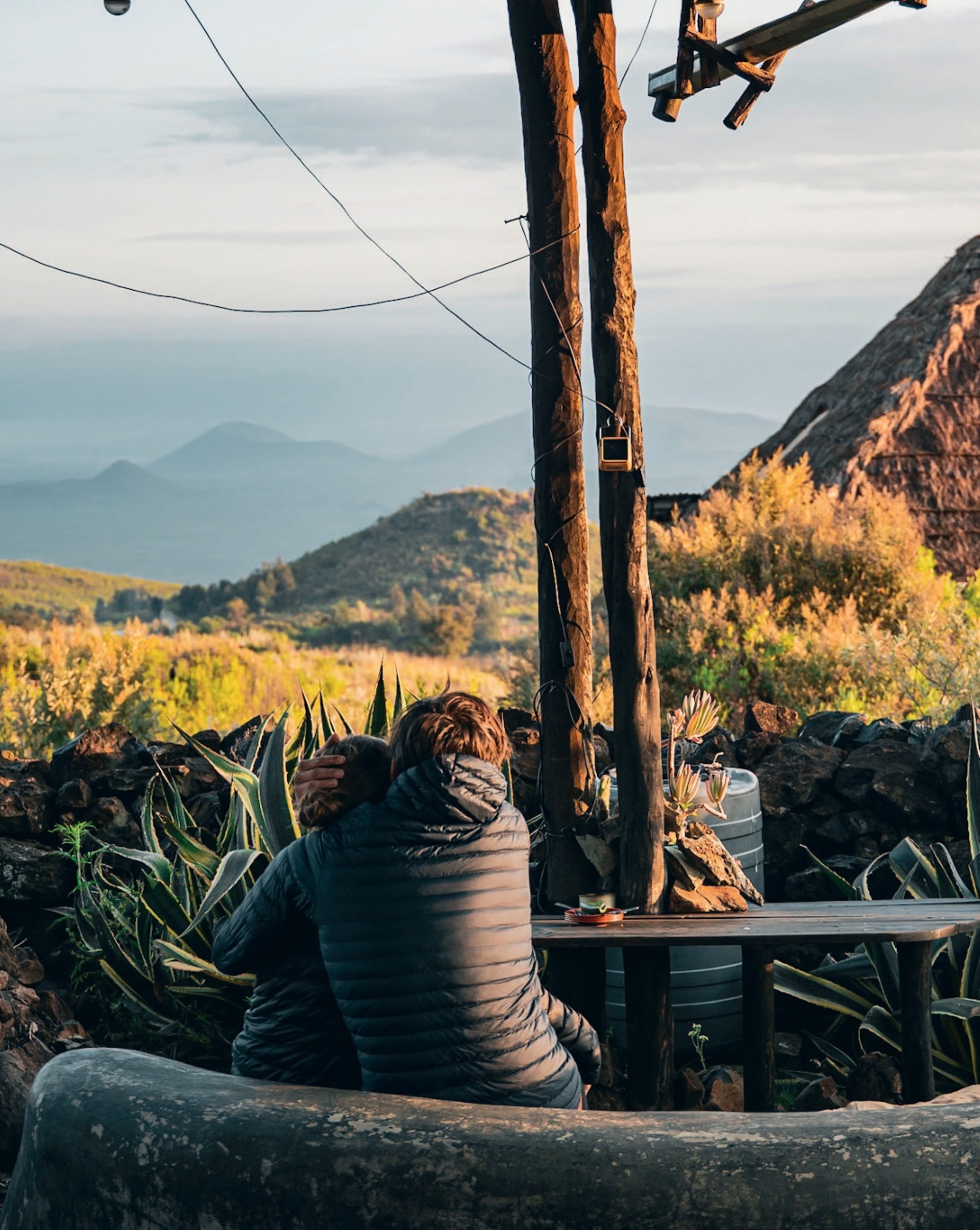
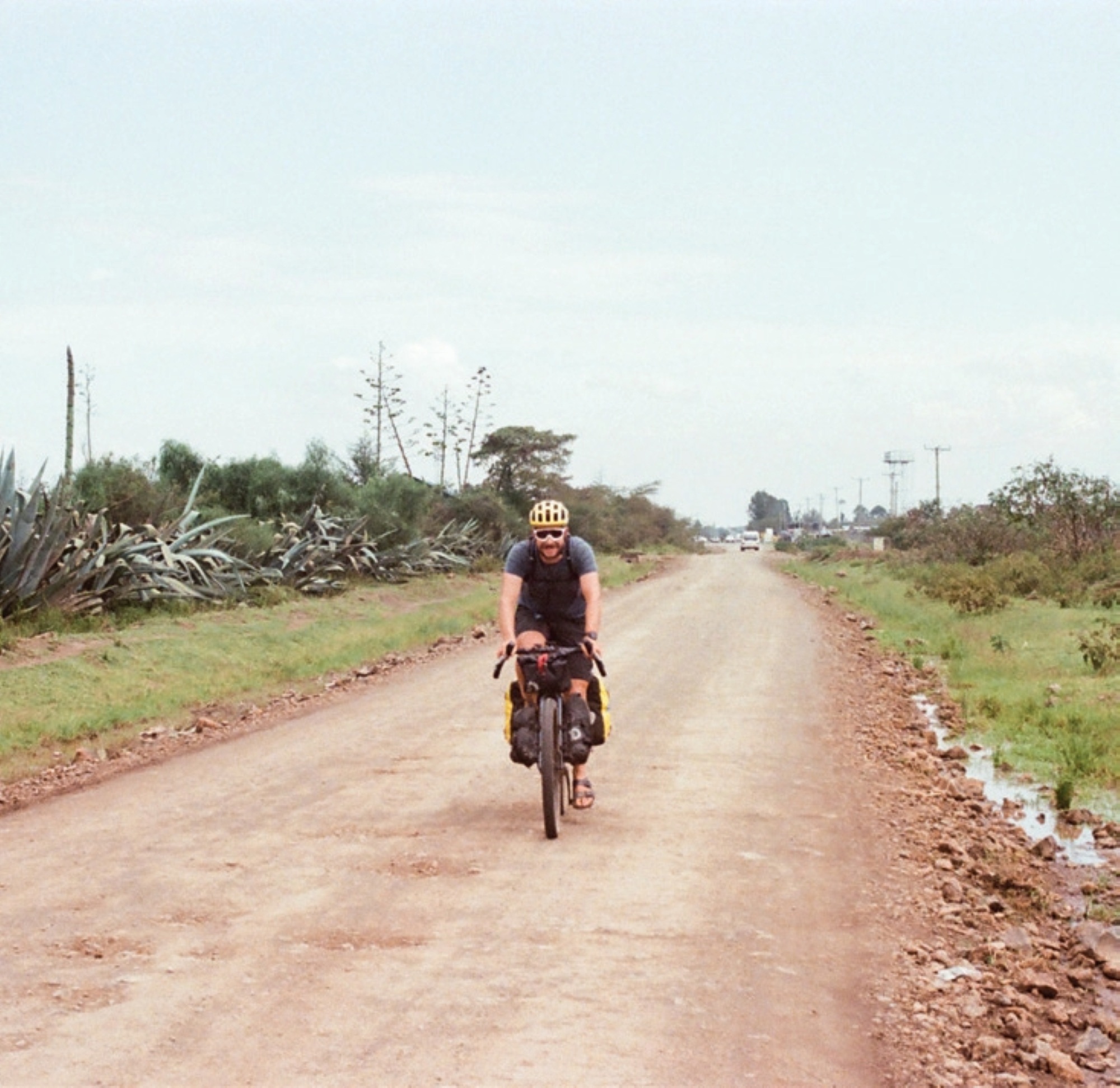
A week later we were already in Kenya, the culture shock slowly easing, our bodies acclimatising to the rigours of every day cycling on poor quality roads. It had been a week like no other on a cycle tour. The poverty was painful to behold: entire families living in mud huts, hungry people on the street, others staring at us, incredulous, as we rolled through, as if to say who are these aliens and what are they doing here? But we had slept in campgrounds next to waterfalls and seen the source of the Nile. Experienced some of the beauty of Africa. A few days later we were in the Rift Valley, a breathtaking ridge running the length of Africa where humans are said to have made those first fateful steps. After a descent from Iten (the home of marathon running) we climbed up the other side of the valley, a 15 kilometre climb at 10% gradient. Contrary to what most people expect from central Africa, it was cool on account of the altitude (around 1,400m at the start of the climb). In fact, most of the ride from Uganda to Tanzania is between 1,000-2400m above sea level, making it quite pleasant to ride in. After the climb we followed the ridge, deep valleys on either side, to the Royal Campsite, established to host the British Monarchy on a royal visit that never transpired. The campsite offers views to the eastern side of the Rift Valley and Mt Kenya in the distance. We watched the sunrise the next morning with cups of Aeropress coffee, rugged up in our sleeping bags, nobody else around, perfect tranquility.
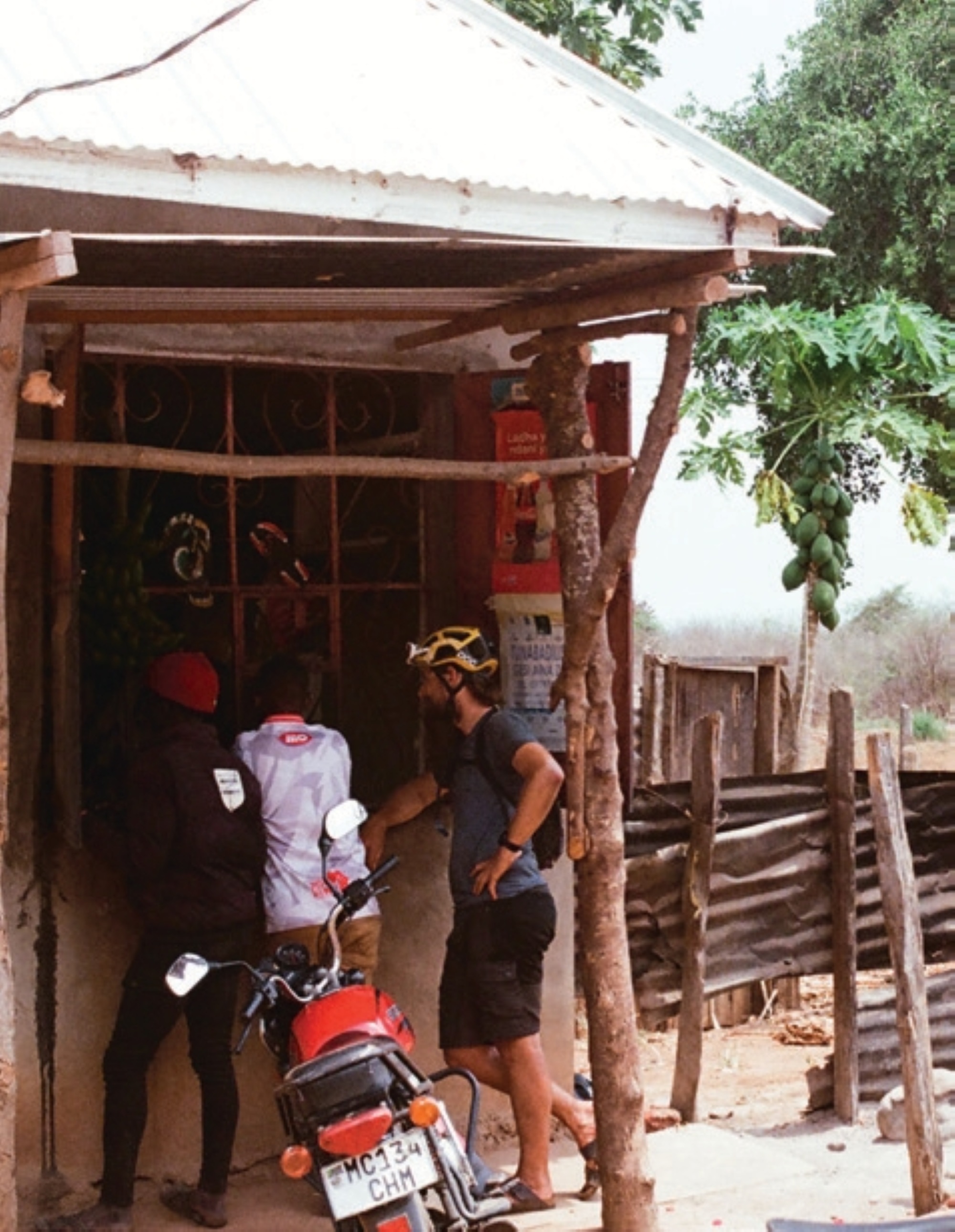
The road was paved on the ridgeline and had been for the entirety of the Rift Valley. We descended, stopping at a ‘hotel’ (shop selling tea and chapati, sometimes beans and rice) for a break, before pedaling into the valley. That afternoon, we crossed the equator. One of the real joys of the trip was ahead of us, an eco-stay named ‘Earth Camp’. Earth Camp is owned by a Japanese man who brought Japanese cuisine to rural Kenya. Perched atop a steep, loose gravel climb, it is unassuming and completely unexpected. There, we pitched tents in a mud hall with a corrugated iron roof, and had coffee and lunch while a storm blew over, rain loud on the roof. Earth Camp boasted a natural sauna with steam rising from the volcanic earth. We scrubbed ourselves clean and enjoyed the warmth of the steam. That night a fire was lit for us on the edge of camp. We watched the lights of Nakuru twinkle in the distance as a multi-course tempura dinner was served.
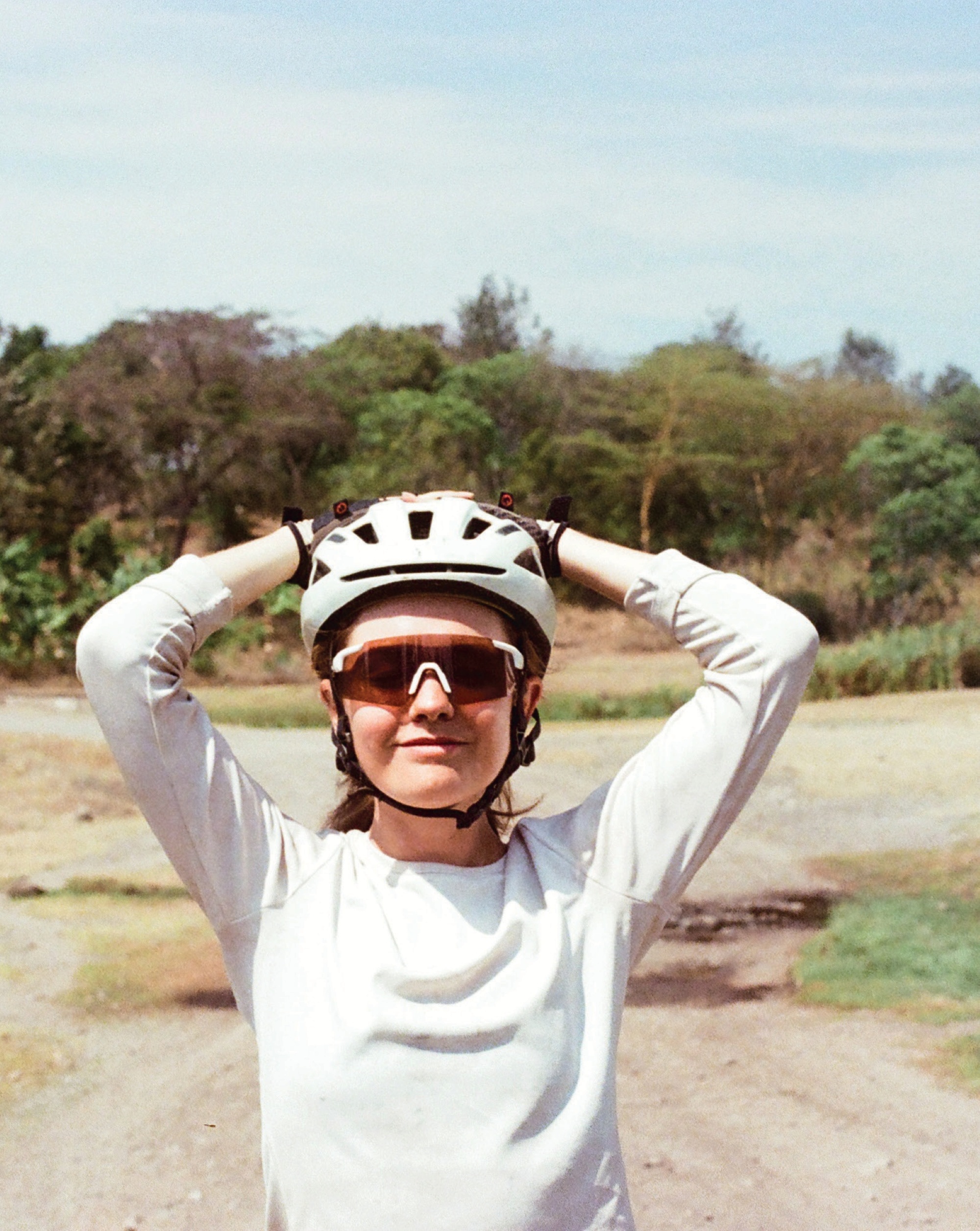
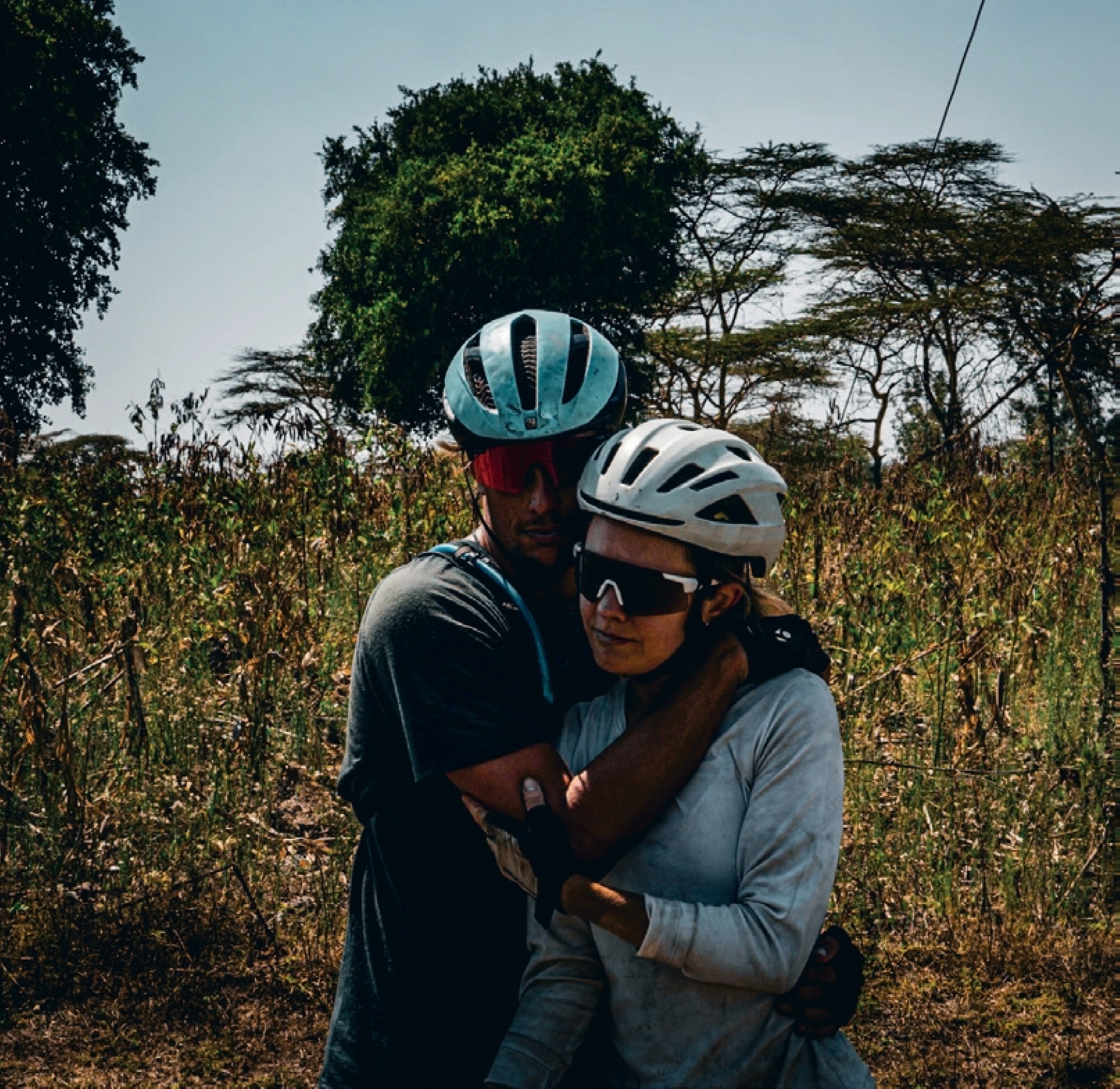
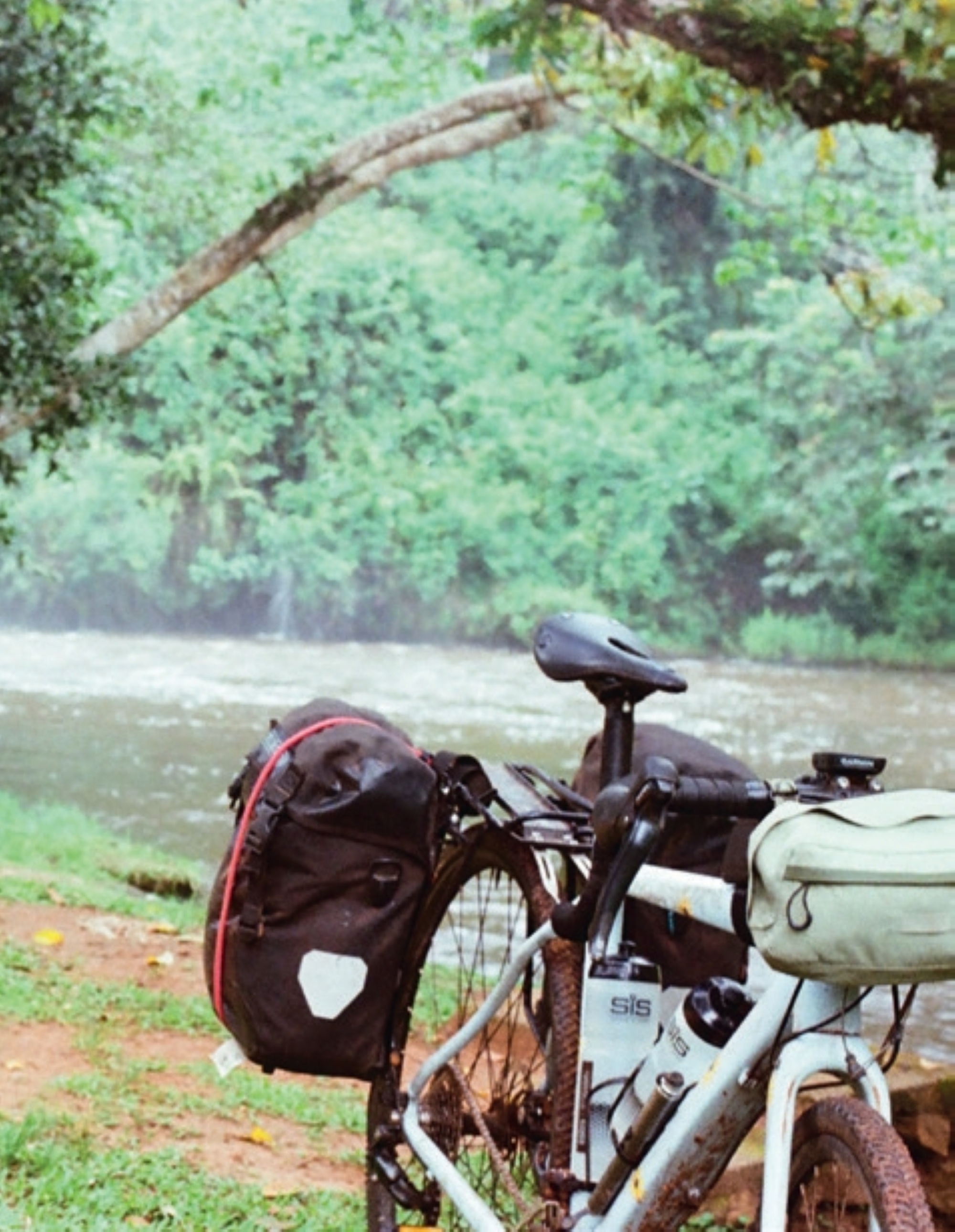
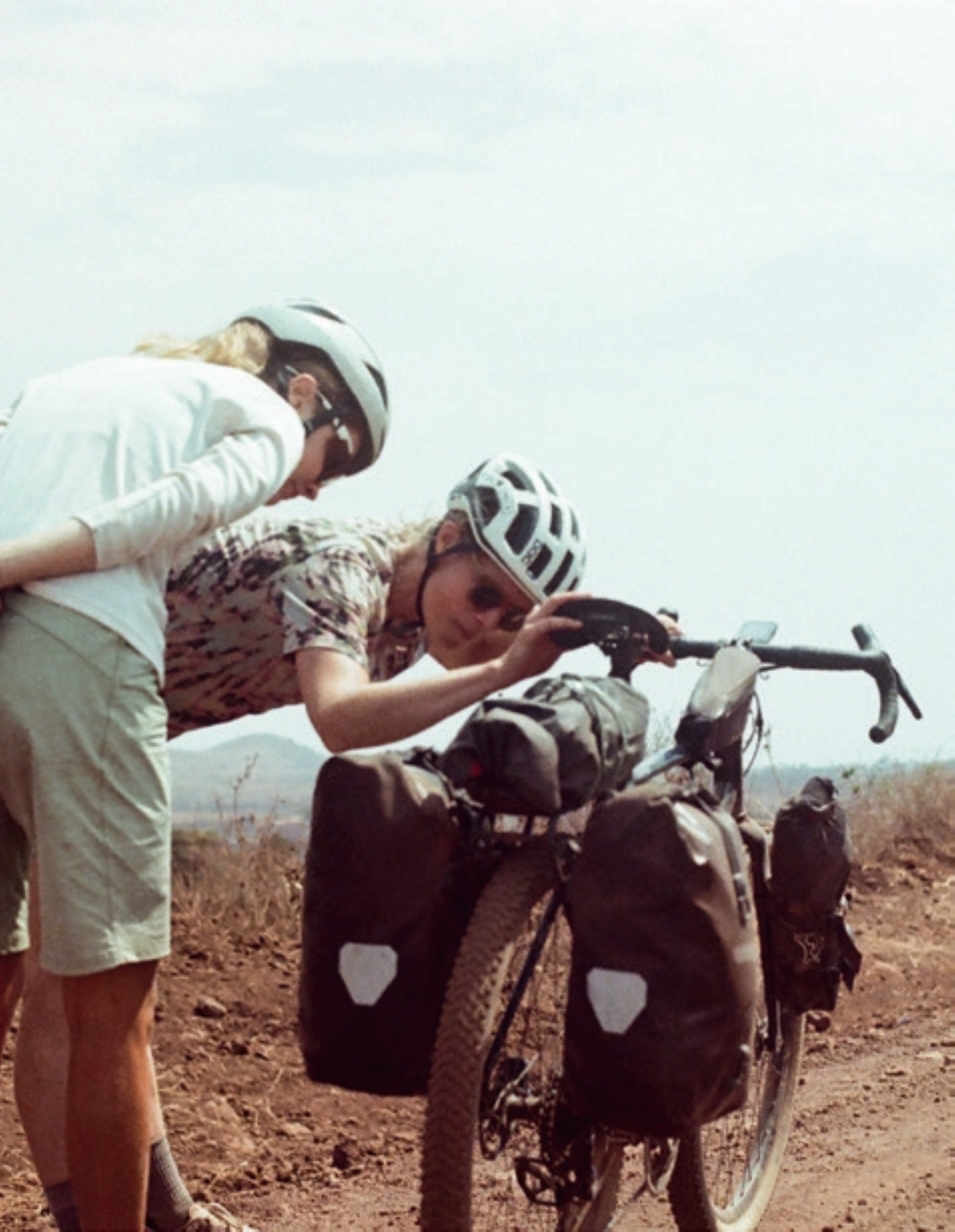
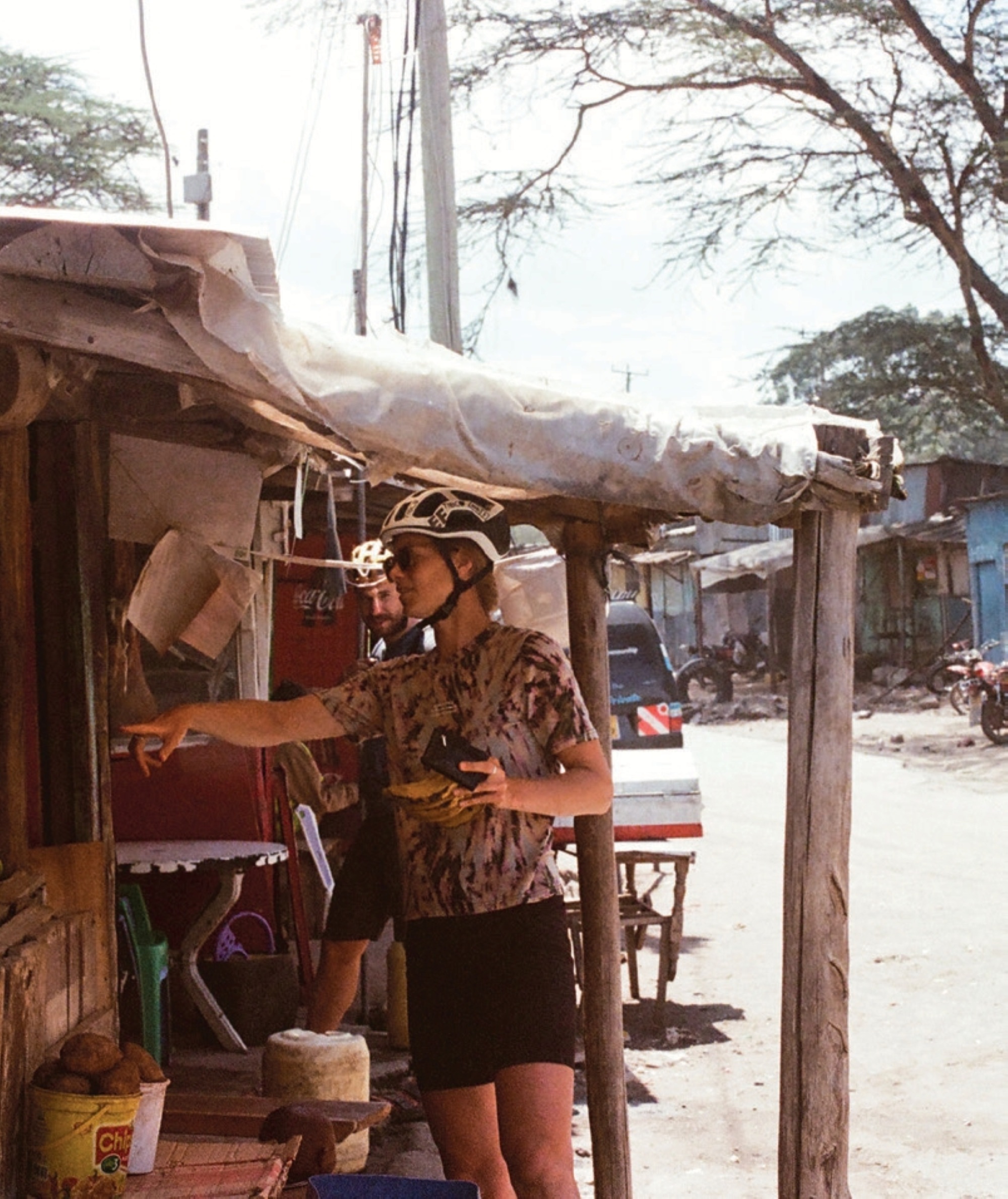
We woke before dawn on the morning of our ride into Nairobi. The lake was still, mirrorlike. Occasionally, the sound of a grunting hippo echoed across the bay. Its beady eyes and pink ears breaking the surface between the reeds. We had coffee and packed up camp, starting on the tarmac before turning into a private ranch that boasted buffalo, antelope, and giraffes. The gravel was firm and good, and we were riding beside giraffes, but soon the gravel deteriorated and turned to washboard then sand. The bikes fishtailed through the deep silt, and we had to walk large sections where Flora’s bike – with its narrow tyres – couldn’t be ridden. I crashed in the deep sand, hyper-extending my knee, and all the while the wind grew stronger. Soon we made it to the main road and stopped for a rolex (the name originating from ‘rolled eggs’, it is essentially a chapati and egg, rolled up) then continued, battling trucks and headwinds. The highways of Kenya can be unforgiving. At times it can feel like a tradeoff between coarse gravel and washboard, or tarmac and trucks, one always wanting the other. After a few hours of dodging over-taking trucks and buses, ears stinging from the horns, we made it into the capital city.
The road around Kilimanjaro comprises challenging, rolling gravel. Steep, short climbs with twisting corners take you from village to village where there is access to water and roadside chapatis. There are good accommodation options (Simba Lodge was a highlight) and campgrounds along the way. Views of the snowy peaked Kilimanjaro feel otherworldly, the savannah extending below as you wrap around the foothills at 2,000m above sea level. It is commonplace to see giraffes close to the road here. We spent three days circumnavigating the 6,000m mountain before turning towards the coast.
The last day of our ride was to take us to Tanga on the coast. We had been told that local elections were being held and that we should be careful and stay away from main cities. Some degree of unrest was expected, protesting the CCM Party’s ongoing (more than sixty year) rule of the country. The younger generation crave democracy and the ‘elections’ were widely accepted to be rigged, with the opposition party banned from running. It was raining heavily as we approached the coast. Polling stations lined the roadside, all of them empty but for the person operating the stand. We rolled into a post-apocalyptic Tanga, to tumbleweed and empty streets. Checking our phones we saw the internet was down. Soon we would learn that the government had imposed a complete internet blackout and that the police were shooting hundreds of people in the streets of Dar es Salaam. All borders had been closed and main cities shut down. We were told to shelter in place at the hotel where others, including an Irish Embassy election observer, were waiting for news. Police arrived by day in an armoured car, trying to assure us everything was fine. Our flight was cancelled and all we could do was wait. After seven days, the internet came back on. We ran the gauntlet and made it through police checkpoints into the city and onto our flight back to London. It was a colourful end to an adventure that was vastly more challenging than cycle touring as I’d ever known it.